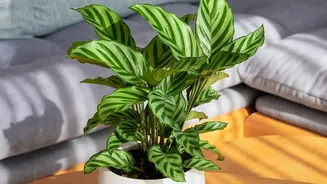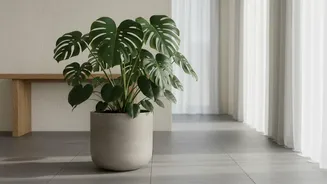



The Green Myth's Origin
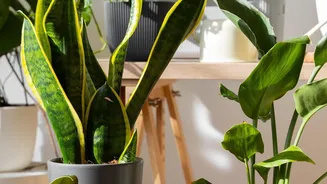
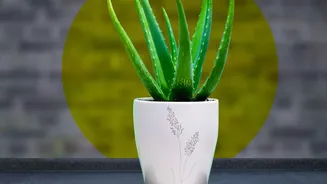
The idea that houseplants are nature's tiny air purifiers is a comforting one, and it has roots in a landmark 1989 NASA study. Tasked with finding ways to clean the air in sealed environments like space stations, NASA researchers found that common houseplants could
remove volatile organic compounds (VOCs) like formaldehyde and benzene from the air in a sealed chamber. This finding was a sensation, launching a decades-long belief that stocking our homes with snake plants and peace lilies was a key step toward healthier indoor air. The advice was simple and appealing: go green to breathe clean. And for years, that's exactly what we did, filling our homes and offices with potted greenery in the hope of scrubbing the air clean.
A Reality Check from New Research
More recently, however, scientists have taken a second look at this popular wisdom. A review of decades of research, notably by a team at Drexel University, came to a startlingly different conclusion. The research found that under real-world conditions—not a sealed lab chamber—the air-cleaning effect of plants is negligible. The reason comes down to scale and ventilation. The natural air exchange in a typical home or office, from open windows, doors, and ventilation systems, dilutes pollutants much faster than a few plants can absorb them. To match the air-cleaning power of a standard building's ventilation system, studies estimate you would need a staggering number of plants—anywhere from 10 to 1,000 plants per square meter of floor space. For a typical 1,500 square foot home, that could mean over 680 plants.
Lab Versus Living Room
The discrepancy between the original NASA study and modern analysis lies in the difference between a lab and a living room. NASA's experiments were conducted in small, airtight plexiglass chambers, an environment completely unlike a typical home. In that sealed setting, the plants had a measurable effect over 24 hours. But our homes are not sealed chambers. Air constantly circulates and is replaced by outdoor air, a process that has a much larger impact on indoor pollutant levels than a plant's slow absorption rate. Researchers now use a metric called Clean Air Delivery Rate (CADR) to measure effectiveness, and when this is applied, a plant's performance is thousands of times slower than simple air exchange. It's not that the original study was wrong, but that its findings were applied to a context—our homes—for which they were never intended.
So, Are Plants Pointless?
After hearing this, it might be tempting to give up on your green friends. But that would be a mistake. While they may not be the air-purifying powerhouses we once thought, the benefits of having plants indoors are still immense. Numerous studies have shown that indoor plants have a positive impact on mental health, reducing stress and boosting mood. They add beauty, life, and a connection to nature in our increasingly indoor lives. Some studies even suggest their presence can reduce fine dust particles and influence humidity. So while your fiddle-leaf fig isn't single-handedly fighting off pollutants, it is contributing to a healthier and happier home environment in other significant ways.
What Actually Cleans the Air?
If plants aren't the answer to indoor air pollution, what is? According to experts, the most effective strategies are also the most straightforward. The number one tool is ventilation. Simply opening windows and doors to allow for a steady flow of fresh air is crucial. Using exhaust fans in kitchens and bathrooms can also help remove pollutants at their source. For a more robust solution, especially in areas with high outdoor pollution, air purifiers equipped with HEPA filters are highly effective at capturing small airborne particles like dust, pollen, and dander. Similarly, using low-VOC products for painting and cleaning can reduce the number of chemicals being released into your home in the first place.