




The Soul of the Coast: Fresh Coconut
In Konkan, the coconut tree is revered as the 'Kalpa Vriksha' or the tree that provides everything, and its culinary role is no exception. Coconut is not just a single ingredient but the foundational element of the cuisine, used in a multitude of forms.
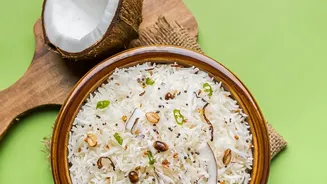
Freshly grated coconut provides texture and a subtle sweetness to vegetable stir-fries (bhajis) and forms the base of countless masalas. Coconut milk, from thin to thick, creates the creamy, luscious gravies of curries, expertly balancing stronger flavours. Even roasted coconut lends a nutty depth, while pure coconut oil is a traditional cooking medium, infusing dishes with its distinct aroma. This versatile use of coconut provides a cooling, rich, and mellow canvas upon which other flavours are layered.
The Coastal Spice Trinity
While many Indian cuisines are known for a wide array of spices, Konkani vegetarian cooking often spotlights a few unique, locally sourced stars. The first is kokum, the dried rind of a sour fruit, which imparts a tangy and fruity acidity that is less harsh than tamarind. It gives dishes a beautiful pinkish hue and a refreshing tartness, most famously in the digestive drink solkadhi. Next is the tirphal or teppal, a wild berry related to the Szechuan peppercorn. It isn't spicy in a 'chilli' sense but provides a woody, citrus-like aroma and a unique tingling numbness on the tongue. This pungent spice is often added to hearty lentil and vegetable dishes to cut through richness. Finally, local varieties of red chillies provide warmth and vibrant colour without overwhelming the other components.
The Art of Culinary Balance
The true genius of Konkan vegetarian cooking lies in the masterful balance of these core ingredients. It is a cuisine built on contrast and harmony. The creamy, almost sweet richness of coconut milk is the perfect counterpoint to the sharp, sour notes of kokum. The tingling pungency of tirphal is mellowed by the gentle cushion of a coconut-based gravy. Jaggery is often added in small amounts, not to make a dish sweet, but to round out the sour and spicy flavours, creating a more complex and satisfying whole. This philosophy of balance means that no single flavour dominates. Instead, the sour, spicy, and creamy elements work together, creating a taste profile that is deeply layered and uniquely coastal. This is evident in dishes like khatkhate, a mixed vegetable stew where coconut, jaggery, and souring agents come together beautifully.
Dishes That Embody the Harmony
Several iconic vegetarian dishes perfectly illustrate this synergy. Solkadhi is the quintessential example, a soothing drink where tangy kokum infusion is mellowed by creamy coconut milk, with a hint of garlic and chilli for complexity. Phansachi Bhaji, a curry made with raw jackfruit, uses a coconut-based masala to complement the meaty texture of the vegetable, often with a hint of tamarind or kokum for brightness. Patholi, a festive sweet, features a filling of fresh coconut and jaggery steamed inside fragrant turmeric leaves, showcasing a simpler, sweeter side of the coconut-jaggery pairing. In savoury dishes like Bharli Vangi (stuffed eggplants), the filling often contains a paste of coconut, peanuts, and spices, creating a rich and satisfying main course that celebrates the region's produce.