






The High-Impact Reality of Running
Every time your foot hits the pavement during a run, your body is subjected to what’s known as ground reaction force. This force, which can be several times your body weight, travels up through your ankles, shins, knees, and hips. For an 80kg person,
a 5km run can mean absorbing over one million kilograms of cumulative force in each knee. While this sounds alarming, it’s not inherently bad. This mechanical loading is precisely what stimulates bones to become stronger and denser, which is a major benefit that running offers. In fact, some studies suggest that runners, contrary to popular belief, do not necessarily have a higher risk of knee arthritis and may even be protected in some ways. The issue arises from factors like poor form, progressing too quickly, or inadequate muscle strength, which can lead to common overuse injuries like shin splints, runner's knee, and stress fractures.
Swimming’s Buoyant Advantage
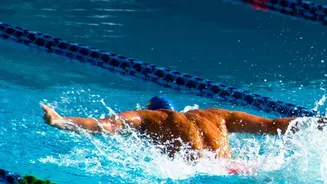
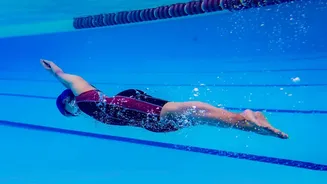
In the pool, the story is completely different. The buoyancy of water supports up to 90% of your body weight, effectively eliminating the impact that stresses joints on land. This makes swimming an excellent choice for individuals with arthritis, joint pain, or those recovering from lower-body injuries. Instead of impact, the challenge in swimming comes from resistance and repetition. Water provides constant, multi-directional resistance, which offers a fantastic full-body muscle-strengthening workout that running doesn't. However, this doesn't mean swimming is injury-free. The highly repetitive motions can lead to their own set of overuse injuries, which are concentrated in different areas than those common in running.
A Joint-by-Joint Breakdown
When comparing the two, it’s helpful to look at which joints are most affected. For runners, the lower body takes the brunt of the force. Knees and hips are the primary load-bearers, and this is where most impact-related issues occur. In swimming, the load is shifted. The most common overuse injury is 'swimmer's shoulder,' a result of the thousands of repetitive overhead arm motions. The lower back can also be strained, particularly with poor technique. Certain strokes create their own specific risks; for example, the whip-like kick in breaststroke can lead to a condition known as 'breaststroker's knee,' which puts stress on the inner part of the knee joint. So, while swimming spares your knees from impact, it can place new demands on your shoulders and, depending on the stroke, your hips and knees.
The Bone Density Trade-Off
One of the most significant long-term differences lies in bone health. The weight-bearing impact of running is crucial for stimulating bone mineral density (BMD). This process helps ward off osteoporosis, a condition where bones become weak and brittle. Studies have shown that runners tend to have higher bone density in their hips and legs compared to non-runners and even compared to swimmers. Because swimming is a non-weight-bearing activity, it does not provide the same bone-strengthening stimulus. Some research indicates that elite or exclusive swimmers may have lower bone density than their land-based athlete counterparts. This doesn't make swimming a poor choice, but it highlights a key trade-off: what you gain in joint relief, you may lose in bone-loading benefits.
Making the Right Choice for Your Body
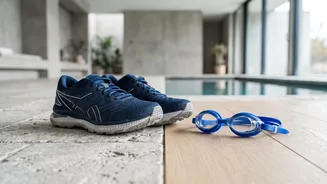
So, which is better? The answer depends entirely on your personal health, goals, and circumstances. If you have existing joint pain, arthritis, or are carrying significant excess weight, the low-impact environment of swimming offers a safe and effective way to build cardiovascular fitness and muscle strength. If your primary goal is to build bone density and you have healthy joints, running is a highly efficient and accessible option. However, the smartest approach for many people is not to choose one over the other, but to incorporate both. Using swimming as a cross-training activity can help runners recover from high-impact workouts, build upper body and core strength, and maintain cardiovascular fitness without the constant pounding. This hybrid approach may offer the best of both worlds: the bone-building benefits of running and the joint-friendly recovery of swimming.