








The Hero of Humble Houseplants
Enter the Devil's Ivy, or Epipremnum aureum. Don't let the dramatic name fool you; this plant is an absolute beginner's dream and a superstar of indoor greenery. Renowned for its hardiness, it thrives in a wide range of conditions, tolerating both bright,
indirect light and shadier spots. Its heart-shaped leaves, often variegated with splashes of yellow, cream, or white, grow on long, trailing vines that can reach impressive lengths. This fast-growing nature is precisely what makes it a game-changer for interior styling, especially in small spaces where every square inch counts.
Why Trailing Plants Work Wonders
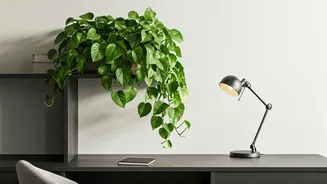
The magic of Devil's Ivy in a study corner lies in its verticality. In a tight apartment, floor and desk space is precious. A trailing plant allows you to add a significant touch of nature without cluttering your work surface. When placed on a high shelf or in a hanging basket, its vines cascade downwards, creating a living curtain of green. This effect does several things at once: it softens the hard lines of desks, shelves, and computer monitors; it draws the eye upward, making the space feel taller; and it creates a subtle sense of enclosure, turning a simple desk into a defined, cocoon-like sanctuary. This 'biophilic' design—connecting with nature indoors—is proven to reduce stress and improve focus, making it perfect for a study environment.
Crafting Your Green Workspace
Integrating Devil's Ivy into your study corner is simple. The most effective method is to place it high up. A pot on top of a bookshelf is a classic choice, allowing the vines to drape elegantly over your books. Alternatively, a stylish hanging planter installed from the ceiling or a wall-mounted hook can create a beautiful focal point. For a more curated look, you can guide the vines using small, clear adhesive hooks. This allows you to 'train' the plant to frame a window, trace the outline of a pinboard, or even create a simple pattern on the wall behind your desk. The goal is to let the plant interact with the architecture of your space, turning it from a simple decoration into a dynamic, living feature.
The Simple Rules of Care
The beauty of Devil's Ivy is its forgiving nature. It's more likely to suffer from over-attention than neglect. The primary rule is to avoid overwatering. Allow the top inch or two of soil to dry out completely before giving it a thorough soak. It’s adaptable to different light levels, but its variegation will be more pronounced in brighter, indirect light. In very low light, the leaves may become more uniformly green. If the vines become too long or sparse, don't be afraid to prune them. Trimming the plant encourages bushier, fuller growth at the base, and the cuttings can be easily propagated in water to create new plants for free.
A Quick Word of Caution
While it's a fantastic addition to most homes, it's crucial to know that Devil's Ivy is toxic to cats and dogs if ingested. The calcium oxalate crystals in its leaves can cause irritation and discomfort to pets. If you have furry friends who are prone to nibbling on plants, be sure to place your Devil's Ivy well out of their reach. Keeping it on a high shelf or in a hanging basket is not just a great design choice—it's also the safest option for a home with pets.