






The Foundation of Your Posture
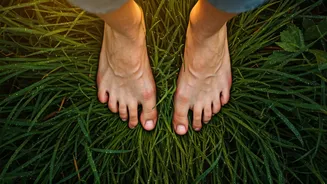
We often think of posture as a problem of the shoulders and back. While that’s where we feel the strain, the issue often starts much lower—at your feet. Your body is a kinetic chain, meaning each part is linked and affects the others. Weak, stiff, or
poorly aligned feet can cause a domino effect, forcing your ankles, knees, hips, and spine to compensate. Over time, this compensation can lead to the slumped shoulders and forward head position we associate with poor posture. Modern shoes, with their thick soles and arch supports, can act like casts. They support our feet, but they also prevent the dozens of small muscles, tendons, and ligaments in them from doing their job. These muscles weaken, and our brains lose some of the sensitive feedback from the ground. This disconnection from our foundation is a major, often overlooked, contributor to postural problems.
How Barefoot Running Helps
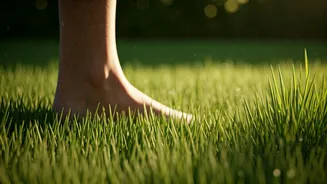
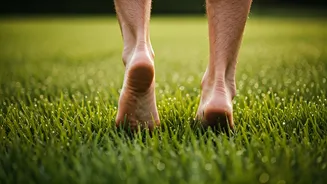
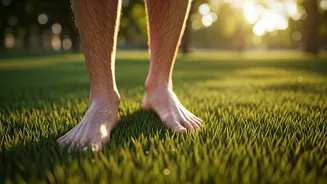
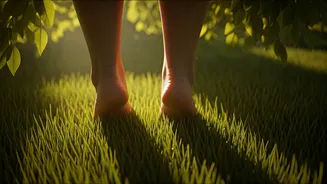
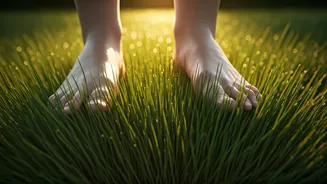
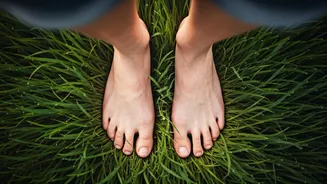
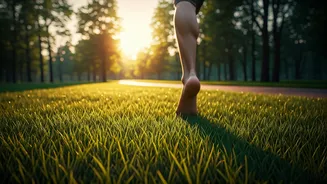
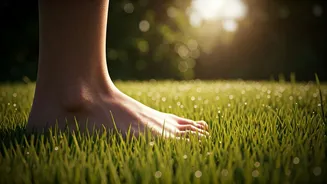
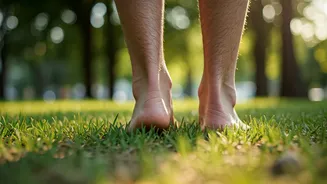
Going barefoot, especially on a natural surface like grass, re-awakens your feet. Without a cushioned heel, you’re encouraged to land more softly on your midfoot or forefoot, which is a less jarring, more natural gait. This simple change does several things to support better posture: 1. **Strengthens Foot Muscles:** Running barefoot forces the intrinsic muscles of your feet to engage, building a stronger, more stable base for your entire body. 2. **Improves Proprioception:** The soles of your feet are packed with nerve endings. Direct contact with the ground provides your brain with a flood of information about the surface, improving your body’s sense of balance and position in space. Better balance naturally encourages a more upright stance. 3. **Encourages Better Alignment:** To run barefoot comfortably, you almost automatically have to align your head, shoulders, and hips over your feet. This engages your core and helps you find a more efficient, upright posture that you can carry into the rest of your day.
Your Five-Minute Park Routine
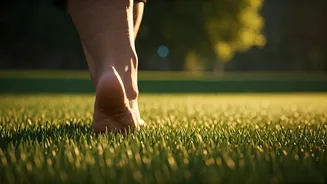
The goal isn't to run a marathon. It's to build a small, consistent habit. Five minutes is the perfect starting point—enough to see benefits without overwhelming untrained muscles. Here’s how to start safely: * **Choose Your Surface:** Find a clean, soft patch of grass in a local park. Visually scan it for sharp objects like stones, glass, or twigs before you begin. * **Warm-Up:** Don't just kick off your shoes and sprint. Start by walking barefoot for a minute or two. Feel the grass under your feet. Roll your ankles and stretch your calves. * **Start with Walking:** For the first week, you might not run at all. Just walk briskly in your bare feet for five minutes. Pay attention to how your feet land. * **Introduce 'Running':** When you're ready, transition to a very light, slow jog. Think short, quick, quiet steps. Your footfalls should be almost silent. If you’re pounding the ground, you’re landing too hard. Focus on form, not speed. * **Cool Down:** End with another minute of walking and gently stretch your calves and the soles of your feet.
Safety First: Listen to Your Body
Transitioning to barefoot activity requires patience. Your feet have likely spent years in shoes and need time to adapt. Pushing too hard, too soon is a direct path to injury, such as stress fractures or plantar fasciitis. Pain is a signal to stop, not to push through. If your feet, ankles, or shins are sore, take a day or two off. Let your body guide the pace of your progress. This is a supplementary practice, not a replacement for medical advice. If you have existing foot conditions, diabetes, or circulation issues, or if you experience persistent pain, it is essential to speak with a podiatrist or physiotherapist before you start.