


Meet the Instrument: ChaSTE
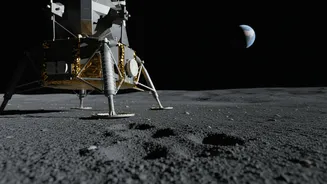
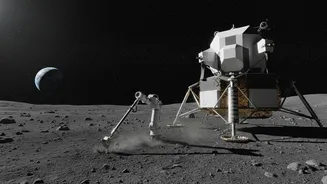
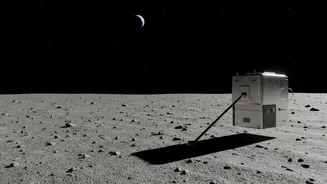
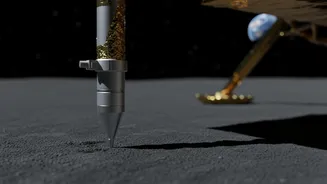
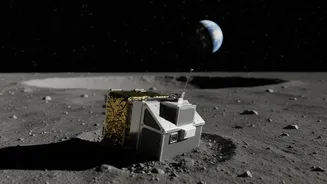
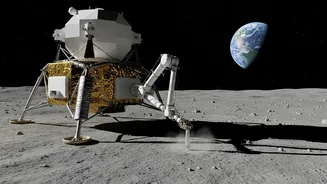
At the heart of this discovery is a payload on the Vikram lander called ChaSTE, or Chandra’s Surface Thermophysical Experiment. Developed by teams at ISRO's Vikram Sarabhai Space Centre and the Physical Research Laboratory, ChaSTE is essentially a high-tech
thermometer designed for the Moon. It features a slender probe that can penetrate up to 10 centimetres into the lunar topsoil, also known as regolith. This probe is lined with 10 individual temperature sensors, allowing scientists to build a detailed thermal profile from the surface down. Unlike previous missions that relied on hammering mechanisms, ChaSTE used a controlled, motor-driven process to push its way into the soil, ensuring pristine and undisturbed measurements. This was the first time such an in-situ measurement has ever been successfully performed near the lunar south pole, providing a unique window into this scientifically crucial region.
A Shocking Temperature Drop
The first data sent back by ChaSTE revealed something that surprised many scientists. While the sun-baked lunar surface sizzled at temperatures around 50-60 degrees Celsius, the temperature plummeted dramatically just beneath it. At a depth of only about 8-10 centimetres, the probe recorded a frigid minus 10 degrees Celsius. This sharp gradient of over 60 degrees across just a few centimetres was far steeper than expected. On Earth, you might have to dig several metres to find such a significant temperature change. This finding immediately pointed to a key property of the Moon's topsoil: it is an incredibly effective thermal insulator. The loose, powdery regolith doesn't conduct heat well at all, meaning the intense heat of the lunar day barely penetrates beyond the very top layer.
The Link Between Insulation and Water
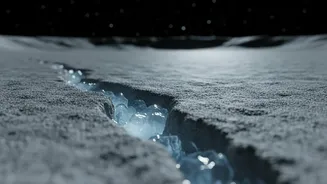
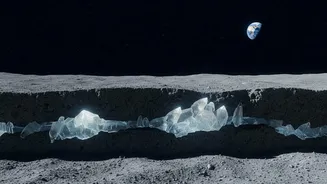
This exceptional insulating property is the critical link to understanding water retention on the Moon. The lunar south pole is a place of extreme contrasts, with sunlit areas getting hot and permanently shadowed craters remaining among the coldest places in the solar system, potentially as low as minus 203°C. Scientists have long theorised that these permanently shadowed regions could harbour water ice because they are cold enough to trap it. The ChaSTE findings suggest something more profound. Because the topsoil is such a good insulator, it could protect subsurface water ice from sublimating (turning directly from a solid to a gas) even in areas that receive some sunlight. The heat simply can't reach deep enough to melt the ice. This discovery significantly expands the potential areas where water ice might be found, moving beyond just the perpetually dark craters to wider regions covered by this protective blanket of regolith.
Why This Discovery Is a Game-Changer
Understanding these thermal properties is not just an academic exercise; it has massive implications for the future of lunar exploration. The presence of accessible water is considered the single most important factor for establishing a sustainable human presence on the Moon. Water can be used for drinking, growing food, and can be split into hydrogen and oxygen to create breathable air and rocket fuel. If water ice is more widespread and protected by just a few centimetres of soil, as ChaSTE's data implies, it makes future missions to extract this resource far more feasible. Engineers can design rovers and habitats knowing the thermal environment they will be operating in, helping to protect sensitive electronics and plan for resource utilisation. These first-of-their-kind measurements from ISRO are providing the ground truth needed to turn the dream of a lunar base into a practical reality.