


More Than Just a Figurehead
The Secretary-General is the chief administrative officer of the United Nations, a role established by the UN Charter. This person is responsible for a massive global staff, oversees peacekeeping missions, and acts as a neutral mediator in international
disputes. They can bring any matter to the Security Council that they believe threatens international peace. While the role's influence heavily depends on the personality of the incumbent, they are expected to be a moral authority and a symbol of the UN's ideals. The term is traditionally five years and, by convention, is renewable for a second term. No one has ever served more than two terms.
The Two-Stage Appointment Process
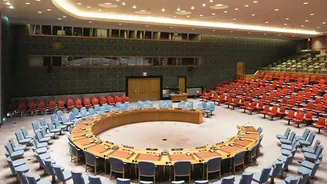
On paper, the process seems straightforward. Article 97 of the UN Charter states the Secretary-General “shall be appointed by the General Assembly upon the recommendation of the Security Council.” This means the 15-member Security Council first selects and recommends a single candidate. Then, the 193-member General Assembly formally appoints that candidate. While the General Assembly's approval is essential, it has never rejected the Council's recommended candidate. In recent years, the process has become more transparent, with candidates submitting vision statements and participating in public dialogues, a significant change from the purely behind-the-scenes negotiations of the past.
The P5 and the Power of the Veto
The real crucible for any candidate is the Security Council, and specifically, its five permanent members (P5): China, France, Russia, the United Kingdom, and the United States. Each of these five nations holds the power of the veto. To be recommended, a candidate needs at least nine 'yes' votes in the Council, but crucially, they must have no 'no' votes from any of the P5. A single veto from a permanent member can, and often does, end a campaign. This gives the P5 immense leverage, ensuring that any Secretary-General is acceptable to the world's most powerful countries.
Straw Polls: A High-Stakes Temperature Check
To narrow down the field and avoid formal, public vetoes, the Security Council holds a series of informal, secret ballots known as 'straw polls'. In these polls, members vote to 'encourage,' 'discourage,' or express 'no opinion' on each candidate. In later rounds, the ballots are colour-coded: red for the P5 and white for the ten elected members. This is where a candidacy's true strength is revealed. A 'discourage' vote on a red ballot is a clear signal of a potential veto, what many consider a 'kiss of death' for a campaign. This process of elimination continues until a consensus candidate emerges who has at least nine votes and no P5 opposition.
The 2026 Race: Geopolitics at Play
With current Secretary-General António Guterres's second term ending on December 31, 2026, the selection process is well underway. The formal process began in late 2025, and several candidates have been nominated. As of late 2026, frontrunners have emerged, but straw polls have revealed potential vetoes from P5 members like the US and Russia, creating a deadlock. Reports suggest these major powers are seeking a candidate more aligned with their interests, highlighting the intense geopolitical manoeuvring behind the selection. Candidates in the running include Costa Rica's Rebeca Grynspan, who has led in many straw polls but faced 'discourage' votes from permanent members, and the UAE's Lana Nusseibeh, a late entrant with big-power backing.
What It Means for India
For India, a major global player and a frequent non-permanent member of the Security Council, the outcome is significant. The choice of Secretary-General affects the UN's priorities, from climate change and development to peacekeeping and counter-terrorism. India, along with other nations, has long pushed for reform of the Security Council, arguing that its structure, including the P5's veto power, is outdated. The selection process is a stark reminder of where power currently lies in the UN system. An ideal Secretary-General from an Indian perspective would be one who is sensitive to the concerns of the Global South, advocates for multilateralism, and supports the reform agenda to make the UN more equitable and representative of the current world order.