


The Logic of Monsoon Fermentation
There’s a reason fermentation has been deeply intertwined with Indian monsoons for centuries. Long before refrigerators became a kitchen staple, the rainy season’s high humidity and warm temperatures created the perfect environment for beneficial microbes
to thrive. This natural process was a genius method of food preservation, transforming seasonal abundance into foods that could last longer. Fermentation is essentially controlled microbial growth, where bacteria and yeast break down sugars and starches. This not only preserved food but also unlocked new flavours and textures, giving us tangy pickles, fluffy dhoklas, and sour-and-spicy kanji. It was a practical solution that evolved into a rich culinary tradition, a science born from necessity and perfected in kitchens across the country.
From Humble Homes to Haute Cuisine
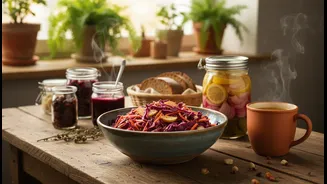
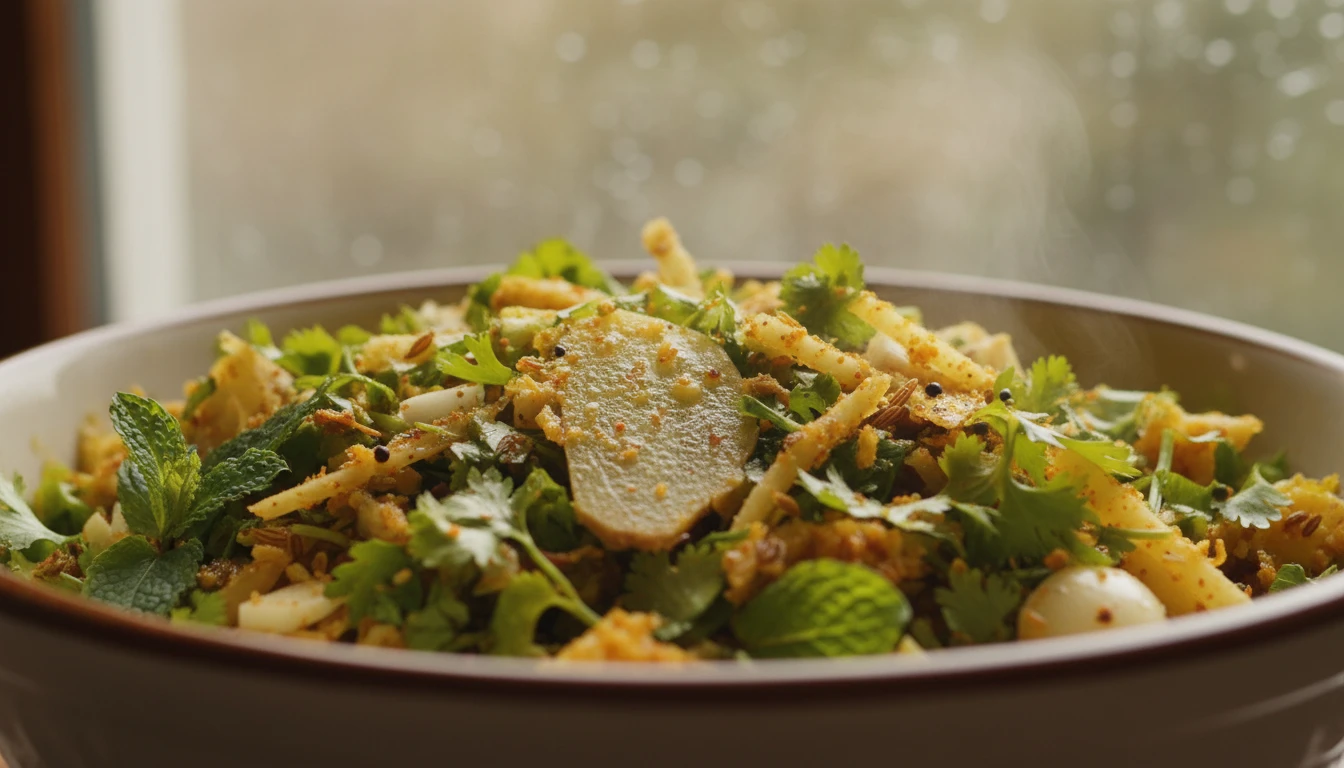
For generations, fermented foods were humble, everyday staples. Think of the earthenware pots of pickles (achar) soaking up the sun, the overnight transformation of rice and dal batter for idli and dosa, or the sharp, probiotic kick of North India's kanji, a drink made from fermented black carrots. These were fixtures of regional diets, from the fermented rice dish pazhaya soru in Tamil Nadu to millet gruels in Central India. Now, what was once considered simple home cooking is being celebrated on the menus of India's most innovative restaurants. Chefs are looking back to their roots, reinterpreting these traditional techniques. Chef Vanika Choudhary at Mumbai's Noon, for instance, champions foraged ingredients and indigenous ferments, reminding diners of a culinary heritage rooted in sustainability and deep respect for seasonal ingredients.
The Modern Wellness Twist
So, why the sudden resurgence? The answer lies in the modern obsession with wellness, particularly gut health. What our grandmothers knew instinctively is now being validated by science. Traditional Indian fermented foods are natural powerhouses of probiotics, the beneficial bacteria that support a healthy digestive system. A balanced gut microbiome is linked to improved digestion, stronger immunity, and even better metabolic health. The wellness world is rediscovering that a simple bowl of homemade dahi or a serving of idli can be more effective than a manufactured supplement. Fermentation also works wonders by breaking down anti-nutrients in grains and lentils, which increases the body's ability to absorb essential minerals like iron, calcium, and B vitamins. This process essentially pre-digests the food, making it lighter and more nutritious.
More Than Just a Health Trend
While the health benefits are a major driver, the revival of fermented foods runs deeper than the quest for a healthy gut. It represents a cultural shift—a desire to reconnect with ancestral wisdom and a sense of identity. In a world of fast food and processed ingredients, turning to fermentation is a return to slower, more mindful ways of eating. It’s an appreciation for local, seasonal produce and sustainable practices that reduce food waste. This trend is not just about importing global fads like kombucha and kimchi, but about celebrating our own rich legacy of fermented superfoods. It’s about the pride in realizing that the solution to many modern lifestyle ailments might just be waiting in recipes that have been passed down through generations.