







A City as a Canvas
For ten days, the streets of Kolkata pulse with an unmatched creative energy. The Durga Puja festival, recognised by UNESCO as an Intangible Cultural Heritage of Humanity, has evolved far beyond its religious roots. It has become a city-wide spectacle
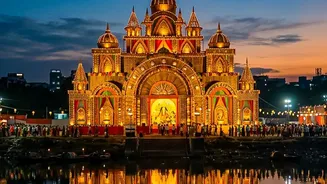
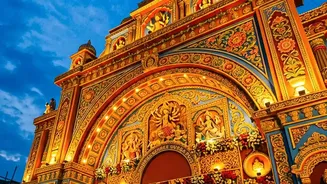
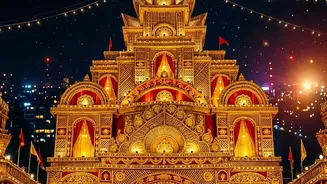
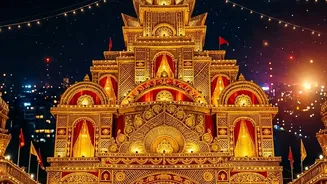
of art and design, where neighbourhoods compete to create the most breathtaking and imaginative pandals—temporary pavilions housing the idol of Goddess Durga. In 2026, this tradition continues with more than 3,000 public pandals transforming the cityscape. These are not simple marquees but elaborate, architectural fantasies, each telling a unique story through its theme, craftsmanship, and visual splendour, turning the entire city into an immersive exhibition.
The Minds Behind the Magic
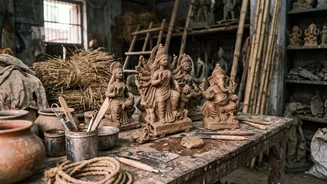
The driving force behind this creative explosion is a new generation of artists and designers who work alongside traditional artisans, or 'karigors'. While idol-makers in areas like Kumartuli still craft the divine figures from clay and straw months in advance, concept artists now mastermind the pandal's entire experience. Artists like Sanatan Dinda and Anirban Das are renowned for their ability to weave complex narratives into the very structure of the pandal. For Puja 2026, their work can be seen in themes that tackle environmental issues, like the pollution of the Ganga at Nalin Sarkar Street, or recreate Bengal's maritime history with a life-sized merchant ship at Dum Dum Park Tarun Sangha. This collaboration between conceptual vision and generational craftsmanship is where the true innovation lies.
Themes That Tell a Story
The themes for 2026 are as diverse as they are ambitious, reflecting a blend of social commentary, historical reverence, and pure artistic fantasy. Several pandals are recreating famous landmarks, such as Sreebhumi Sporting Club's grand replica of Jaipur's Hawa Mahal and Ekdalia Evergreen's homage to the Somnath Temple. Others delve into history and mythology, with Alipore Sarbojanin depicting the Ramayana through intricate installations. Many themes also carry a potent social message. Santoshpur Trikon Park's theme, 'Prakriti' (nature), highlights the natural elements integral to the puja rituals, while Thakurpukur SB Park's 'Colliery' theme shines a light on the harsh lives of coal miners. These narrative-driven designs prove that pandals are not just for celebration, but also for reflection.
Innovation in Every Fibre
Artisanal innovation is most visible in the surprising choice of materials. While bamboo and cloth remain staples, committees are increasingly embracing sustainability and unconventional mediums. Jute, terracotta tiles, coconut shells, and dried leaves are being used to create eco-friendly structures that are both beautiful and biodegradable. The most talked-about innovation for 2026 comes from Tridhara Sammilani, where artist Chandra Nath Saha has crafted a 5.5-foot Durga idol from approximately 13,000 recycled plastic pens. This idol will not be immersed in the river; instead, it will be dismantled and its components recycled into new products, offering a powerful statement on how tradition and environmental consciousness can coexist.