




A Groundbreaking Discovery
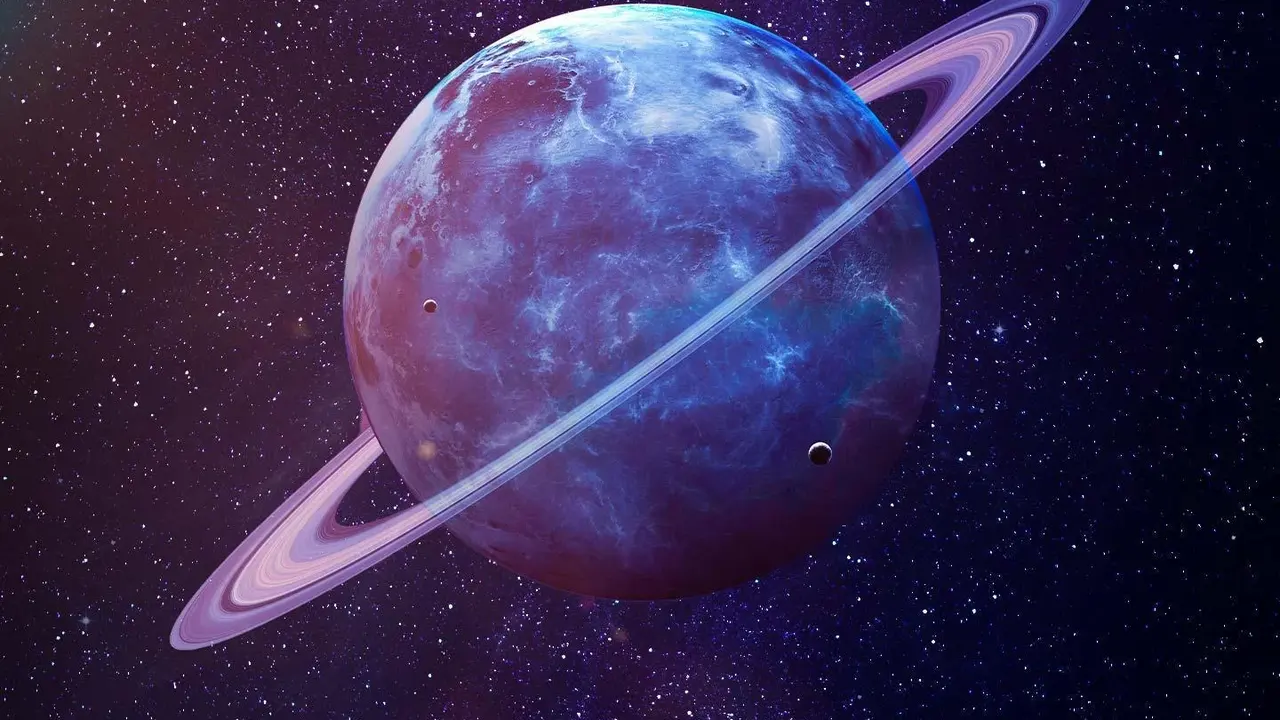
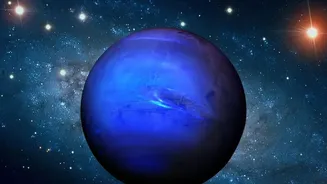
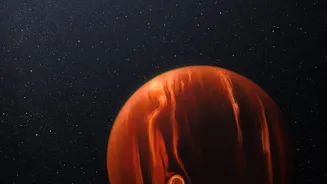
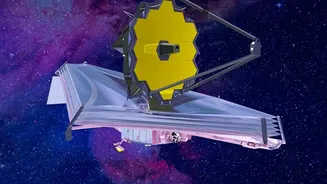
The JWST has successfully detected key carbon-bearing molecules, such as methane and carbon dioxide, in the atmosphere of an exoplanet named K2-18 b. This planet, located about 124 light-years away, is larger than Earth but smaller than Neptune, placing
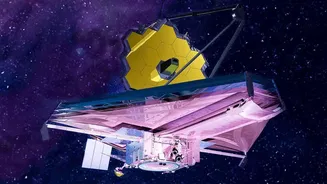
it in a category known as a 'sub-Neptune'. What makes this discovery particularly exciting is that K2-18 b orbits within its star's habitable zone—the region where conditions might be right for liquid water to exist on a planet's surface. Finding these carbon molecules is a monumental step, confirming the telescope's power to conduct complex chemical analysis from quadrillions of miles away.
Why Carbon is a Game-Changer
On Earth, carbon is the backbone of all known life. While finding it on an exoplanet doesn't automatically mean we've found life, it's a critical piece of the puzzle. The ratio of different carbon-based molecules, like carbon dioxide (CO2) and methane (CH4), provides a wealth of information. It helps planetary scientists understand the planet’s formation history, its geological activity, and the chemical processes occurring in its atmosphere. An abundance of methane and CO2, combined with a lack of ammonia, supports the idea that K2-18 b could have a significant ocean under its hydrogen-rich atmosphere.
The 'Hycean' World Hypothesis
The findings from K2-18 b have made it the leading candidate for a theoretical type of planet called a 'Hycean' world. This term, a portmanteau of 'hydrogen' and 'ocean', describes a planet with a global liquid water ocean underneath a dense hydrogen atmosphere. Such worlds are thought to be larger than Earth and, if they exist, could be promising places to search for biosignatures because their thick atmospheres make them easier to observe. The detection of methane and CO2 on K2-18 b is consistent with models of a Hycean planet, though scientists are still debating other possibilities, such as it being a gas-rich mini-Neptune without a distinct surface.
The Art of Celestial Chemistry
So how does JWST 'smell' the atmosphere of a planet light-years away? It uses a technique called transmission spectroscopy. As K2-18 b passes in front of its star from our perspective, starlight filters through the planet's atmosphere. Different gases in the atmosphere absorb light at specific wavelengths, leaving a unique chemical 'fingerprint' in the light that reaches the telescope. By analyzing this spectrum of light, astronomers can identify the molecules present, including methane and carbon dioxide. This incredible feat showcases the telescope's unmatched infrared sensitivity and its role as a premier tool for exoplanet science.
The Search for Life Continues
The detection of carbon molecules on K2-18 b has also been linked to a more tantalizing, though highly tentative, signal: dimethyl sulfide (DMS). On Earth, DMS is produced almost exclusively by marine life. The potential detection of DMS is heavily debated, with many scientists agreeing the evidence is not yet robust enough to confirm its presence. Even if confirmed, non-biological sources can't be ruled out. This illustrates both the excitement and the caution required in the search for life. Each discovery provides a crucial data point, but the bar for confirming a biosignature remains extremely high.