



The Illusion of a Standard Ladle
The first and most significant problem is that there is no universal standard for a “ladle.” The one you use for a hearty stew might hold 180ml, while a smaller one for sauce could be just 30ml or 60ml. Some commercially available ladles are marked with
their capacity in ounces or millilitres, ranging from 1 ounce (about 1/8 cup) to 8 ounces (1 cup), but many decorative or older serving ladles have no markings at all. Relying on a random ladle is like telling a baker to add “a handful” of flour; the variability is so high that the instruction becomes meaningless. This guesswork can be the primary reason a recipe works one day and fails the next.
Baking: A Science of Precision
While a forgiving soup or stew might not suffer from a little extra broth, baking is a different story. Baking is chemistry. The success of a cake, bread, or batch of cookies depends on precise chemical reactions between ingredients like flour, sugar, fat, and leavening agents. Too much flour can lead to a dry, dense cake. Too much sugar can cause cookies to spread into thin, crispy wafers. An inaccurate amount of baking soda or powder can cause a cake to rise too quickly and then collapse, or not rise at all. Using a ladle introduces a level of uncertainty that can easily ruin these delicate ratios, wasting both time and expensive ingredients.
Dry vs. Liquid: A Critical Difference
Measuring tools are not one-size-fits-all. There's a reason kitchens have separate measuring cups for dry and liquid ingredients. Liquid measuring cups are typically made of clear glass or plastic with a pour spout and measurement lines below the brim. This design allows you to see the liquid’s surface (the meniscus) and pour accurately without spilling. Dry measuring cups are designed to be filled to the brim and levelled off with a straight edge for a precise volume. A ladle is poorly suited for both tasks. It’s impossible to accurately level a dry ingredient like flour in a ladle’s curved bowl. When measuring liquids, you have to fill it precariously to the top, risking spills and inaccurate portions.
The Compounding Effect of Small Errors
A little extra of one ingredient might not seem like a big deal, but these small deviations add up. Imagine a recipe calls for one cup of flour, a half-cup of sugar, and a half-cup of milk. If your ladle over-measures each by just 15%, you’ve significantly altered the recipe's fundamental structure before it even goes into the oven. These compounding errors are often the culprit behind mysterious baking failures, where the final product is gummy, tough, or has a strange texture. Achieving repeatable success in the kitchen requires consistency, and that starts with consistent measurements.
The Simple, Affordable Solution
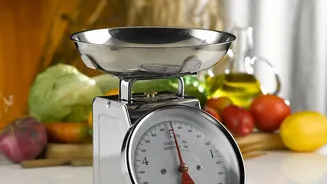
The good news is that solving this problem is simple and inexpensive. A standard set of dry measuring cups (typically 1/4, 1/3, 1/2, and 1 cup) and a liquid measuring cup are essential tools for any home cook. These items ensure you can follow a recipe as the author intended, giving you a much higher chance of success. For those who want to take their precision to the next level, a digital kitchen scale is the ultimate tool. Measuring ingredients by weight instead of volume is the most accurate method used by professional bakers because it eliminates all variables, like how densely flour is packed. But for everyday cooking and baking, a reliable set of measuring cups is all you need to leave the guesswork behind.