






A Desert in the Sky
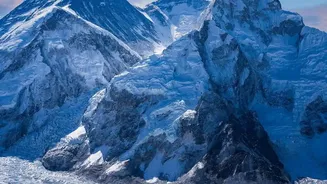
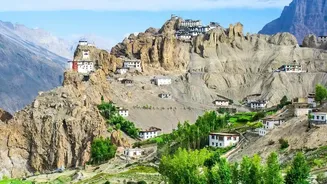
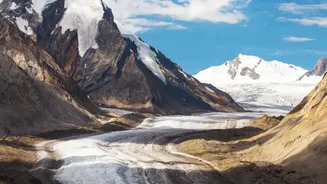
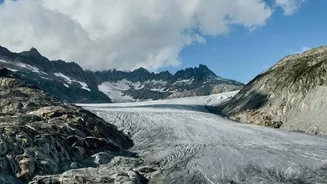
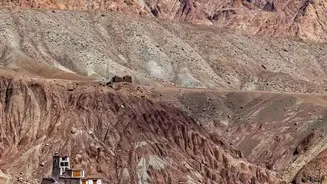
Ladakh is a land of breathtaking paradoxes. Nestled between the Himalayan and Karakoram mountain ranges, it's known as a 'cold desert'. The region receives very little rainfall, making its agricultural communities almost entirely dependent on the seasonal
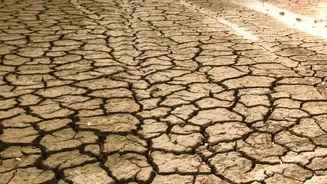
meltwater from natural glaciers. However, climate change is disrupting this ancient rhythm. Glaciers are receding, and weather patterns have become unpredictable. The most critical challenge arises during the spring planting season in April and May. While mountain streams run dry, farmers desperately need water for their barley and vegetable crops. By the time the heavy glacial melt begins in June, it is often too late, and much of the water flows away unused during the harsh winter months when farming is impossible.
The Birth of an Icy Solution
This very problem inspired Ladakhi engineer and innovator Sonam Wangchuk to seek a solution. The answer, he realized, was not to find more water, but to save the winter water that was going to waste. Wangchuk, the founder of the Students' Educational and Cultural Movement of Ladakh (SECMOL), observed that ice could survive the summer sun if it was shaded. While shading an entire glacier is impossible, he theorized that changing its shape could minimize its exposure to direct sunlight. This led to the groundbreaking idea of the Ice Stupa: a cone-shaped artificial glacier built during the winter that would melt slowly in the spring, releasing water exactly when farmers need it most. The name is a tribute to the sacred Buddhist stupas that are a common sight across Ladakh.
Engineering Artificial Glaciers
The genius of the Ice Stupa lies in its simplicity. It requires no heavy machinery, no electricity, and no complex engineering. The system uses basic physics to work. A pipe is laid to carry water from an upstream source, typically a glacial stream, at a higher altitude. As the pipe reaches the village at a lower elevation, the force of gravity creates natural water pressure. This pressure is used to spray the water into the freezing winter air through a sprinkler. As the mist falls, it freezes almost instantly, layer upon layer, gradually forming a massive cone of ice that can reach heights of over 30 meters. Because a cone has the minimum surface area for its volume, the Ice Stupa melts much more slowly than a flat sheet of ice, ensuring the stored water lasts well into the crucial planting season.
Water for the Planting Season
Since the first prototype was built in 2013, the project has transformed agriculture in several villages. A single large stupa can hold millions of litres of water, irrigating dozens of acres of farmland. This has allowed farmers to sow their crops on time, leading to better yields and even the ability to grow more water-intensive crops like potatoes and peas. The project is deeply rooted in community participation, with villagers actively involved in building and maintaining the stupas each year. This involvement has fostered a strong sense of ownership and has even led to friendly annual competitions to see which village can build the largest stupa, turning a critical adaptation strategy into a celebrated cultural event.
A Model for the Mountains
The success of the Ice Stupa project in Ladakh has garnered international acclaim, including a Rolex Award for Enterprise for Sonam Wangchuk. It is now seen as a powerful symbol of climate change adaptation. The technology is not just a local fix; it's a scalable model for other mountainous, arid regions facing similar water-related challenges due to shrinking glaciers. Projects inspired by the Ladakhi model have already been initiated in other parts of the Himalayas and even in the Swiss Alps and the Andes. The Ice Stupa demonstrates how indigenous knowledge and frugal innovation can provide powerful, community-driven solutions to some of the most pressing environmental challenges of our time.