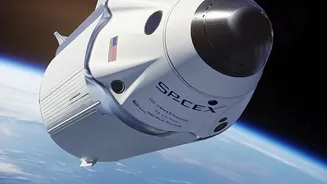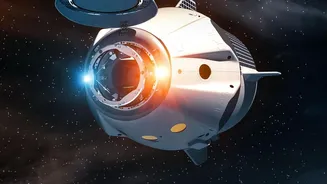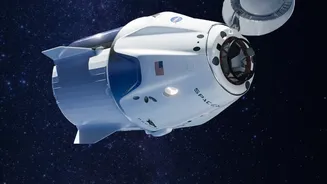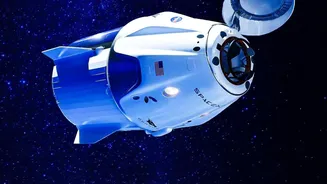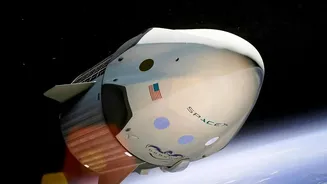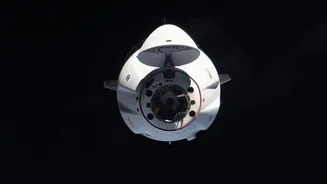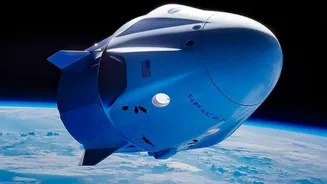





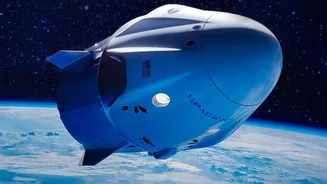
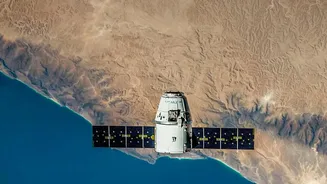
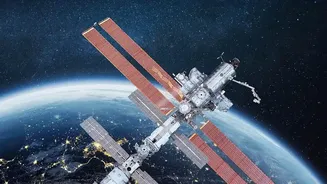
A SpaceX Dragon capsule successfully splashed down off the coast of California on November 21, marking the end of a critical logistics mission to the International Space Station. Far from being just another launch, this round trip is a cornerstone of modern
space research.
A High-Stakes Delivery Service
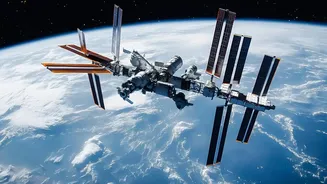
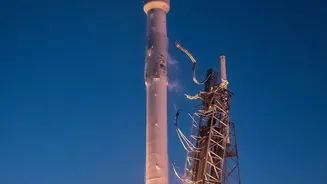
On October 13, a SpaceX Falcon 9 rocket launched the CRS-35 mission from Cape Canaveral, Florida. The designation stands for Commercial Resupply Services, a long-standing partnership where NASA contracts private companies like SpaceX to act as a courier for the International Space Station (ISS). These flights are the lifeline for astronauts in orbit, delivering everything from food and daily supplies to essential hardware and, most importantly, scientific experiments. This particular mission delivered over 2,800 kilograms of cargo to the station after docking on October 15. This included the final pair of new roll-out solar arrays (iROSAs) designed to boost the station's power supply, ensuring the orbiting lab can support future research.
The Unique Return Trip
While other cargo vehicles like Northrop Grumman's Cygnus are designed to burn up on reentry, the SpaceX Dragon is unique in its ability to return significant amounts of cargo safely back to Earth. This capability is not just a bonus; it's a game-changer for science. Many experiments conducted in the microgravity environment of the ISS require detailed analysis in ground-based laboratories. The Dragon capsule acts as a high-tech return vessel, protecting its precious contents from the extreme heat of atmospheric reentry before parachuting to a gentle splashdown. After undocking from the ISS on November 20, the capsule began its 29-hour journey home.
Precious Cargo on Board
The return manifest for CRS-35 reads like a wish list for scientists. Among the returned items were groundbreaking medical experiments. One key sample was a 3D-bioprinted blood vessel construct used to study cardiovascular disease and the aging process in space. Researchers also received frozen tumour organoids that had been treated aboard the station, which could lead to new insights for cancer treatments on Earth. Another payload contained frozen microbial samples to help scientists understand how antibiotic-resistant bacteria adapt and evolve in a space environment. By studying these samples, researchers hope to develop better ways to protect astronaut health on long-duration missions and find applications for improving life on our planet.
Splashdown and Rapid Recovery
The mission concluded at approximately 2:03 p.m. Pacific Time on November 21, when the Dragon capsule splashed down in the Pacific Ocean. A SpaceX recovery ship, the MV Shannon, was positioned to quickly retrieve the capsule from the water. The moments after splashdown are a race against time. For time-sensitive scientific samples, every minute counts. A helicopter is often used to fly the most critical experiments from the recovery ship back to land, ensuring they arrive at NASA's laboratories as quickly as possible for analysis. This rapid return process preserves the integrity of biological samples and maximizes the scientific value of the mission.