


An Underground World of Wonder
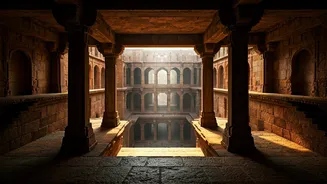
Known as baolis, vavs, or kunds, India’s stepwells are much more than just ancient reservoirs. They are subterranean architectural marvels, designed to provide communities with year-round access to water in arid regions. But their function went far beyond
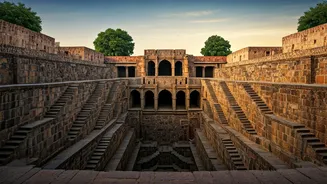
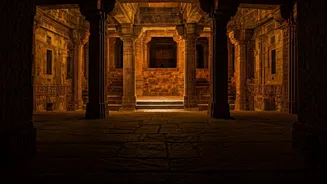
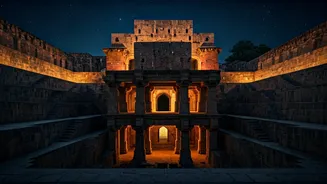
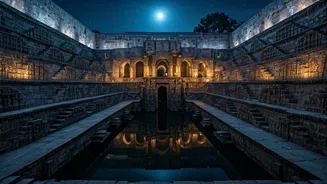
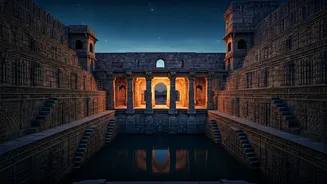
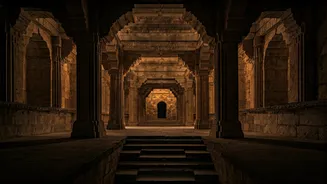
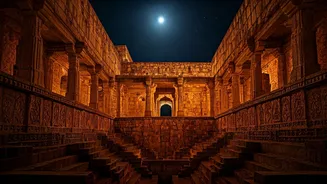
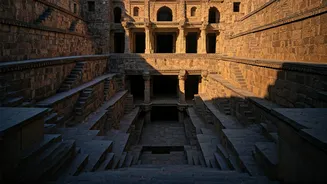
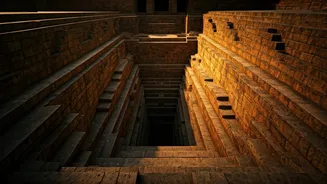
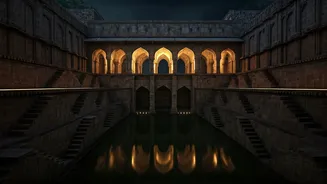
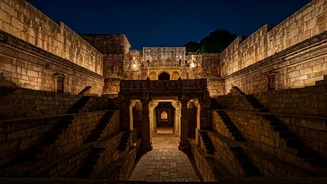
hydrology. They were cool, shaded community hubs, places for social gatherings, and often, intricately carved temples dedicated to water deities. Each stepwell is a unique gallery of stone, with repeating patterns of stairs, columns, and pavilions that create a mesmerising sense of depth and symmetry. While bustling with life during the day for centuries, it's in the quiet of the low light—at dusk, dawn, or even under a full moon—that their true architectural soul emerges, making them a photographer's dream.
Choosing Your Stage
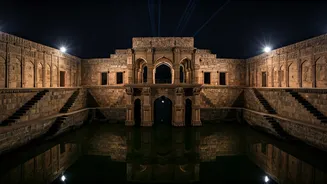
While the headline conjures images of solitary midnight explorations, the reality for most of India's protected monuments is that they close to the public at sunset. However, the 'midnight walk' is more a photographic mood than a literal schedule. The goal is to capture them in dramatic, low-light conditions. Agrasen ki Baoli in Delhi, nestled amidst modern high-rises, offers a fantastic opportunity. Its closing time around 6 PM allows photographers to capture the 'blue hour'—that magical period after sunset when the sky is a deep blue and the city lights begin to glow, creating a stunning contrast with the ancient stone. In Rajasthan, the colossal Chand Baori in Abhaneri is a masterclass in geometry. While access is restricted after hours, capturing its intricate patterns during the golden hour of late afternoon provides shadows and depth that mimic the drama of night.
The Photographer's Essential Kit
Low-light photography demands more than just a smartphone. To do justice to the scale and detail of a stepwell after dark, a few key pieces of gear are essential. First and foremost is a sturdy tripod. Long exposures, which are necessary to capture enough light, will be blurry without one. A camera with manual mode (most DSLRs or mirrorless cameras) is crucial for controlling settings like shutter speed, aperture, and ISO. For lenses, a wide-angle (e.g., 16-35mm) is perfect for capturing the grand scale of the architecture, while a prime lens (e.g., 50mm f/1.8) is great for isolating details in low light. Finally, a remote shutter release or using your camera’s self-timer will prevent camera shake when you press the shutter button, ensuring your long-exposure shots are perfectly sharp.
Techniques for Capturing the Magic
Once you're set up, the creative work begins. Start by setting your camera to a low ISO (100-400) to minimise graininess. Use a narrow aperture (f/8 to f/11) to ensure the entire structure, from the nearest step to the farthest wall, is in sharp focus. The key is a long shutter speed—anywhere from 5 to 30 seconds. This technique, called long exposure, soaks up all available ambient light, revealing details the naked eye can't see and creating silky-smooth textures if there's any water. Experiment with 'light painting' by using a small torch or your phone's flashlight to selectively illuminate specific arches, steps, or carvings during the exposure. This adds a layer of creative control and dramatic effect. Also, focus on silhouettes. Positioning yourself to frame the geometric patterns against the fading evening sky can create powerful, minimalist compositions that emphasize the structure's pure form.
Respect the Heritage
These sites are not just photo props; they are invaluable pieces of our history. Always adhere to the site's rules and opening hours. Never climb on fragile structures or cross barriers for a better shot. Be mindful of your surroundings, especially in low light, as the steps can be uneven and steep. Leave no trace behind—carry out everything you bring in. The goal is to capture the beauty of these places while ensuring they remain preserved for generations of future visitors and photographers to appreciate. A respectful photographer is a welcome one.