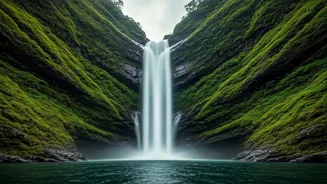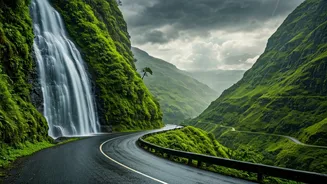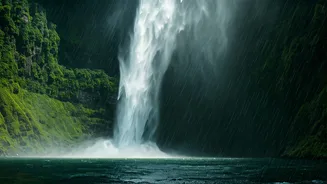



What is a Reverse Waterfall?
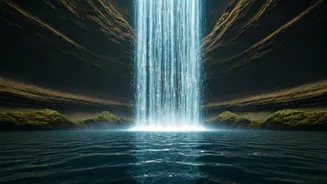
Before you start questioning the laws of physics, there's a perfectly logical—yet no less wondrous—explanation. A reverse waterfall occurs when fierce monsoon winds barrel towards a cliff face at high speed. As the wind is forced upwards over the precipice,
it becomes powerful enough to catch the water flowing down a waterfall and spray it back up into the air. The water appears to be climbing the cliff, creating a spectacular illusion of a waterfall flowing in reverse. This rare spectacle is entirely dependent on two key ingredients: a steady stream of water from rainfall and incredibly strong, sustained winds hitting a cliff at just the right angle. When these conditions align, the result is pure magic, transforming a familiar landscape into something extraordinary.
1. Naneghat, Maharashtra
Arguably the most famous spot in India to witness this phenomenon is Naneghat, nestled in the Western Ghats near Junnar. This ancient mountain pass, once a bustling trade route, becomes a top destination for nature lovers during the monsoon. As heavy rains feed the numerous cascades along the pass, the topography of the valley creates a powerful wind tunnel effect. Trekkers and tourists flock here not just for the lush greenery and historic caves, but for the breathtaking sight of water droplets being swept upwards in a fine mist, dancing against the grey monsoon sky. The drive itself is an adventure, with mist-laden roads and panoramic views that make the journey as memorable as the destination.
2. Kavleshet Point, Amboli Ghat
Located in Maharashtra's Sindhudurg district, Amboli Ghat is a biodiversity hotspot that comes alive during the rains. While the entire ghat is a feast for the eyes, Kavleshet Point offers a special treat. This viewpoint is strategically located to capture ferocious winds that sweep across the valley. Consequently, the small waterfalls that form here during the monsoon are often seen flowing upwards. Visitors describe a surreal experience of standing in a valley that seems to be 'raining' upwards, as the wind carries the water from the falls high into the air. The surrounding landscape, blanketed in a thick layer of green and shrouded in mist, adds to the ethereal atmosphere, making it a must-visit for photographers and monsoon enthusiasts.
3. Malshej Ghat, Maharashtra
A beloved monsoon getaway for residents of Mumbai and Pune, Malshej Ghat is renowned for its countless waterfalls that cascade down its rocky cliffs. During peak monsoon, when the winds are particularly strong, many of these waterfalls exhibit the reverse flow effect. Driving through Malshej during this time is an experience in itself, as you pass under waterfalls that drench your vehicle from the side and sometimes from below, as the wind plays tricks with the water's direction. While it's a popular and sometimes crowded destination, the sheer number of waterfalls increases your chances of spotting a reverse one. Its accessibility and stunning natural beauty make it a perennial favourite for a quick escape into nature's monsoon theatre.
4. Samrad, Ahmednagar
The village of Samrad, famous as the base for the thrilling Sandhan Valley trek, offers more than just adventure. This region, deep in the Sahyadri mountains, is another prime location to witness reverse waterfalls. The rugged, high-altitude terrain creates the perfect conditions for strong winds to interact with the seasonal streams flowing off the plateaus. For those undertaking treks in the area, stumbling upon a reverse waterfall is an unexpected and delightful bonus. It’s a powerful reminder of nature's raw power and beauty, often experienced in a more secluded and less crowded setting than the more popular ghats. The combination of challenging treks and stunning natural phenomena makes Samrad a unique and rewarding monsoon destination.