







Decoding the Design Revolution
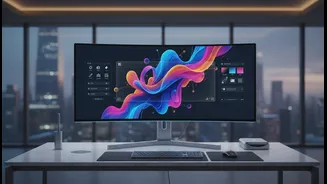
Let’s break down the jargon in that headline. A 'high-fidelity UI layout' is essentially a pixel-perfect, detailed blueprint of a digital product. It's not just a rough sketch; it includes the final colours, fonts, icons, and spacing, showing exactly
how the app or website will look and feel before any code is written. The term 'rendered instantly' speaks to the incredible speed of modern AI tools. While not literally instantaneous, platforms can now generate these complex designs in seconds or minutes from simple prompts, a process that once took designers hours or days. 'Visual AI Blocks' is a conceptual term for the technology that makes this possible. Think of them as intelligent, pre-trained AI components that understand design principles. The AI doesn't just stick boxes on a screen; it comprehends context, layout, and aesthetics to assemble a coherent and functional design.
The Rise of the 'Vibe Coder'
So, who is using these tools? The headline calls them 'Vibe Coders,' a term that points to an emerging role in the tech industry. This isn't your traditional front-end developer who writes lines of HTML, CSS, and JavaScript. Instead, a Vibe Coder is a creative professional—perhaps a product manager, a designer, or an entrepreneur—who directs the AI. They focus on the 'what' and the 'why': the target audience, the user journey, and the overall 'vibe' or aesthetic. They might provide the AI with a text prompt like, 'Generate a login screen for a yoga app that feels serene and minimalist,' or upload an inspiring image. The AI then handles the 'how,' translating that vibe into a functional design and even production-ready code. This person orchestrates the technology, guiding it with human-centric vision rather than getting lost in the weeds of syntax.
From Idea to Interface in Minutes
The workflow is becoming remarkably streamlined. A user can start with a simple text description, a rough hand-drawn sketch, or even a detailed product requirements document. AI tools like UX Pilot, Figma AI, and Visily can interpret these inputs to generate polished, multi-screen prototypes. For example, you could upload a screenshot of an app you admire and ask the AI to create a new design with a similar layout but a different colour scheme. The AI analyzes the reference, extracts the style, and generates a new, editable interface. From there, the creator can refine the design using natural language commands, such as 'make this button blue' or 'add a section for user testimonials'. Once finalized, many of these platforms can export the design directly into tools like Figma for further tweaking or even generate the underlying React or HTML/CSS code, bridging the gap between design and development.
Is This the End for Front-End Developers?
This rapid automation naturally raises concerns about the future of traditional front-end development roles. If an AI can generate a perfect UI from a text prompt, what's left for developers to do? Industry experts suggest it's not a replacement but an evolution. While AI is excellent at handling repetitive, boilerplate tasks—like creating forms, buttons, and standard layouts—it still struggles with complex logic, security, scalability, and nuanced user experience problems. The consensus is that AI will handle the mundane, freeing up senior developers to focus on high-level architecture, performance optimization, and solving unique challenges that require human judgment. However, the bar for entry-level roles is rising; simply knowing a framework like React is no longer enough. The demand is shifting towards developers who can effectively use AI as a tool to multiply their productivity.
The Road Ahead for AI-Powered Design
The technology is still evolving. While current tools are powerful, they are most effective at creating interfaces based on established design patterns. Truly novel or artistically complex layouts can still pose a challenge. The future lies in creating AI that not only builds but also understands user psychology. Imagine an AI that suggests design improvements based on accessibility standards, predicts user drop-off points in a flow, or A/B tests different layouts automatically. This new generation of AI won't just be a tool for execution; it will become a collaborative partner in the creative process. It represents a fundamental shift from manually crafting interfaces to orchestrating intelligent systems that can design, test, and even refine themselves, leading to faster innovation and more user-centric products.