




Today, on World Food Day, India faces a stark paradox: millions remain undernourished while a staggering amount of food never reaches a plate. This crisis of waste is more than an economic and moral failure; it is a hidden driver of climate change.
A Crisis Measured in Crores and Tonnes
The
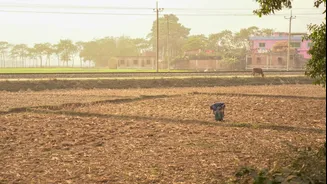
scale of India's food loss is difficult to comprehend. According to reports from the United Nations Environment Programme (UNEP) and other agencies, India loses and wastes a monumental volume of food each year. Post-harvest losses alone are estimated at nearly 69 million metric tonnes annually, with an economic cost of around ₹1.53 lakh crore. Add to that the food wasted at the household, retail, and service levels—an additional 78.2 million tonnes—and the picture becomes alarmingly clear. This happens across the supply chain: from inadequate storage and refrigerated transport that lets produce spoil, to cosmetic filtering where perfectly edible items are rejected for their appearance, and finally, in our own homes. While India is one of the world's largest agricultural producers, up to 40% of some crops are lost before they can be consumed. This is not just a matter of inefficiency; it represents a colossal waste of the natural resources used in production and a direct threat to the livelihoods of farmers.
The Undeniable Link to Climate Change
When food is thrown away, it doesn't just disappear. The vast majority ends up in landfills, where it decomposes without oxygen. This anaerobic process releases methane, a greenhouse gas that is over 80 times more potent than carbon dioxide in warming the planet over a 20-year period. Globally, food loss and waste are responsible for an estimated 8-10% of all greenhouse gas emissions. If food waste were a country, it would be the third-largest emitter after China and the United States. In India, where over half of municipal solid waste is organic, unmanaged dumpsites are significant sources of methane. Beyond emissions from landfills, wasted food carries the massive carbon footprint of its entire production journey. Think of the diesel used for tractors and transport, the electricity for cold storage, and the immense quantities of water needed for irrigation—all expended for nothing. For example, growing a single kilogram of rice can require up to 5,000 litres of water. Wasting food is, therefore, wasting all the precious resources that went into growing it, further straining our environment.
How Saving Food Builds Climate Resilience
This is where the connection to climate resilience becomes critical. A resilient food system is one that can withstand shocks, like the increasingly frequent and intense heatwaves, floods, and droughts that climate change brings to India. By reducing food loss, we build this resilience in several key ways. First, a more efficient system places less pressure on our natural resources. Saving food means saving the water, land, and energy that would have been used to produce it, making those resources available to cope with climate-stressed conditions. Second, it enhances food security. When extreme weather events disrupt harvests and supply chains, a system with less inherent waste has a larger buffer of available food, stabilising prices and ensuring people can still access nourishment. For a country where millions are food insecure, preventing loss is one of the most direct ways to boost food availability without clearing more land for agriculture. It directly supports small farmers, who make up the majority of India's agricultural holders and whose incomes are directly impacted by post-harvest losses.
Innovating for a Nourished Tomorrow
The theme for World Food Day 2026, 'Innovate today. Nourish tomorrow,' perfectly captures the path forward. The solutions lie in a combination of policy, infrastructure, and technology. The government has already initiated schemes for Mega Food Parks and strengthening cold chain infrastructure to modernise the supply chain. But more is needed. This includes expanding access to affordable credit for farmers and small businesses to invest in better storage and climate-resilient technologies. Technology offers promising tools, from apps that connect businesses with surplus food to distribution agencies, to advanced traceability systems that monitor produce from farm to fork, reducing spoilage. Initiatives like the FSSAI's 'Save Food, Share Food' and the creation of the Indian Food Sharing Alliance are crucial steps in creating a circular economy where surplus food feeds people, not landfills.