



For Flavour Without Fire: The Mild Bunch
If you prefer your dishes rich in flavour rather than heat, mild peppers are your best friend. The most common is the bell pepper, or Shimla Mirch. Available in green, red, and yellow, they offer zero heat and a sweet, crunchy texture. Red bell peppers are the sweetest,
while green ones have a slightly more savoury, sometimes spicy, note. They are incredibly versatile, perfect for stuffing (Bharwa Simla Mirch), stir-frying in dishes like Aloo Shimla Mirch, or adding bulk and colour to a paneer kadai. Another excellent mild option is the Bhavnagri chilli. These large, light green peppers have a very gentle heat and are famously used for making stuffed mirchi pakoras or tangy pickles. Their thicker walls hold up well to being filled with spiced potatoes, paneer, or gram flour mixtures and then fried or baked.
The Colour and Character Crew: Medium Heat
This is where some of India’s most iconic chillies reside, prized as much for their brilliant colour as for their balanced heat. The undisputed star is the Kashmiri chilli. With a low Scoville Heat Unit (SHU) rating of 1,000-2,000, it's known for imparting a vibrant, deep red colour to dishes without making them overwhelmingly spicy. It’s the secret behind the appealing hue of dishes like Rogan Josh and many tandoori marinades. A close cousin, and often used as a substitute, is the Byadgi chilli from Karnataka. Byadgi chillies are slightly hotter and have a unique, smoky flavour, making them a staple in South Indian cooking for sambar and rasam. Many commercially available 'Kashmiri' chilli powders are actually Byadgi, as they provide excellent colour at a more accessible price point. The popular green chilli, often a Jwala variety, also falls into a medium to hot category, providing the fresh, sharp heat essential for tadkas, chutneys, and daily sabzis.
For the Brave: The Truly Hot Peppers
For those who believe a meal isn't complete without a fiery kick, India offers some potent options. The Guntur chilli from Andhra Pradesh is a workhorse in this category. Guntur Sannam, a popular variety, has a significant pungency (ranging from 30,000 to over 100,000 SHU) and is a key ingredient in the famously spicy Andhra cuisine, used in hot curries, pickles, and powders. The Kanthari chilli, or bird’s eye chilli, found in Kerala and other parts of South India, is another small but mighty contender. It delivers a sharp, intense burst of heat and is often used in chutneys or pickles. At the far end of the spectrum is the legendary Bhut Jolokia, or Ghost Pepper, from Northeast India. Once considered the world's hottest pepper, it has an intense, lingering heat with a subtly fruity, smoky flavour. A tiny amount is enough to flavour an entire dish, and it's typically used with great care in chutneys, pickles, or infused oils.
Fresh vs. Dried: A Note on Form
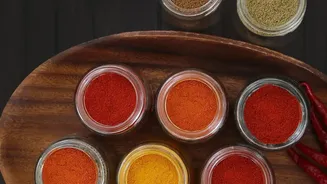
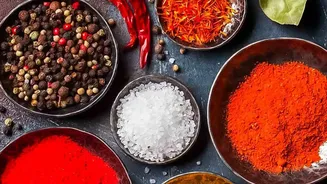
How you use a pepper also changes its impact. Fresh green chillies, like the Jwala, offer a bright, immediate heat that's perfect for garnishing or adding to a quick stir-fry. When chillies are dried, their flavour concentrates and often becomes deeper and smokier. Whole dried red chillies, like Guntur or Byadgi, are essential for 'tadka'—the technique of tempering spices in hot oil to release their aromatic compounds before adding them to a dish. This method infuses the entire meal with a layered warmth and flavour. Chilli powder, the most common form, offers convenience and consistent heat. Kashmiri powder provides colour, while a standard hot chilli powder (often made from Guntur or a similar variety) provides the spice. For a well-rounded pantry, having a mix of fresh green chillies, whole dried red chillies, and at least two types of chilli powder (one for colour, one for heat) is ideal.