




More Than Just Wallpaper
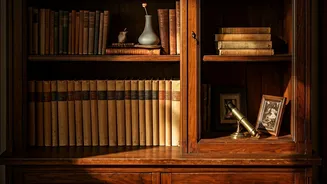
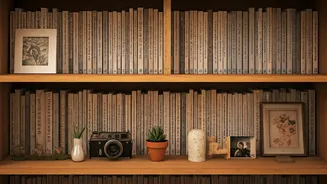
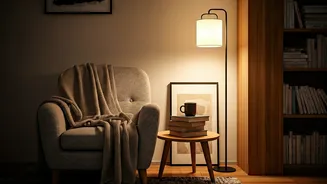
Walk into a home where books line the walls, stack on coffee tables, and colonise forgotten corners, and you feel an immediate sense of personality. This isn't the generic, soulless aesthetic of a hotel lobby or a staged catalogue photo. This is a space
with a story. While trends like ‘bookshelf wealth’ have recently given a name to this look, the appeal is timeless. Unlike a statement wall or a trendy vase, a book collection is decor with a soul. Each spine is a potential portal to another world, another idea, another life. It’s an intellectual and emotional wallpaper that tells you something real about the person who lives there, long before you’ve even spoken to them.
The Psychology of Comfort
Why do these spaces feel so comforting? In a world that often demands perfection and order, a home filled with books feels wonderfully human. It embraces a kind of organised chaos that signals an active, curious mind at work. There's even a Japanese term, ‘tsundoku,’ which describes the act of acquiring reading materials but letting them pile up in one's home without reading them—a celebration of the potential for knowledge and the love of the book as an object. Being surrounded by books is being surrounded by possibility. It’s a physical manifestation of a rich inner life, a comforting reminder that there is always more to learn, more to explore, and more stories to get lost in. This kind of ‘clutter’ isn't stressful; it's stimulating.
A Living Personal Archive
A thoughtfully curated music playlist can tell you about someone's taste, but a book collection tells you about their entire journey. You can trace a person’s life through their shelves. There’s the well-worn copy of a childhood favourite, the university textbook with frantic scribbles in the margins, the travel guide from a life-changing trip, the novel that helped them through a difficult time, and the collection of poetry they turn to for inspiration. A bookshelf is not a static display; it’s a living, evolving archive of a person's intellectual and emotional history. It showcases their passions, their phases, their ambitions, and their heartbreaks. It’s the most honest autobiography a person can write without ever putting pen to paper.
An Invitation to Connect
A book-drenched home is also an inherently social one. While reading is a solitary act, a collection of books is a public invitation to connect. When guests enter, their eyes inevitably wander to the shelves. They might spot a favourite author, a book they’ve been meaning to read, or something wonderfully obscure that sparks a question. “Oh, you’ve read this? What did you think?” is one of the best conversation starters in the world. It’s a way to bypass small talk and dive straight into a meaningful exchange of ideas and experiences. Sharing a book is sharing a piece of yourself, and a home full of them creates endless opportunities for genuine human connection, turning a living room into a salon of sorts.
The Anti-Algorithm Aesthetic
In our hyper-digital age, our tastes are constantly being shaped and served back to us by algorithms. Our streaming services suggest what to watch, our music apps curate our playlists, and our social feeds show us what they think we want to see. A physical book collection is a powerful act of defiance against this passive consumption. It’s a collection built over time through personal discovery—from browsing in a dusty bookshop, receiving a gift from a friend, or taking a chance on an unknown author. It represents a conscious, personal, and sometimes delightfully random curation of one’s own mind. It’s a declaration that your identity is not for sale and cannot be predicted by a machine. It’s authentic, tangible, and unapologetically you.