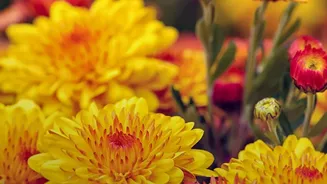








The Festive Marigold (Genda)
The marigold, or 'Genda', is arguably the king of the Indian garden, especially in October. Its vibrant shades of yellow and orange are synonymous with festivals like Dussehra and Diwali. Beyond their beauty, marigolds are incredibly easy to grow and even
help deter pests in your garden. For best results, choose a spot that receives at least six to eight hours of direct sunlight. They are not fussy about soil but thrive in a well-draining mix; a simple combination of garden soil and compost is perfect. You can sow seeds directly or plant saplings from a local nursery. Water them regularly, but let the top inch of soil dry out between waterings to prevent root rot. With minimal effort, you will have a profusion of blooms that will last through the winter.
Elegant Chrysanthemums (Guldavari)
Chrysanthemums, known as 'Guldavari', bring a touch of elegance to any balcony or garden with their dense, multi-petalled blooms in shades of pink, white, yellow, and red. They are heavy feeders and flourish in the cooler temperatures of October. For lush, bushy plants, providing 5-6 hours of daily sunlight is crucial, with morning sun being ideal. Plant them in pots at least ten inches wide to give their roots ample space. The right soil mix is key; it must be well-draining. A mixture of garden soil, compost, and a bit of sand or cocopeat works wonders. Water when the top inch of soil feels dry, taking care to water at the base of the plant to keep the leaves dry and prevent fungal issues. For more flowers, you can pinch off the top new growths when the plant is young to encourage it to grow bushier.
Nutritious Organic Winter Spinach (Palak)
There's nothing more rewarding than harvesting your own fresh, chemical-free greens. October is the ideal time to sow spinach ('Palak') for a continuous winter supply. Growing it organically at home is straightforward. Spinach has shallow roots, so a pot that is six to eight inches deep and wide is sufficient. Ensure the pot has drainage holes. The perfect soil is a light, fertile mix; combine garden soil with a generous amount of organic compost or well-rotted cow manure to give the plants the nutrients they need. Sow the seeds about half an inch deep and space them a few inches apart. Keep the soil consistently moist but not waterlogged to encourage germination, which typically takes about a week. Spinach prefers partial sun, about four to six hours a day, so a spot with morning sun and afternoon shade is perfect. In just a few weeks, you can start harvesting the outer leaves, and the plant will continue to produce more.