





From Science Fiction to Reality
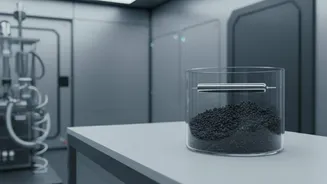
Scientists at NASA's Johnson Space Center in Houston have successfully extracted oxygen from simulated lunar soil, or regolith, in a vacuum environment that mimics the conditions on the Moon. The project, known as the Carbothermal Reduction Demonstration
(CaRD), represents a massive leap forward for the field of in-situ resource utilization (ISRU), which is the science of using local materials to sustain missions in space. While initial tests in 2023 proved the concept in a vacuum for the first time, more recent progress in early 2026 successfully integrated a solar concentrator, using focused light to power the reaction. This confirms that future lunar facilities could one day harness sunlight to 'cook' the very ground they stand on to produce breathable air, a cornerstone for the Artemis program's goal of a sustainable human presence on the Moon.
How to Make Air From a Rock
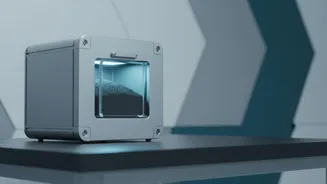
The Moon may look like a barren, lifeless world, but its soil is surprisingly rich in a vital element: oxygen. Lunar regolith is about 45% oxygen by weight, but it's chemically locked inside oxide minerals. The challenge is breaking those strong chemical bonds. The CaRD experiment does this through carbothermal reduction, a process used on Earth for decades in industrial applications like making steel. In a specialized reactor, a high-powered laser simulating concentrated sunlight heats the regolith to very high temperatures, causing it to melt. This intense heat makes the oxygen break away from the minerals and form carbon monoxide (CO), which was detected by a highly sensitive device called the Mass Spectrometer Observing Lunar Operations (MSOLO). That carbon monoxide gas can then be collected and easily split into breathable oxygen and reusable carbon.
The Tyranny of the Rocket Equation
So, why go to all this trouble instead of just packing more oxygen tanks? The answer lies in the brutal economics of space travel. Every kilogram of mass launched from Earth is incredibly expensive. Relying entirely on supplies from home makes long-term missions prohibitively costly and complex. This is where ISRU becomes a game-changer. Oxygen isn't just for breathing; it's also a primary component of rocket propellant. Being able to manufacture both on the Moon would drastically reduce the amount of mass that needs to escape Earth's gravity. It means lunar landers could refuel for return trips or for journeys to other destinations, like Mars. According to NASA, this capability will enable the affordable establishment of extraterrestrial exploration by minimizing dependency on Earth.
A Lunar Industrial Revolution
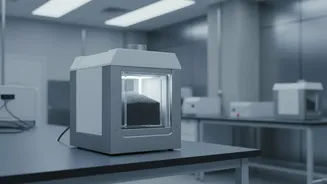
The benefits of processing lunar regolith don't stop with oxygen. After the oxygen is extracted, what's left behind is a mixture of molten metals. This metallic slag contains iron, aluminum, and silicon, which could become the raw materials for a nascent lunar industry. Future missions could potentially use this material in 3D printers to manufacture tools, spare parts, or even construction elements for building habitats. Instead of launching every single screw, bracket, and beam from Earth, astronauts could print them on demand using resources mined right at the lunar base. This approach not only saves on launch costs but also gives missions an unprecedented level of self-sufficiency and flexibility, turning a dusty liability into a valuable resource.
From Houston to the Moon
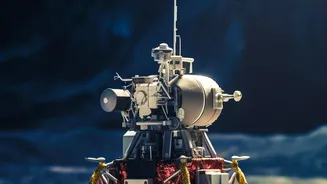
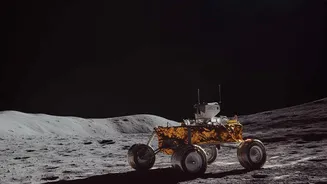
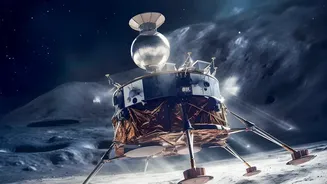
The successful lab demonstrations have advanced the CaRD technology to what NASA calls a 'Technical Readiness Level 6'. This means the prototype is fully functional and has been proven in a relevant environment, making it ready for the next logical step: testing it in space. The goal is to fly a pilot plant on a future lunar mission, possibly aboard one of the commercial landers participating in the Commercial Lunar Payload Services (CLPS) program. Such a mission would demonstrate the end-to-end process on the lunar surface, from scooping regolith to producing pure oxygen. Proving this technology on the Moon will be the final hurdle before engineers can scale it up to build larger plants capable of supporting a permanent research outpost and, eventually, a bustling lunar economy.