



Why Bodyweight Training Works
Before diving into the exercises, it’s worth understanding why this method is so effective. Bodyweight training, also known as calisthenics, uses your own mass as resistance to build strength, endurance, and flexibility. These movements are often functional,
meaning they mimic everyday actions like pushing, pulling, and squatting, which can improve your real-world strength and mobility. Research has shown that bodyweight exercises can produce significant improvements in muscle strength and body composition, comparable to training with weights. They engage multiple muscle groups at once, improve core stability, and support good posture. The best part? It's completely free and can be done anywhere, anytime.
The Foundation: Bodyweight Squats
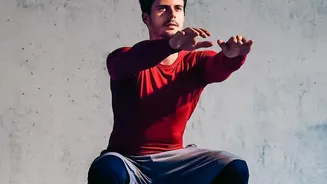
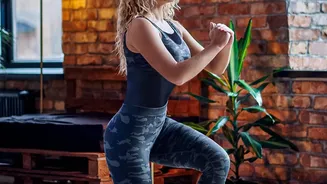
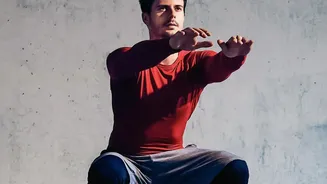
The squat is one of the most fundamental human movements and a powerhouse exercise for your lower body. It primarily targets your quadriceps, hamstrings, and glutes. To perform a correct bodyweight squat, stand with your feet slightly wider than your hips and your toes pointed slightly outward. Keeping your chest up and your back straight, lower your hips as if you are sitting in a chair. Aim to get your thighs parallel to the floor, then drive through your heels to return to the standing position. For maximum results, focus on controlled movement, especially during the lowering phase.
Upper Body Power: The Push-Up
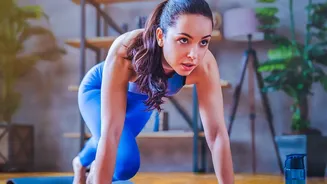
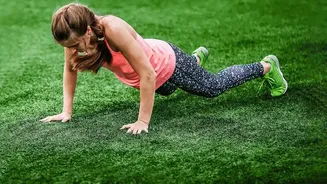
The push-up is the gold standard for upper-body strength, working your chest, shoulders, triceps, and core all at once. Start in a high plank position with your hands directly under your shoulders. Your body should form a straight line from your head to your heels. Lower your body until your chest is close to the floor, keeping your elbows tucked slightly toward your body. Press back up to the starting position. If a full push-up is too challenging, you can modify it by placing your knees on the ground or performing them with your hands on an elevated surface like a sturdy table or chair.
Core Stability: The Plank
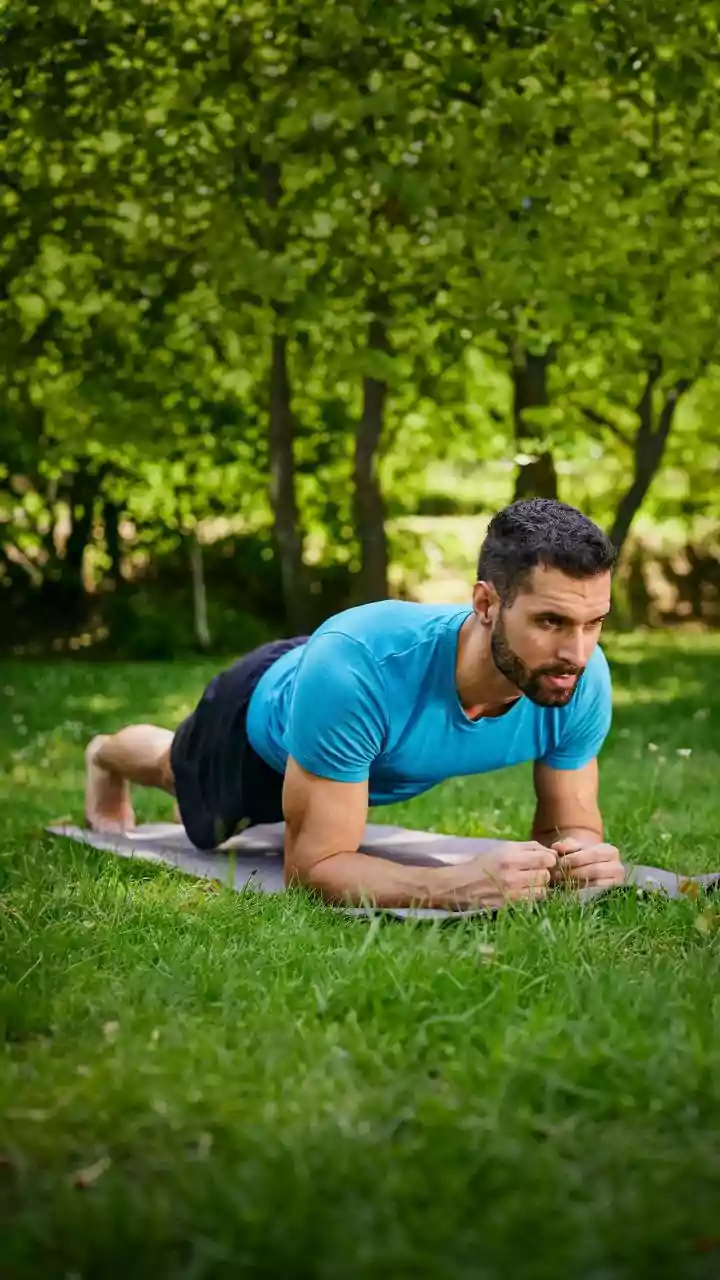
A strong core is the bedrock of a healthy body, and the plank is one of the best exercises to build it. It strengthens the deep stabilizing muscles of your abdomen and back, protecting your spine. To perform a plank, get into a position similar to the top of a push-up, either on your hands or forearms. Engage your core, glutes, and quads to keep your body in a perfectly straight line. Avoid letting your hips sag or rise too high. Hold this position for a set amount of time, starting with 20-30 seconds and gradually increasing as you get stronger. To make it harder, you can try variations like lifting one leg at a time.
Leg Strength and Balance: Reverse Lunges
Lunges are excellent for building unilateral leg strength, meaning they work one leg at a time. This helps correct muscle imbalances and improves your balance. Reverse lunges are often recommended for beginners as they can be easier on the knees. From a standing position, take a controlled step backward with one foot. Lower both knees to a 90-degree angle, ensuring your front knee stays behind your toes and your back knee hovers just above the ground. Push off your back foot to return to the start. Alternate legs with each repetition.
Cardio Burst: The Burpee
For a move that combines strength and cardiovascular endurance, nothing beats the burpee. It's a full-body exercise that elevates your heart rate quickly. From a standing position, drop into a squat and place your hands on the floor. Jump your feet back into a plank position. For an added challenge, perform a push-up. Then, jump your feet forward toward your hands and explode up into a jump. This move is intense, so focus on maintaining good form. A simpler variation is the 'sprawl', where you skip the push-up and the jump at the end.
Putting It All Together: Your Routine
To create a full-body workout, combine these exercises into a circuit. Perform each exercise for 45-60 seconds, or for a set number of repetitions (e.g., 10-15 reps), with minimal rest in between. After completing one full round of all the exercises, rest for 1-2 minutes. Aim to complete 3 to 4 rounds in total. For a balanced week, you could perform this routine three times a week on non-consecutive days, allowing your muscles time to recover and grow. Remember, consistency is the true key to achieving maximum results.