







A New Era in Indian Aviation
The year 2026 marks an inflection point for Indian aviation, driven by a perfect storm of factors. Indian carriers, led by a resurgent Air India and an ambitious IndiGo, are inducting new, ultra-long-range aircraft like the Airbus A350 and Boeing 787
Dreamliner. These planes are capable of connecting Indian cities with destinations in North America, Europe, and Australia without a stopover. This fleet modernization coincides with rising passenger demand and a government strategy to develop India into a global aviation hub, challenging the dominance of Middle Eastern transit points. The result is a significant expansion of non-stop routes that are poised to redefine international travel for millions of Indians.
The Ultra Long-Haul Routes Taking Off
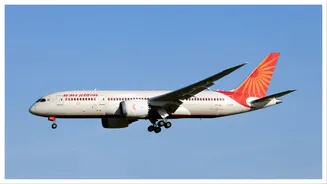
North America and Australia are the biggest beneficiaries of this new wave of connectivity. Air India has been restoring and enhancing its non-stop services to the United States. For instance, flights from Delhi and Mumbai to New York (JFK) and Newark (EWR) are now truly non-stop, after a period of requiring a refuelling stop in Europe due to airspace restrictions. This move alone cuts travel time by up to five hours. Similarly, direct flights to Australia are a major focus. Air India operates non-stop services from Delhi to both Sydney and Melbourne, while Qantas flies directly from Bengaluru to Sydney. These routes are operated by modern aircraft like the Boeing 787, making the long journey more comfortable.
How Much Time Will You Really Save?
The time savings on these new direct routes are substantial. A journey that previously involved a layover can now be completed in a single, seamless stretch. For example, a typical one-stop flight from Delhi to New York, with a connection in the Middle East or Europe, could easily take 19 to 22 hours. The direct Air India flight now covers this distance in approximately 17 hours, a saving of up to five hours. The advantage is even more pronounced on routes to Australia. A direct flight from Delhi to Sydney takes around 12 hours and 45 minutes. A comparable one-stop flight often adds another four to eight hours to the journey, spent waiting at a connecting airport in Singapore or Kuala Lumpur.
Airlines Driving the Direct Flight Boom
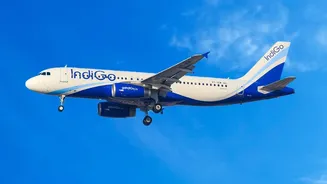
Air India, under its new ownership, is at the forefront of this expansion. The airline is not only launching new routes but also significantly upgrading its cabin products, introducing new First Class suites and Premium Economy on key international flights to destinations like Melbourne and London. This is part of a broader strategy to compete with top-tier global carriers. Meanwhile, IndiGo, India's largest domestic airline, is also making a determined push into long-haul international travel. While its initial foray using leased wide-body aircraft faced some challenges in 2026, the airline has firm orders for Airbus A350 aircraft, with deliveries expected to begin in 2028, signalling a long-term commitment to connecting India directly with the world.
More Than Just Time: The Hidden Benefits
While shaving hours off a journey is the most obvious advantage, the benefits of direct flights extend further. Non-stop travel significantly reduces the stress and fatigue associated with long trips. There's no frantic rush to a connecting gate, no middle-of-the-night layover, and a dramatically lower risk of your checked baggage going astray. For business travellers, this means arriving fresher and more prepared for meetings. For leisure travellers and families, it means starting your holiday the moment you board, not after a tiring multi-leg journey. The enhanced comfort of new aircraft, with better cabin air pressure, humidity, and quieter engines, also contributes to reducing jet lag and improving the overall travel experience.