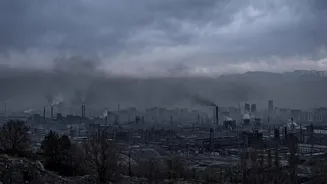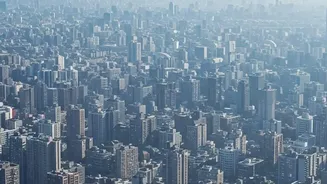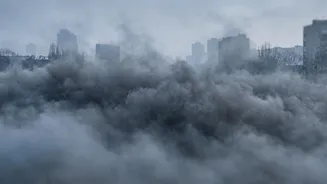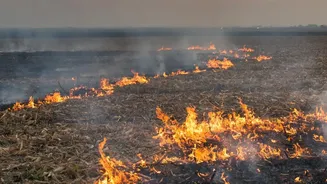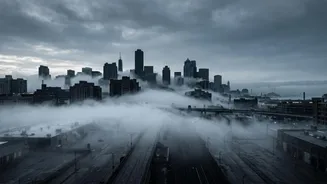





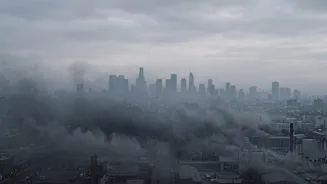
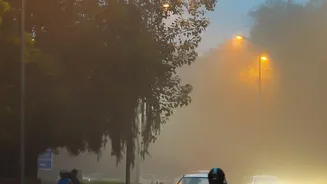
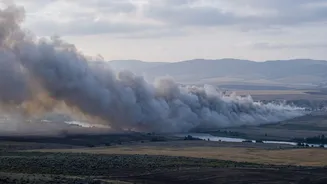
Every winter, a familiar grey haze descends upon North India. While stubble burning in neighbouring states is the visible culprit, the real reason the smoke lingers is a powerful atmospheric phenomenon known as a temperature inversion.
The Atmosphere’s Usual Cleaning Service
On a typical day,
the air closest to the ground is the warmest. This is because the sun heats the earth, which in turn warms the air directly above it. Warm air is less dense than cool air, so it naturally rises. As it rises, it carries pollutants—like smoke, dust, and vehicle emissions—up with it, dispersing them into the higher atmosphere. This constant vertical movement acts like a natural ventilation system, cleaning the air we breathe at ground level. This process, called convection, is why on a normal day, smoke from a chimney is seen rising high into the sky and scattering.
When the Air Puts a Lid On It
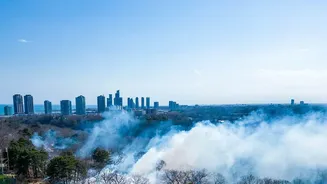
A temperature inversion flips this entire process on its head. During an inversion, a layer of cooler, denser air gets trapped at the surface beneath a layer of warmer, less dense air. This warmer air acts like an atmospheric 'lid' or 'cap', preventing the cooler air below from rising. With the natural vertical mixing of air blocked, there is no escape for anything trapped in that bottom layer. This creates a stable, stagnant pocket of air that can linger for hours or even days, especially when winds are calm.
Why Winter Creates This Atmospheric Trap
Temperature inversions are particularly common during North Indian winters. The phenomenon is driven by the stark temperature changes between day and night. On clear winter nights, the ground loses heat rapidly, significantly cooling the air just above it. The air higher up, however, doesn't cool as quickly and remains relatively warm. This creates the perfect conditions for a strong ground-level inversion. The low angle of the winter sun means the ground doesn't warm up enough during the day to break this inversion, allowing it to persist. Calm winds, also common during this season, mean there's no horizontal force to blow the trapped air away.
How Stubble Smoke Gets Trapped
This is where stubble burning becomes a critical part of the air quality crisis. Farmers in Punjab, Haryana, and Uttar Pradesh often burn crop residue between October and November to quickly clear their fields for the next sowing season. The immense amount of smoke generated is released directly into this trapped, cold layer of air near the ground. Because of the inversion 'lid', the smoke cannot rise and disperse. Instead, it accumulates at breathing level, getting more and more concentrated with each passing hour. This is why smoke from fires hundreds of kilometres away can create a thick, hazardous smog over cities like Delhi.
A Toxic Mix Held at Breathing Level
The trapped smoke is far more than just an inconvenience that reduces visibility. It's a dangerous cocktail of pollutants. The fine particulate matter, especially PM2.5, is small enough to penetrate deep into the lungs and even enter the bloodstream. These particles, along with gases like carbon monoxide and nitrogen oxides, are all held at ground level by the inversion. This concentration dramatically increases health risks, leading to coughing, throat irritation, and shortness of breath. It severely impacts those with existing conditions like asthma and heart disease and poses a significant danger to children and the elderly.