


The Mousse Myth
For decades, chocolate mousse has been synonymous with culinary complexity. Traditional French recipes often call for separating eggs, carefully melting chocolate, whipping egg whites to perfect peaks, and folding everything together without deflating
the precious air you just incorporated. It’s a delicate dance that can easily go wrong, resulting in a grainy texture or a soupy mess. This perception has led many home cooks to believe that great mousse is best left to pastry chefs or reserved for special occasions that warrant the risk. But what if we told you that the core of what makes a mousse a mousse—the emulsification of fat and water to trap air—can be achieved with shocking simplicity? The truth is, all the essential components for a creamy, stable mousse are already present in a good bar of chocolate. You don't need the eggs or the heavy cream. You just need to unlock the chocolate’s hidden potential.
The Only Ingredient That Matters
When a recipe has so few ingredients, the quality of each one becomes paramount. In this case, the star, hero, and entire supporting cast is the chocolate. This is not the time for compound chocolate or old, dusty baking chips. You need a good quality eating chocolate, preferably one with a cacao content between 60% and 72%. Why this specific range? Chocolate in this category has the ideal ratio of cocoa solids to cocoa butter. The cocoa butter provides the fat needed for a creamy texture, while the cocoa solids deliver that deep, complex flavour. A chocolate with a lower cacao percentage might be too sweet and contain extra stabilisers that interfere with the texture. One with a much higher percentage (85%+) can be too bitter and may not have enough fat to create a stable emulsion, potentially leading to a grainy result. Choose a bar you would happily eat on its own.
The Two-Ingredient Recipe
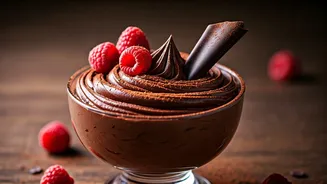
This method, popularised by French physical chemist Hervé This, is a testament to the magic of food science. It feels like a trick, but it’s pure chemistry. **Ingredients:** - 200 grams good-quality dark chocolate (60-72% cacao), finely chopped - 180 ml water - Optional: 1-2 tablespoons of sugar if you prefer a sweeter mousse, or a teaspoon of vanilla extract for flavour. **Equipment:** - A medium saucepan - A large bowl for the ice bath - A medium heatproof bowl that can sit inside the large bowl - A whisk
Your Step-by-Step Guide
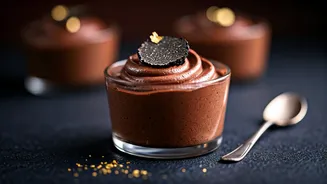
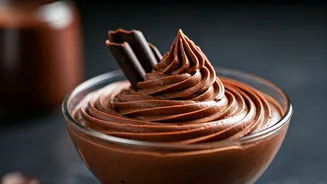
1. **Prepare the Ice Bath:** Fill your large bowl about halfway with cold water and a generous amount of ice. Set it aside. This is the most crucial part of the process, so have it ready before you start with the chocolate. 2. **Melt the Chocolate:** Place the finely chopped chocolate and the water (and sugar, if using) into the saucepan. Heat over medium-low heat, stirring constantly, until the chocolate is completely melted and the mixture is smooth and glossy. Don't let it boil. You're simply creating a warm chocolate-water solution. 3. **The Magic Whisk:** Pour the warm chocolate mixture into your medium heatproof bowl. Now, place this bowl directly into the ice bath you prepared. Begin whisking immediately and continuously. At first, it will look thin and unpromising. Don’t panic! As the mixture chills, the cocoa butter will start to crystallise and solidify, trapping the water and air from your whisking. In 1-3 minutes of vigorous whisking, you will see it transform. It will suddenly thicken to the consistency of a thick, creamy pudding. 4. **Stop at the Right Time:** The moment it becomes thick and holds soft peaks, stop whisking and remove it from the ice bath. If you whisk for too long, it can become grainy and hard. Immediately spoon the mousse into serving glasses or bowls. It’s ready to eat right away, or you can chill it for 30 minutes for a firmer set.
Troubleshooting and Variations
This recipe is simple, but technique matters. Here’s how to fix common issues and get creative: - **My mousse is grainy:** You likely over-whisked it or chilled it too much. Don’t throw it out! Simply return the mixture to the saucepan, gently melt it down again over low heat until smooth, and repeat the ice bath and whisking process. This time, be sure to stop as soon as it thickens. - **My mousse is too runny:** It just needs more whisking or more chilling. Ensure your ice bath is very cold and keep whisking. The transformation from liquid to mousse is sudden, so be patient for a minute or two. - **Flavour Variations:** Once you've mastered the basic technique, feel free to experiment. Add a pinch of sea salt to the saucepan with the chocolate. Bloom a teaspoon of instant espresso powder in the water for a mocha flavour. Or, once whisked, stir in a tablespoon of your favourite liqueur like Grand Marnier or a good rum.