





Understanding Cropland Degradation
Cropland degradation is the persistent decline in the quality and productive capacity of the soil we rely on for agriculture. It’s not a single event, but a slow-motion crisis driven by both human activities and natural forces. Key drivers in India include
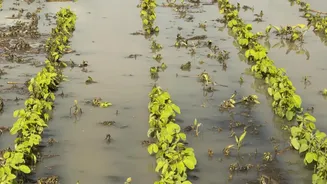
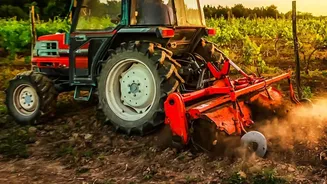
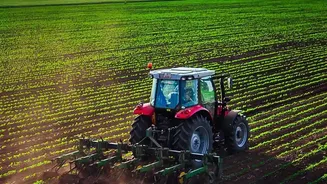
soil erosion from wind and water, the overuse of chemical fertilisers, excessive tillage, overgrazing, and deforestation. These practices strip the soil of essential organic matter and nutrients, making it less fertile. Other processes like salinization, where salt builds up in the soil, and compaction from heavy machinery further damage the land's ability to support healthy crops. It's estimated that a significant portion of India's land, around 147 million hectares, is affected by some form of degradation. This slow decline in soil health has a direct and alarming impact on agricultural output.
The Concept of a 'Yield Gap'
To understand the impact of degradation, we need to understand the 'yield gap'. This is the difference between a crop's maximum potential yield under ideal conditions and the actual yield a farmer harvests. Many factors contribute to this gap, including pests, diseases, and water availability. However, new research shows a clear and troubling link between land degradation and a widening of this gap. A recent study published in Nature Food found that for every 10% increase in land degradation, the crop yield gap increases by about 2%. This means that as our soil gets worse, we get further away from achieving the food production levels we are capable of. Healthy soil is the bedrock of a resilient food system, and its decline directly limits how much food we can grow.
India’s Frontline Challenge
For India, a nation that supports 18% of the world's population on just 2.4% of its land, this issue is critical. The consequences of the Green Revolution, while successful in boosting food production, included a heavy reliance on chemical fertilisers that took a toll on soil health. Today, studies show that a majority of soil samples across the country are deficient in key nutrients and organic carbon. The effect is tangible: in the 1970s, one kilogram of fertiliser could produce 15 kilograms of grain; by 2015, that ratio had fallen to just five kilograms of grain. This diminishing return means farmers face higher costs for lower output. With nearly a third of its soil already degraded, India is on the frontlines of a battle that could determine its future food self-sufficiency.
The Risk to Future Food Security
The implications of this trend are stark. Globally, land degradation is already associated with annual losses of approximately 20 million tonnes of crop production, enough to feed over 70 million people. It affects around 1.7 billion people who live in areas where yields are shrinking due to human-induced degradation. For India, with its growing population, the risk is particularly acute. If the trend of soil degradation continues, the country may have to import food in the future to feed its people, a sharp reversal from its current self-sufficiency. The problem is compounded by climate change, which brings more extreme weather like intense rainfall and drought, further accelerating soil erosion and water scarcity. This creates a dangerous feedback loop where environmental challenges and food production challenges worsen each other.
Forging a Path to Recovery
The situation, while serious, is not without solutions. The focus is shifting towards sustainable and regenerative agricultural practices. Methods like agroforestry (integrating trees with crops), minimum tillage, crop rotation, and using organic fertilisers like compost can help rebuild soil health. These techniques improve the soil's structure, enhance its ability to hold water, and restore vital nutrients. Government initiatives like the Soil Health Card scheme, which advises farmers on appropriate fertiliser use, have shown positive results, reducing chemical use while increasing productivity. There is also a growing movement towards organic and natural farming across the country. These efforts represent a crucial shift from simply extracting from the soil to actively nurturing and restoring it for long-term resilience.