
A Sweet Link to History
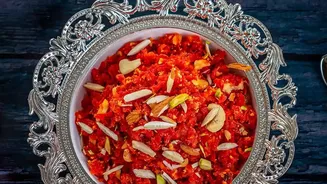
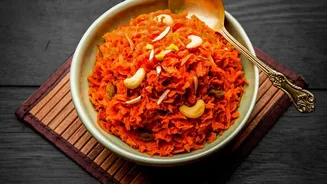
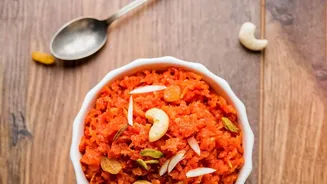
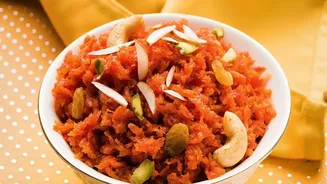
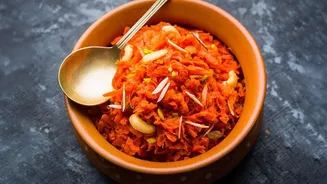
Gajar ka Halwa is a beloved dessert across the Indian subcontinent, with its origins often traced back to the Mughal era. The word 'halwa' itself comes from the Arabic 'hulw', meaning sweet, hinting at its Persian and Middle Eastern roots. It is said
that the dish as we know it gained popularity in the Punjab region, where cooks combined the sweetness of carrots with milk, ghee, and sugar to create a culinary masterpiece. While carrots are available year-round, the dessert is a winter specialty primarily because the seasonal red carrots, known as 'Delhi carrots', are at their sweetest and juiciest during this time. These carrots give the halwa its iconic vibrant color and a superior flavour that simply can't be replicated. The act of slow-cooking the halwa fills the home with an irresistible aroma, creating a sense of celebration and togetherness during the cold months.
Your Ingredients for a Perfect Halwa
The beauty of Gajar ka Halwa lies in its simple, yet flavourful, ingredients. For an authentic taste, aim for the best quality you can find. You will need: Carrots: About 1 kg of fresh, juicy red or orange carrots, peeled and finely grated. The finer the grate, the more melt-in-the-mouth the texture. Milk: 1 litre of full-fat milk is essential for a rich, creamy consistency. Ghee: 4 to 5 tablespoons of pure ghee (clarified butter). This is not the place to skimp, as ghee provides the signature aroma and flavour. Sugar: Around 1 cup of sugar, though this can be adjusted to your personal taste and the natural sweetness of your carrots. Cardamom: 4 to 5 green cardamom pods, crushed to release their seeds, for that classic warm, floral aroma. Nuts & Raisins: A handful of chopped almonds, cashews, and pistachios for garnish and texture. A tablespoon of raisins can also be added.* Optional - Khoya: For an even richer, more decadent version, you can add 150-200 grams of crumbled khoya (dried milk solids) towards the end of the cooking process.
The Slow-Cooked Method to Success
Patience is a key ingredient in a great Gajar ka Halwa. The process is one of slow reduction and constant care. 1. Sauté the Carrots: In a heavy-bottomed pan or kadai, heat 2 tablespoons of ghee over medium heat. Add the grated carrots and sauté for 10-15 minutes, stirring continuously. This step helps to cook off the raw taste of the carrots and brings out their sweetness. 2. Add Milk and Simmer: Pour the milk into the pan with the carrots. Bring the mixture to a boil, then reduce the heat to a gentle simmer. Now, the patient work begins. Cook uncovered, stirring every few minutes to prevent sticking and ensure even cooking. The goal is to let the carrots cook until tender while the milk reduces and is almost fully absorbed. This can take anywhere from 45 to 60 minutes. 3. Add Sugar and Ghee: Once the milk has evaporated, add the sugar. The sugar will melt and release moisture, making the mixture gooey. Continue to cook, stirring frequently, until the mixture thickens again. Now, add the remaining ghee and continue to sauté for another 10-15 minutes. You'll know it's ready when the halwa starts to pull away from the sides of the pan, the colour deepens to a rich reddish-orange, and the ghee begins to separate. 4. Finishing Touches: Stir in the crushed cardamom powder and any nuts or raisins you're using. Cook for another two minutes before turning off the heat.
Tips for a Flawless Finish
While the recipe is straightforward, a few pro tips can elevate your halwa from good to unforgettable. Use a Heavy-Bottomed Pan: This is crucial to prevent the milk and carrots from scorching at the bottom during the long cooking process. Grate, Don't Chop: For the best texture, always grate the carrots. Using a food processor can save time, but ensure you use a grating blade, not a chopping one, to avoid a mushy result. Stir Diligently: Do not leave the halwa unattended, especially after the milk has started to thicken. Regular stirring is key to a creamy consistency and preventing burns. Don't Rush the 'Bhunai': The final stage of sautéing in ghee after adding sugar is called 'bhunai'. This step is essential for developing the deep, caramelized flavour and rich colour of the halwa.