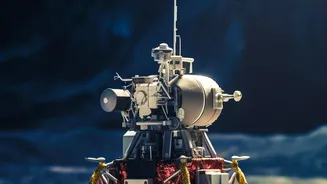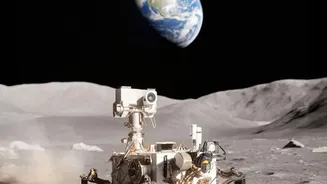




The Challenge: Living Off the Land
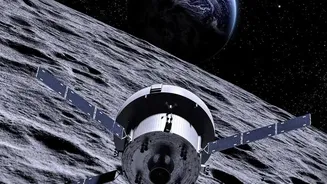
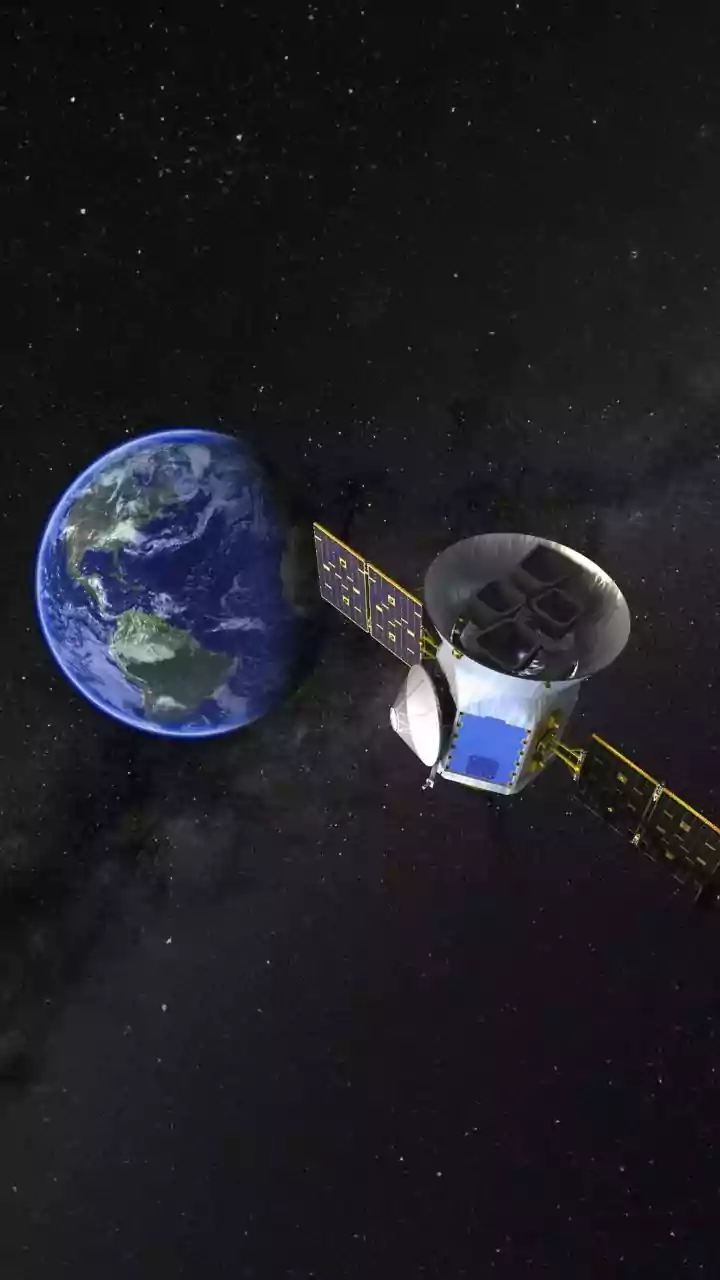
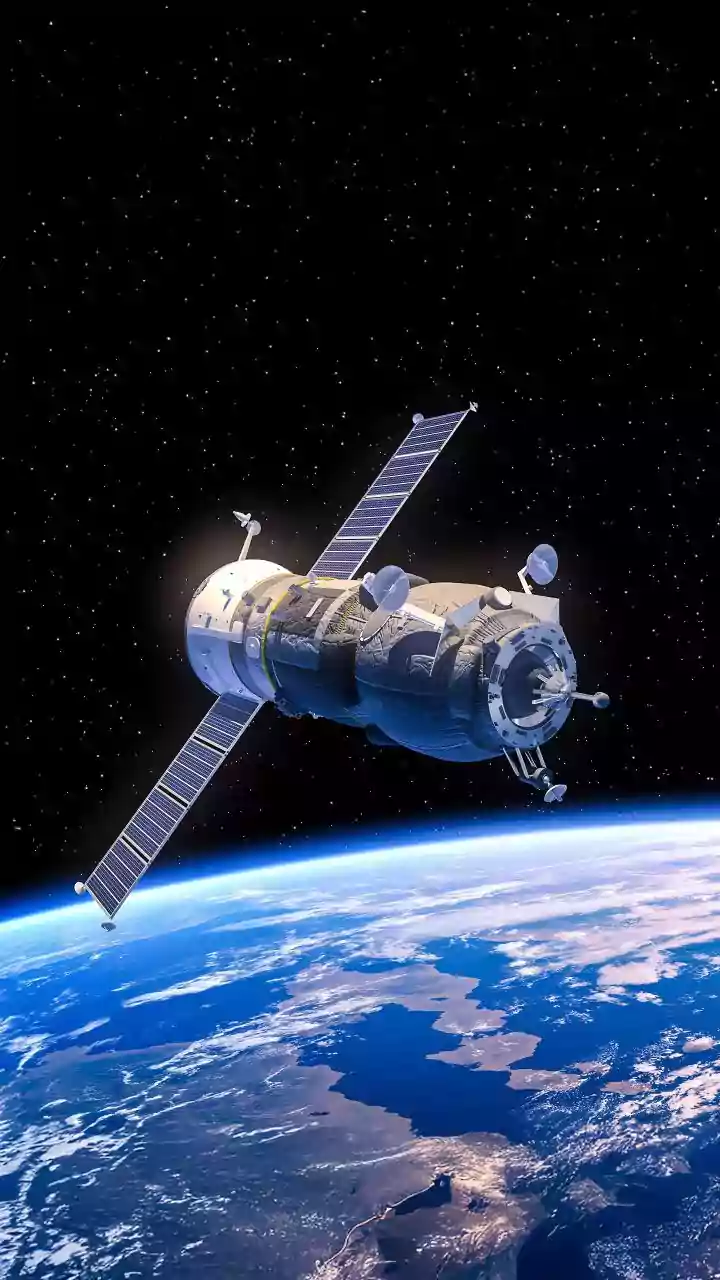
For humans to establish a long-term presence on the Moon, as planned under the Artemis program, they cannot rely on resupply missions from Earth for every necessity. The cost of launching materials is immense; it's estimated to take about $10,000 to send
just one kilogram of payload into space. This makes launching bulky essentials like water and oxygen tanks for extended stays incredibly expensive and impractical. The solution lies in a concept called In-Situ Resource Utilization (ISRU), which essentially means using local resources. Just as early explorers learned to live off the land, future astronauts must learn to harvest and process materials found on the Moon itself to survive and thrive.
How to Make Air From a Rock
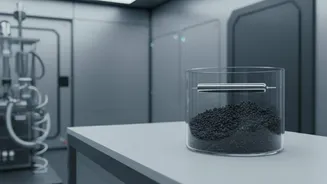
It might seem impossible, but the Moon’s soil, or regolith, is surprisingly rich in oxygen. It makes up about 45% of the regolith's mass, but it's chemically locked away inside oxide minerals. NASA's Carbothermal Reduction Demonstration, or CaRD, project is developing the technology to break those bonds. The process involves heating the lunar soil to very high temperatures—over 3,000 degrees Fahrenheit—inside a specialized reactor. In recent tests, a high-powered laser was used to simulate concentrated sunlight, which would be the power source on the Moon. This intense heat causes the oxygen to be released from the minerals in the form of carbon monoxide (CO). That carbon monoxide can then be split to produce pure, breathable oxygen and carbon, which can be recycled for the process.
A Major Milestone in a Vacuum
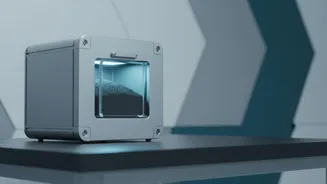
While scientists have extracted oxygen from simulated Moon dust before, a team at NASA's Johnson Space Center recently achieved a critical milestone: they successfully performed the extraction in a vacuum chamber that mimics the airless conditions of the Moon. This test, which used a reactor developed by Sierra Space, proved that the hardware could withstand the harsh lunar environment and successfully produce the target gases. The team was able to detect the release of carbon monoxide, confirming that the solar-powered chemical reaction works as intended. This success elevates the technology to a readiness level where it is certified for a demonstration in space, a major step toward its eventual deployment on the lunar surface for the Artemis missions.
More Than Just Breathable Air
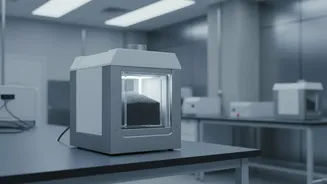
The ability to produce oxygen on the Moon has benefits that go far beyond just life support. Oxygen is also a key component of rocket propellant; liquid oxygen typically makes up about 80% of the mass of rocket fuel. By producing propellant on the Moon, a future lunar base could become a refueling station for missions venturing deeper into the solar system, such as to Mars. This would dramatically reduce the cost and complexity of long-duration space exploration. Furthermore, the carbothermal reduction process also leaves behind useful metallic alloys as a byproduct. These metals could potentially be used as raw materials for 3D-printing tools, spare parts, or even construction materials for building lunar structures, further enabling a self-sustaining habitat.
What This Means for the Artemis Generation
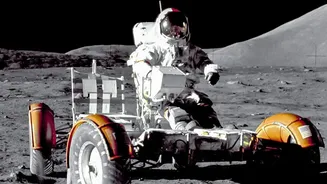
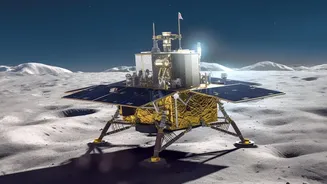
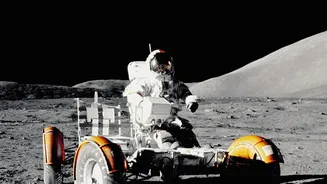
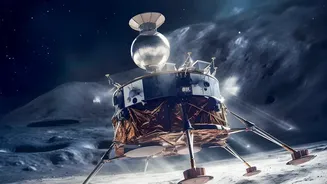
This technological progress is a foundational pillar for the entire vision of the Artemis program, which aims not just to visit the Moon, but to establish a sustainable human presence there. Being able to generate oxygen on-site means astronauts can stay for longer periods, conduct more science, and explore more of the lunar surface. It transforms the paradigm from short, Apollo-style sorties to a permanent foothold in deep space. This single capability—turning dust into a life-sustaining resource—is what makes the idea of a lunar base, and eventually a lunar economy, a feasible engineering goal rather than a distant dream. The technology could even be adapted for use on Mars, using the carbon dioxide in the Martian atmosphere to create oxygen and fuel for the first human missions to the Red Planet.