






Our Southern Blind Spot
Discussions about climate change in India understandably focus on immediate threats. We debate the intensity of heatwaves in the northern plains, the delayed arrival of the monsoon, and the critical state of Himalayan glaciers. These are vital conversations.
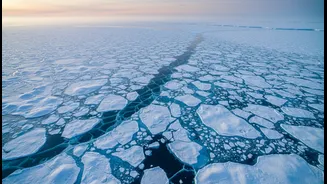
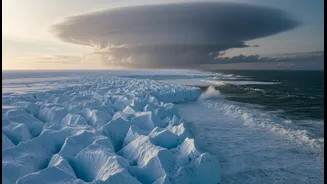
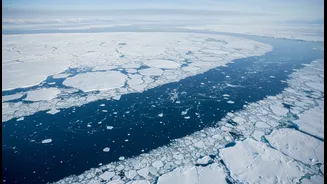
Yet, they are incomplete. We are missing half the picture by ignoring the colossal white continent at the bottom of the world: Antarctica. This remote, frozen landmass plays an enormous role in regulating Earth's climate. The continent’s vast ice sheets reflect sunlight, cooling the planet, while the surrounding Southern Ocean absorbs massive amounts of heat and carbon dioxide. To ignore Antarctica in our climate discourse is like a doctor diagnosing a fever while ignoring the underlying infection. The connection is not abstract; it is a direct line to India's future prosperity and stability.
A Direct Threat to Our Coasts
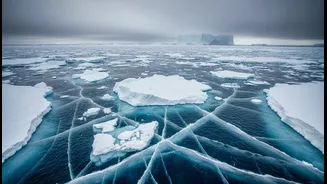
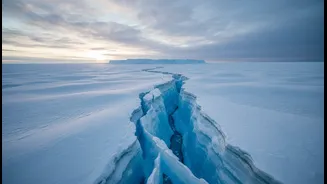
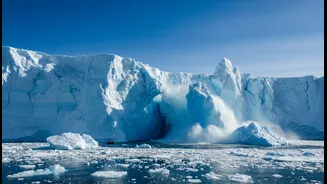
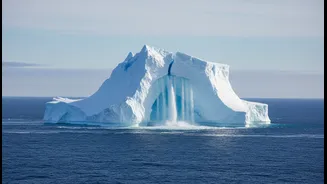
The most direct impact of a warming Antarctica on India is sea-level rise. The Antarctic Ice Sheet holds about 70% of the planet's freshwater. If it were to melt entirely, global sea levels would rise by a catastrophic 60 metres. While that extreme scenario is distant, even a small amount of melt has dire consequences. Net ice loss from Antarctica is currently estimated at 100-200 billion tons per year, and this rate is accelerating. For India, with its 7,500-kilometre coastline dotted with major cities like Mumbai, Chennai, and Kolkata, this is an existential threat. A United Nations report warned that by 2050, nearly 40 million Indians will be at risk from rising sea levels. We already see the effects in the erosion of coastal land in West Bengal and the increased vulnerability of islands in the Sundarbans. This isn't a future problem; it's a present danger.
The Monsoon's Unseen Driver
The connection between Antarctica and the Indian monsoon is complex but crucial. The Southern Ocean, which encircles Antarctica, is the engine room where the world's major oceans—the Atlantic, Pacific, and Indian—are connected. Changes in this frigid ocean have global ripple effects. Recent research has established a surprising link between Antarctica and our life-giving rains. Studies show that changes in Antarctic climate, including meltwater, can alter global atmospheric patterns. For instance, the formation of Antarctic ice sheets 34 million years ago helped shape the Indian monsoon system by shifting Earth's primary rain belt. Today, as that ice melts at an accelerated rate, it could again disrupt these patterns, leading to more erratic and unpredictable monsoons, with devastating consequences for India's agriculture, which relies heavily on seasonal rains.
India's Stake on the Ice
India is not a passive observer in this unfolding drama. The nation has a significant scientific and strategic stake in the frozen continent. Since its first expedition in 1981, India has maintained a continuous presence, operating two research stations, Maitri and Bharati. Scientists at these outposts conduct vital research on glaciology, atmospheric sciences, and climate systems, contributing to global understanding of these critical changes. This year, India also announced plans to build a new, advanced research station, Maitri-2, reaffirming its long-term commitment. Our presence there isn't just for scientific prestige; it's a recognition that this distant continent is a laboratory for understanding our own climate future. The data collected by Indian scientists in Antarctica is essential for predicting the impacts on our own shores.