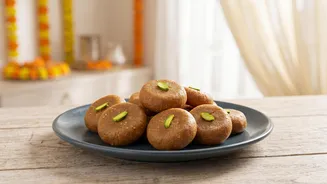



1. Mathura Peda
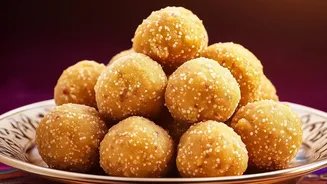
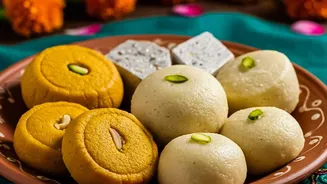
No Janmashtami bhog is complete without the iconic Mathura Peda, a sweet synonymous with Lord Krishna's birthplace. This granular, caramelised milk fudge is a testament to the magic of slow-cooking milk. While traditionally a lengthy process of reducing
milk to khoya, you can make a quicker version at home. Start by roasting milk powder in ghee on a low flame until it turns a lovely brown colour. Gradually add milk, stirring continuously until the mixture becomes crumbly. Once it cools, add powdered sugar and cardamom powder, mix well, and shape the mixture into small, flat discs. Roll them in caster sugar for that authentic finish. This sweet is not just a dessert; it's an offering steeped in history and devotion.
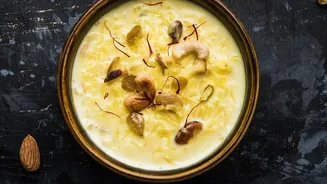
2. Makhana Kheer
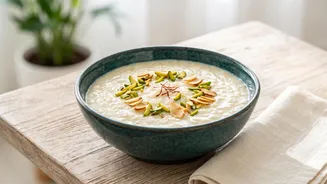
A light yet creamy dessert, Makhana Kheer (or fox nut pudding) is a popular choice for festive fasting menus. Makhanas are considered auspicious and healthy, making this kheer a perfect offering. To prepare it, begin by roasting one cup of makhana in ghee until they are crisp. Set a small portion aside and coarsely grind the rest. In a heavy-bottomed pan, bring one litre of full-fat milk to a boil and let it simmer. Add the crushed and whole makhanas to the milk and cook until they soften and the milk thickens. Stir in sugar to your liking, a pinch of cardamom powder, and some saffron strands for colour and aroma. Garnish with chopped almonds and pistachios before offering. This kheer is delightful served either warm or chilled.
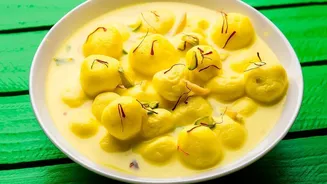
3. Rabri
Rabri is a classic North Indian dessert that celebrates the richness of milk in its purest form. It is made by patiently simmering full-fat milk in a wide, heavy pan until it reduces and thickens, creating luscious layers of cream (malai). The process is slow but meditative. As the milk simmers, the layer of cream that forms on top is gently pushed to the side of the pan. This is repeated until the milk is dense and has reduced significantly. The collected cream layers are then mixed back into the thickened milk, along with sugar, crushed cardamom, and saffron. The result is a dessert that is not entirely smooth but has a beautiful, layered texture. Served chilled and garnished with nuts, Rabri is a truly decadent offering.
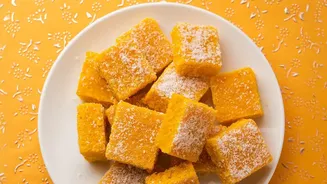
4. Kalakand
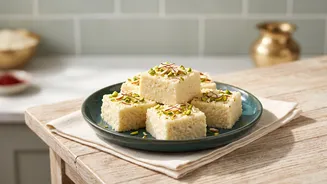
Soft, moist, and with a signature grainy texture, Kalakand is a beloved milk cake across India. An instant version of this sweet can be prepared easily for your Janmashtami platter. It is traditionally made by curdling milk and then cooking it down, but a quick method involves using paneer and condensed milk. In a non-stick pan, combine crumbled fresh paneer and a can of sweetened condensed milk. Cook the mixture on a low flame, stirring continuously, until it thickens and starts to leave the sides of the pan. This should take about 15 minutes. Add cardamom powder and mix well before pouring the mixture into a greased tray. Garnish with chopped pistachios and almonds, let it set for a couple of hours, and then cut into squares.
5. Gopalkala
Gopalkala is a unique and symbolic bhog that is savoury, sweet, and tangy all at once. It is believed to represent the meal Krishna shared with his cowherd friends (Gopalas) in Vrindavan. This no-cook recipe is a flavourful mix of Lord Krishna's favourite ingredients. To make it, take a cup of soaked and drained flattened rice (poha) in a bowl. To this, add fresh yogurt, finely chopped cucumber, grated coconut, and a pinch of salt and sugar. For the tempering, heat a little ghee, splutter some cumin seeds, and add chopped green chillies and ginger. Pour this tempering over the poha mixture and mix everything gently. Garnish with fresh coriander leaves. Gopalkala is a refreshing and wholesome offering that beautifully captures the spirit of the festival.