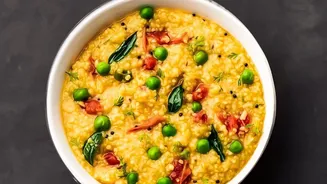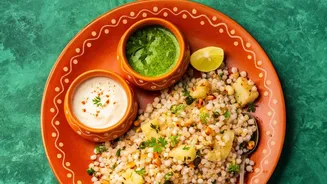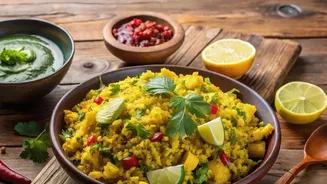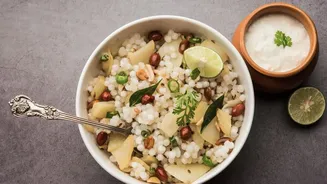

In the world of Indian comfort food, dalia and khichdi reign supreme as wholesome, go-to meals. But when it comes to nutrition, is one truly better than the other? The answer is more complex and reveals a more important truth about healthy eating.
The Golden Rule: It's All About Portion Size
Before
we pit these two beloved dishes against each other, it's crucial to understand a fundamental concept in nutrition: portion control. Even the healthiest foods, packed with nutrients, contain calories. Consistently eating more calories than your body needs leads to weight gain, regardless of the food's quality. Research shows that people almost always eat more when served larger portions. This is why understanding what a sensible portion looks like is more important than declaring one grain superior to another. A small bowl of either dalia or khichdi can be incredibly beneficial, but an oversized serving can easily derail your health goals. The focus shouldn't just be on what you eat, but also how much you eat.
A Closer Look at Dalia (Broken Wheat)
Dalia, or broken wheat, is a whole grain that undergoes minimal processing, which means it retains its nutrient-rich bran and germ. A 100-gram serving of uncooked dalia contains roughly 340-350 calories, an impressive 12 grams of protein, and about 10-12 grams of dietary fibre. This high fibre content is dalia's superpower. It promotes digestive health, keeps you feeling full for longer (aiding in weight management), and slows the release of sugar into the bloodstream. This gives it a low-to-medium glycemic index (around 41-55), making it an excellent choice for individuals managing blood sugar levels. It's also packed with essential minerals like iron and magnesium.
Understanding Khichdi's Comforting Power
Khichdi, a one-pot meal of rice and lentils (usually moong dal), is celebrated for being gentle on the stomach and highly nutritious. Its main advantage lies in the combination of a cereal (rice) and a pulse (dal), which together provide a complete protein profile, containing all essential amino acids. Nutritionally, khichdi's profile varies greatly depending on the recipe—the ratio of dal to rice, the amount of ghee used, and the addition of vegetables all play a role. A basic moong dal khichdi can have around 125-260 calories per 100g serving, with about 8-9 grams of protein. Because it's easy to digest, it's a perfect recovery food and can even promote better sleep due to its carbohydrate content helping the body relax.
The Nutritional Showdown
When placed sideward by side, dalia generally has a nutritional edge in a few key areas. Uncooked, it is more nutrient dense, with significantly more fibre and slightly more protein than the rice and dal combination in khichdi. Dalia’s high fibre makes it more effective for satiety and blood sugar regulation. However, khichdi shines as a complete protein source and is often easier to digest. It's important to remember that preparation is everything. A plain dalia porridge can be less nutritious than a vegetable packed khichdi made with plenty of dal. Conversely, a khichdi swimming in ghee with very little dal will be less healthy than a simple vegetable dalia. One study noted that when eaten as part of a mixed meal with vegetables and pulses, the glycemic index difference between wheat (like dalia) and rice can become insignificant.
How to Maximise the Health Benefits
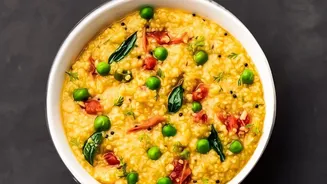
Instead of choosing one over the other, focus on how to make each dish work for you. For Dalia: Boost its nutritional value by cooking it with plenty of vegetables like carrots, peas, and beans. You can also make a savoury dalia khichdi by adding moong dal to it, combining its fibre with complete protein. For Khichdi: Improve its health quotient by increasing the proportion of dal to rice. Use brown rice instead of white to increase the fibre content. Load it with vegetables to add vitamins and minerals, and be mindful of the amount of ghee or oil you use. Pairing it with a side of curd can also boost its protein and probiotic content.