


The Royal Grandeur of Mysore Dasara
In Karnataka, Mysore Dasara is a 10-day state festival, or 'Nadahabba', that celebrates Goddess Chamundeshwari's victory over the demon Mahishasura. The tradition dates back to the 15th-century Vijayanagara Empire and was continued by the Wodeyar dynasty,
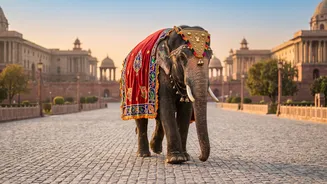
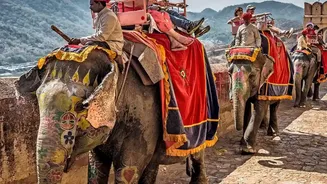
who established the grand festivities in 1610. The entire city of Mysore becomes a cultural hub, but the main attraction is the Mysore Palace, which is illuminated with nearly 100,000 light bulbs every evening. The festival culminates on Vijayadashami with the magnificent Jumboo Savari, a grand procession featuring decorated elephants, with one carrying the idol of the goddess in a 750kg golden howdah. Travellers can also experience cultural performances, a sprawling exhibition that has been running since 1880, and a torchlight parade at the Bannimantap grounds.
Kullu's Unique Week-Long Celebration
In Himachal Pradesh, Kullu Dussehra offers a completely different flavour. Here, the festival begins on Vijayadashami, the day celebrations conclude in most other parts of India, and continues for seven days. Declared an International Festival, it draws lakhs of people to the Dhalpur Maidan. The main event is not the burning of Ravana's effigy but a grand congregation of deities. More than 200 local gods and goddesses, carried on ornate palanquins from surrounding villages, arrive to pay homage to Lord Raghunath, the valley's presiding deity. This tradition began in the 17th century with King Jagat Singh. Visitors are treated to a vibrant cultural fair filled with folk music, the traditional Nati dance, local handicrafts, and a procession known as the Rath Yatra.
Kolkata's Artistic Immersion on Vijayadashami
In West Bengal, Dussehra is known as Vijayadashami and marks the final day of the five-day Durga Puja festival. The celebration here focuses on Goddess Durga's victory over Mahishasura. For days, the city of Kolkata transforms into a massive open-air art gallery, with thousands of elaborate temporary stages called 'pandals', each housing intricately crafted idols of the goddess. On Vijayadashami, the festivities peak with 'Sindoor Khela', where married women offer vermilion to the goddess and each other. This is followed by emotional and vibrant processions, where the idols are carried to the Hooghly River for immersion ('visarjan'). The air fills with the sounds of traditional 'dhak' drums and chants of 'Asche Bochor Abar Hobe' ('It will happen again next year'), making it a deeply moving cultural experience.
The Tribal Traditions of Bastar Dussehra
Perhaps the most unique celebration takes place in Chhattisgarh's Bastar region. Known as Bastar Dussehra, this festival spans an incredible 75 days, making it one of the longest in the world. With a history stretching back 600 years to the Kakatiya dynasty, its focus is entirely different from the Ram-Ravana story. Instead, it honours Devi Danteshwari, the presiding deity of the Bastar tribes, and the region's deep connection with nature. The festival involves a series of complex and ancient rituals involving numerous tribal communities, each with a specific role. Highlights include the 'Pata Jatra' (worship of wood for the chariot), 'Kachan Gadi' (a ceremony involving a young girl who grants permission for the festival to begin), and the 'Rath Yatra' (chariot procession). No effigies are burned; it is a profound celebration of indigenous faith and heritage.
The Carnivalesque Devotion of Kulasai Dasara
In the coastal village of Kulasekarapattinam in Tamil Nadu, Dussehra, or 'Kulasai Dasara', is a spectacular 10-day carnival of devotion unlike any other. The festival at the Arulmigu Mutharamman Temple celebrates the goddess Mutharamman's victory over the demon Mahishasura. Its most striking feature is the 'Vesham' tradition, where lakhs of devotees dress in the guise of gods, goddesses, demons, and folk characters, most popularly the fierce Goddess Kali. Many observe a strict 41-day fast in preparation. The costumed devotees dance in a trance-like state and collect alms as an act of humility before offering it to the temple. The festival culminates on the shores of the sea with a dramatic reenactment of the goddess slaying the demon, an event with a raw, primal energy that attracts huge crowds.