




Global Systems at Play
The Indian monsoon doesn't operate in a vacuum. Its behaviour is heavily influenced by large-scale climate patterns. Phenomena like El Niño, the warming of the Pacific Ocean, can weaken monsoon winds and delay its onset, as has been seen in recent years.
Conversely, its counterpart, La Niña, often brings stronger monsoon rainfall. Another key player is the Indian Ocean Dipole (IOD), which refers to the temperature difference between the western and eastern parts of the Indian Ocean. A 'positive' IOD, with a warmer western Indian Ocean, generally aids the monsoon, while a 'neutral' or 'negative' phase can suppress it. These global see-saws set the main stage for the monsoon season, determining its overall strength and character.
The Weekly Wobble: Meet the MJO
To understand the week-to-week changes, we need to look at a more immediate factor: the Madden-Julian Oscillation (MJO). The MJO is a massive, eastward-moving pulse of clouds, rainfall, and wind that travels around the equator every 30 to 60 days. When the MJO's active, rainy phase is over the Indian Ocean, it can significantly boost monsoon activity, leading to a week of heavy showers. As it moves away towards the Pacific, it can trigger a 'break' or dry phase, resulting in reduced rainfall and higher humidity. The MJO’s position and strength are a primary reason why Mumbai can swing from intense downpours one week to a frustratingly dry spell the next, even in the middle of the monsoon.
Mumbai's Own Making: The Urban Effect
Local factors within Mumbai itself play a crucial role in amplifying rainfall. The city's dense concrete and asphalt absorb and retain heat, creating an 'urban heat island' effect. This makes the city warmer than its surrounding rural areas. When moisture-laden monsoon winds arrive over this heated urban landscape, the warm air rises more rapidly, cools, and condenses, leading to more intense, short bursts of rain. Furthermore, Mumbai's geography, situated on the coast and near the Western Ghats, naturally creates orographic rainfall, where mountains force moist air to rise and release its water. The combination of this natural effect with man-made urban pressures means that when it rains, it often pours with greater intensity than it otherwise would.
The Overarching Influence: Climate Change
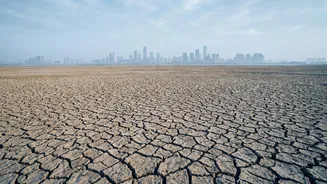
The final, and perhaps most critical, piece of the puzzle is climate change. A warmer atmosphere can hold more moisture—about 7% more for every degree Celsius of warming. This means that when the conditions for rain are right, there is more water available to fall, leading to the extreme rainfall events that are becoming more common. Climate change doesn't just mean more intense rain; it also makes the entire system more erratic. It can lead to longer dry spells between rainy periods, making the monsoon less a consistent season and more a series of extreme, unpredictable events. Experts now suggest that the trend of short, intense downpours followed by long dry breaks is the new, climate-altered reality of the Mumbai monsoon.