


What is a 'Super-Earth'?
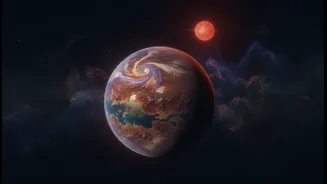
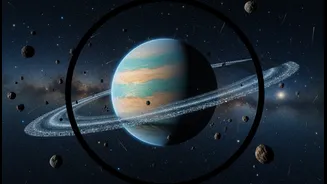
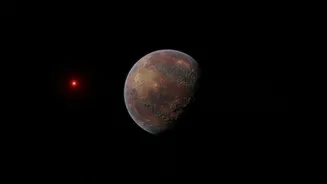
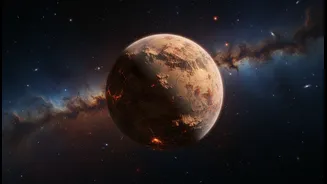
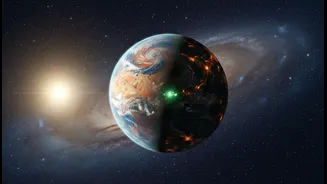
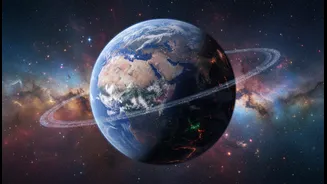
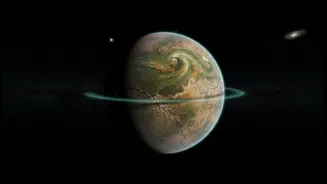
First, let's break down the terminology. A "super-Earth" isn't necessarily a bigger, better version of our home. The term refers only to a planet's mass and size. Specifically, it’s an exoplanet—a planet outside our solar system—with a mass higher than
Earth's but significantly lower than that of our ice giants, Uranus and Neptune. They can be rocky like Earth, gaseous like Neptune (often called 'mini-Neptunes'), or something entirely different, like a water world. The name doesn't imply anything about its surface conditions, atmosphere, or potential for life. In fact, our own solar system doesn't have a super-Earth, which makes them a fascinating puzzle for astronomers.
The 'Goldilocks Zone' Misconception
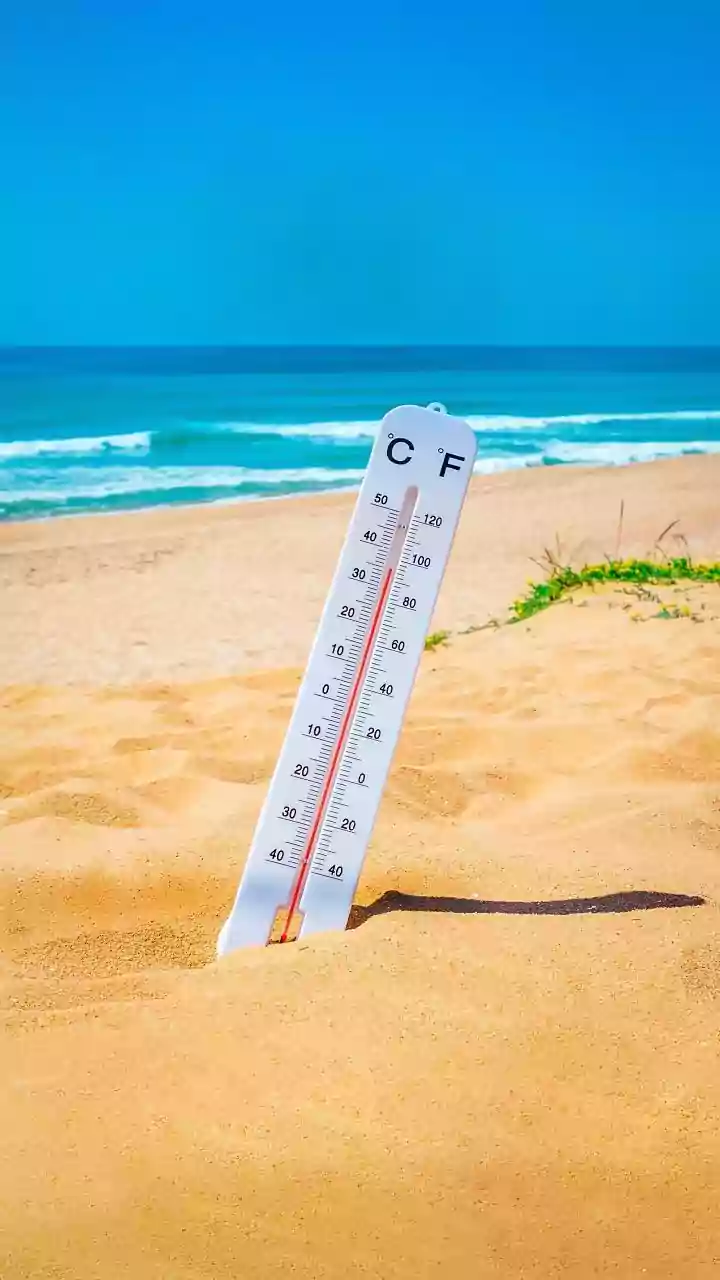
This brings us to the most exciting and misunderstood phrase: "potentially habitable." This term is often used when a planet is found within its star's "habitable zone," also nicknamed the "Goldilocks zone." This is simply the orbital range where temperatures could be right—not too hot, not too cold—for liquid water to exist on a planet's surface. However, being in the zone is not a guarantee of habitability. A planet needs a suitable atmosphere to maintain that liquid water. Mars and our own Moon are within the Sun's habitable zone, but neither has lakeside retreats. The recently discussed exoplanet Gliese 12 b, for example, has an estimated surface temperature of 42°C, but this assumes it has no atmosphere at all. Without an atmosphere to protect it, a planet can't have liquid water, a key ingredient for life as we know it.
How Scientists Find These Worlds
Discovering these distant planets is a feat of indirect detection, as they are too small and faint to be seen directly against the glare of their stars. One of the most common techniques is the "transit method," used by telescopes like Kepler and TESS. Scientists monitor a star's brightness over time, and if a planet passes in front of it from our perspective, it causes a tiny, periodic dip in the starlight. This not only reveals the planet's existence but can also help determine its size. Another key technique is the "radial velocity" or "wobble" method. A planet's gravity tugs on its star, causing it to wobble slightly. This wobble alters the star's light in a predictable way that astronomers can measure to determine the planet's minimum mass.
From 'Habitable' to 'Inhabited'
Finding a rocky planet in the habitable zone is just the first step on a very long journey to finding life. The critical next step is to determine if the planet has an atmosphere and what it's made of. Telescopes like the James Webb Space Telescope can analyze the starlight that passes through an exoplanet's atmosphere. The light carries chemical fingerprints of the gases present, which could include potential "biosignatures"—gases like oxygen or methane that might be produced by living organisms. But even these signals must be interpreted with extreme care. For instance, the recent excitement over a potential biosignature on exoplanet K2-18b is still a matter of intense scientific debate and requires more data to confirm. The gap between a world being 'habitable' and 'inhabited' is enormous.
Why Responsible Science Matters
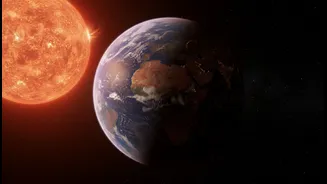
Recent discoveries like GJ 3378b, a super-Earth just 25 light-years away, are genuinely thrilling. It sits in its star's habitable zone and receives a similar amount of energy as Earth. But even here, scientists stress the great unknown: does it have an atmosphere? Red dwarf stars, which these planets often orbit, are known for violent flares that can strip atmospheres away. This is why responsible science communication is vital. Public imagination can move faster than the evidence, and presenting a possibility as a confirmed fact erodes trust in the long run. Scientists must carefully communicate uncertainty, ensuring that excitement is tempered with the realities of the scientific process.