







Understanding Thunder Phobia
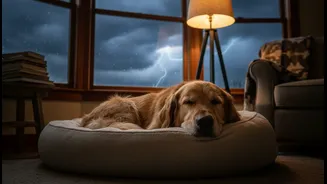
A pet’s fear of thunderstorms isn't just an overreaction to loud noise. Many animals are sensitive to the subtle environmental shifts that precede a storm. Their acute hearing makes the low-frequency rumbles of thunder feel overwhelming and inescapable.
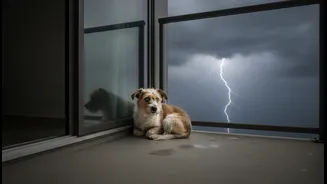
Beyond the noise, some pets react to the drop in barometric pressure, the static electricity in the air that can make their fur feel strange, or the bright flashes of lightning. For some animals, especially herding breeds, this sensitivity is genetic. For others, a past negative experience during a storm can create a lasting phobia. Recognizing that the fear is complex and multifaceted is the first step toward providing effective support.
Create a 'Safe Den'
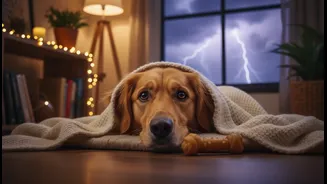
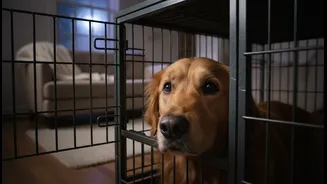
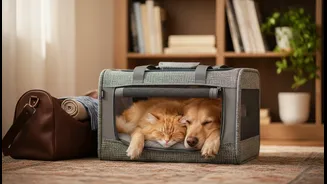
Instinctively, many anxious animals will try to find a small, enclosed space to hide. You can support this by creating a dedicated “safe den” for them. This shouldn't be a place of punishment, but a permanent refuge they can access anytime. A crate covered with a heavy blanket, a closet with the door propped open, or even the space under a desk can work well. The ideal location is in a quiet, low-traffic area of the house, away from windows. Fill it with soft bedding, a favorite toy, and perhaps an item of your clothing that carries your scent. The goal is to make it a cozy, dark, and muffled space that your pet chooses on its own. Never force your pet into their den; instead, use treats and praise to build a positive association with the space well before a storm is forecasted.
The Power of Predictable Sound
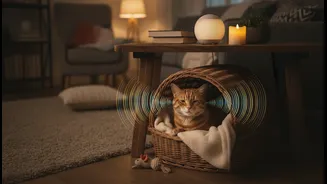
One of the most frightening aspects of thunder is its unpredictability. You can counter this by using predictable, consistent sound to mask the jarring booms. This technique, known as sound masking, works by raising the ambient noise level in a room so that sudden, loud noises from outside are less startling. White noise machines are an excellent tool for this, but you can also use a fan, an air conditioner, or play calming music. Some studies show that classical music, soft rock, and even reggae can have a soothing effect on pets. The key is to provide a constant, gentle sound that helps to drown out the storm and create a more controlled and less frightening auditory environment for your pet.
Your Calm Is Contagious
Your pet looks to you for cues about how to react to the world. If you are anxious and stressed about their fear, you can inadvertently make it worse. While it’s tempting to lavish a trembling pet with excessive cuddling and frantic reassurances, this can sometimes reinforce the idea that there is indeed something to be afraid of. Instead, project a calm, confident demeanor. Speak in a normal, soothing tone and go about your business. You can offer gentle distractions, like a food puzzle, a favorite chew toy, or a light game of indoor fetch, to help shift their focus away from the storm. This communicates that the storm is not a threat and that everything is okay.
When to Seek Professional Help
For some pets, thunderstorm phobia can be severe and may worsen over time if left unmanaged. If your pet’s anxiety leads to destructive behavior, attempts to escape, self-injury, or if they are inconsolable despite your best efforts, it’s time to consult a professional. Your veterinarian can rule out any underlying medical issues and discuss a range of additional options. These may include anti-anxiety medications, which can be prescribed for short-term use during storms or as a long-term treatment for more generalized anxiety. A certified veterinary behaviorist can also develop a tailored plan that may include techniques like desensitization and counter-conditioning, which involves gradually exposing your pet to storm sounds in a controlled, positive way.