




The Cosmic Lighthouse Analogy
Before diving into any tool, we need to grasp the basics. A pulsar is a type of neutron star, which is the incredibly dense, crushed core left behind after a massive star explodes. Think of an object about the size of a city containing more mass than
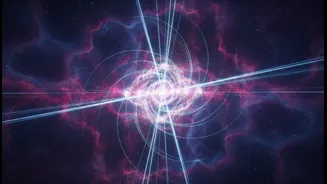
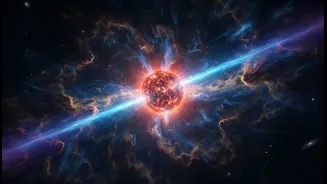
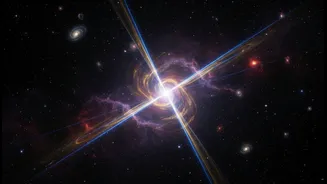
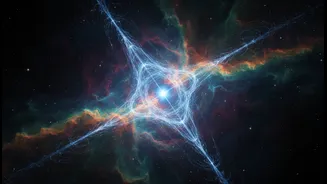
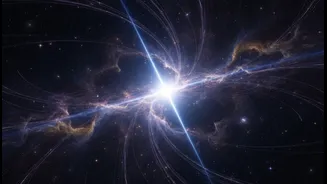
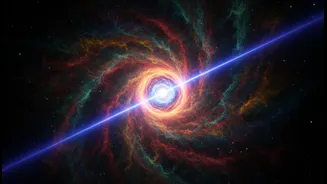
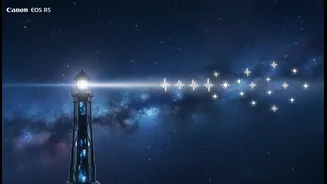
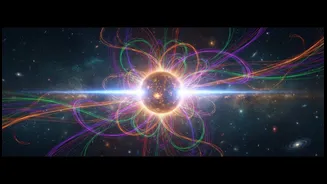
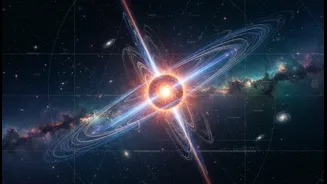
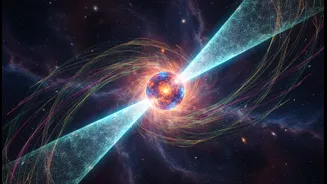
our sun. These stars spin extremely rapidly and have powerful magnetic fields. This combination shoots out beams of radiation from their magnetic poles. Crucially, the spin axis and the magnetic axis are not aligned. As the pulsar rotates, these beams sweep across the cosmos like the beam from a lighthouse. From Earth, we only see a flash of radiation when the beam points directly at us, creating a regular, pulsing signal. It’s not that the star is blinking on and off; it’s a constant beam that we only periodically see. This “lighthouse effect” is the key to explaining pulsars.
Finding Your 'Pulsar Map'
While there isn't a single, interactive tool officially named the “Lighthouse Pulsar Map,” the concept is central to how NASA explains these celestial objects. The ‘map’ isn’t a physical chart to navigate with, but rather a mental model built from NASA's extensive resources. Your toolkit includes animations, articles, and data visualisations that bring the lighthouse analogy to life. For instance, the famous Pulsar Map sent on the Voyager spacecraft used 14 known pulsars to pinpoint our solar system's location for any intelligent life that might find it. This shows how the regular timing and unique positions of pulsars can serve as reliable cosmic markers, much like lighthouses on a celestial shore.
Step 1: Visualise the Rotation
Start by using NASA’s visual aids. A quick search for “NASA pulsar animation” will provide numerous videos that show a rotating neutron star with misaligned magnetic poles. These animations are invaluable for a classroom setting. Pause the video and point out the key parts: the star itself, the rotation axis, the magnetic field lines, and the powerful beams of radiation. Explain that just like a lighthouse beam is only visible when it faces you, the pulsar's 'pulse' is only detected when its beam sweeps past Earth. Many NASA videos and web pages, such as those from the Goddard Space Flight Center, offer these resources for public and educational use.
Step 2: Turn Data into a Story
A pulsar’s “result” is often its pulse period—the time between flashes. These are incredibly precise, sometimes more accurate than atomic clocks. You can use this fact to build a compelling story. For example, explain the discovery of the first pulsar by Jocelyn Bell Burnell in 1967. The signals were so regular that the science team initially joked they might have come from an alien civilization, labeling them “LGM-1” for “Little Green Men.” This historical anecdote makes the science more human and memorable. You can find information about specific pulsars, like the famous Crab Nebula pulsar, on NASA’s websites to use as concrete examples. This one originated from a supernova recorded by Chinese astronomers in 1054 AD.
Step 3: Create a Hands-On Activity
To make the concept truly stick, create a simple, physical model. A student can be the pulsar. Have them hold two flashlights (the beams) and extend their arms. Now, have them spin in place. The other students are “observers” on Earth. They should raise their hands only when the flashlight beam shines directly on them. This simple activity perfectly demonstrates the lighthouse effect. It shows why the pulsar appears to pulse without the star itself changing. This kinesthetic learning helps solidify a complex, abstract idea into something intuitive and fun, turning your classroom into a mini-galaxy.