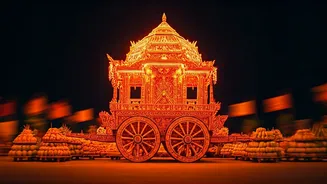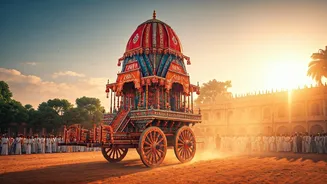





The Once-in-a-Generation Event
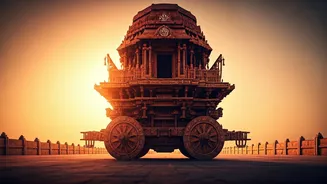
The driving force behind this incredible demand is the Nabakalebara festival, a sacred and monumental event centred around Lord Jagannath and the other deities of Puri's famed temple. Unlike the annual Rath Yatra, Nabakalebara is an event of cosmic and spiritual
significance that occurs only once every 12 to 19 years. The next one is slated for 2026, and it's expected to be one of the largest religious gatherings on the planet. This rare alignment, determined by specific lunar calendars, signals a time for the symbolic death and rebirth of the deities, a process that draws millions of devotees from across India and the world.
What is Nabakalebara?
Nabakalebara, which translates to 'New Body', is a deeply intricate and ancient ritual involving the replacement of the wooden idols of Lord Jagannath, Balabhadra, Subhadra, and Sudarshana. The process is a fascinating blend of spiritual faith and meticulous tradition. It begins with a divine decree, followed by a long journey to find the sacred 'Daru' (neem wood trees) with specific holy markings. Once identified, these trees are felled after a series of elaborate rituals. The logs are then transported to the Jagannath Temple in Puri, where skilled artisans, the 'Daitapatis', carve the new idols in complete secrecy. The spirit or 'Brahma Padartha' is then transferred from the old idols to the new ones in a clandestine ceremony, symbolising the eternal cycle of life, death, and rebirth. The old idols are buried in a special enclosure within the temple complex known as 'Koili Baikuntha.'
Lessons from the Past
To understand the scale of what's coming in 2026, we only need to look back at the last Nabakalebara in 2015. Official estimates suggest that over five million pilgrims descended upon the small coastal town of Puri during the festival period. The city's infrastructure was stretched to its absolute limit. Hotels were booked out months, if not years, in advance. Many visitors had to make do with temporary shelters, stay in nearby cities like Bhubaneswar and Konark, or even sleep in open spaces. The demand for transport, food, and basic amenities was staggering. Hotel and restaurant associations are using the 2015 experience as a baseline, and they are forecasting even larger crowds for 2026, prompting the current scramble for accommodation.
The Race for Rooms and Infrastructure
Hoteliers in Puri are already reporting a surge in enquiries and block bookings for the summer of 2026. Travel agencies, tour groups, and even individual families are locking in their spots now to avoid the inevitable price surge and lack of availability later. Tariffs are expected to skyrocket, potentially increasing by 300-400% closer to the event. Recognising the impending challenge, both the state and central governments are ramping up infrastructure projects. This includes widening roads, improving railway connectivity, and augmenting the city's capacity to handle water, sanitation, and electricity for a population that will temporarily swell by millions. New hotels and guesthouses are also under construction, but experts doubt if the added capacity will be enough to meet the sheer volume of demand.
Planning for Your Pilgrimage
If you are considering being a part of this historic event, planning is not just recommended—it's essential. Waiting until 2025 will likely be too late for securing affordable or even available lodging in Puri itself. Consider looking for accommodation in the wider Puri-Konark-Bhubaneswar golden triangle. Be prepared for immense crowds, traffic gridlock, and a test of your patience. The spiritual reward for devotees is immeasurable, but the logistical journey requires foresight. Book your travel and stay as early as possible, be flexible with your dates if you can, and prepare for an experience that is as much about navigating the masses as it is about seeking blessings.