



The Coolest Lab in the Universe
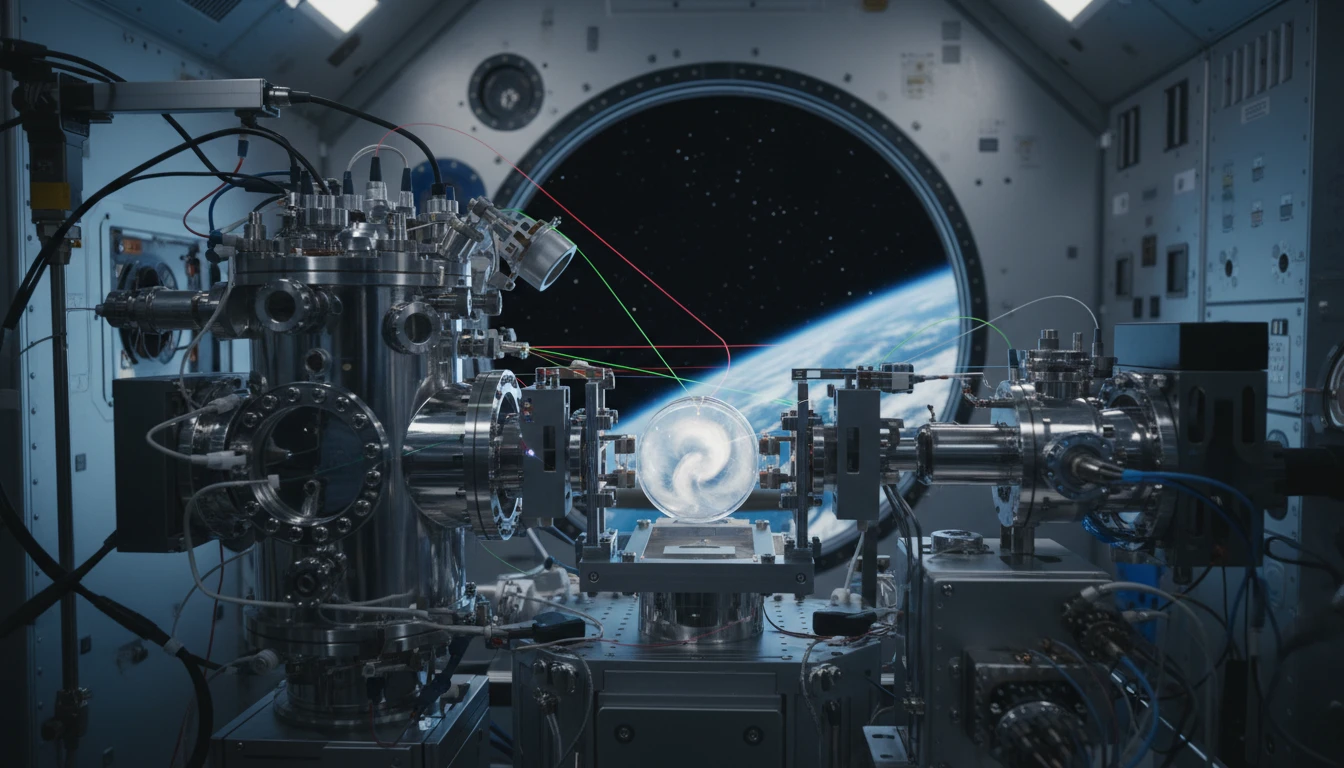
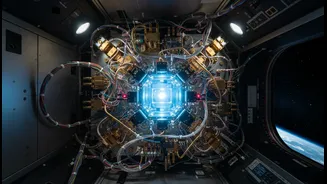
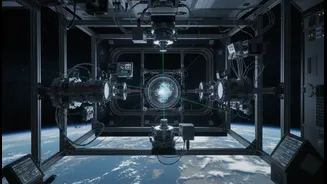
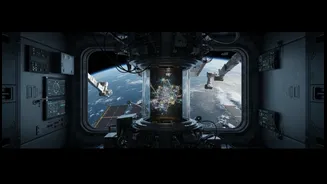
The latest focus of NASA's quantum quest is the Cold Atom Laboratory (CAL), a facility about the size of a mini-fridge operating aboard the ISS since 2018. In April 2026, new hardware was sent to the station and installed by astronauts, marking the lab's
fourth major upgrade. This enhancement includes a redesigned magnetic trap for holding atoms, improved atom sources, and more precise measurement tools. The lab's mission is to chill atoms to temperatures colder than anything found in nature, just a fraction of a degree above absolute zero (minus 273.15 degrees Celsius). At these extreme temperatures, atoms nearly stop moving, allowing their strange quantum properties to be observed on a larger scale.
A Fifth State of Matter
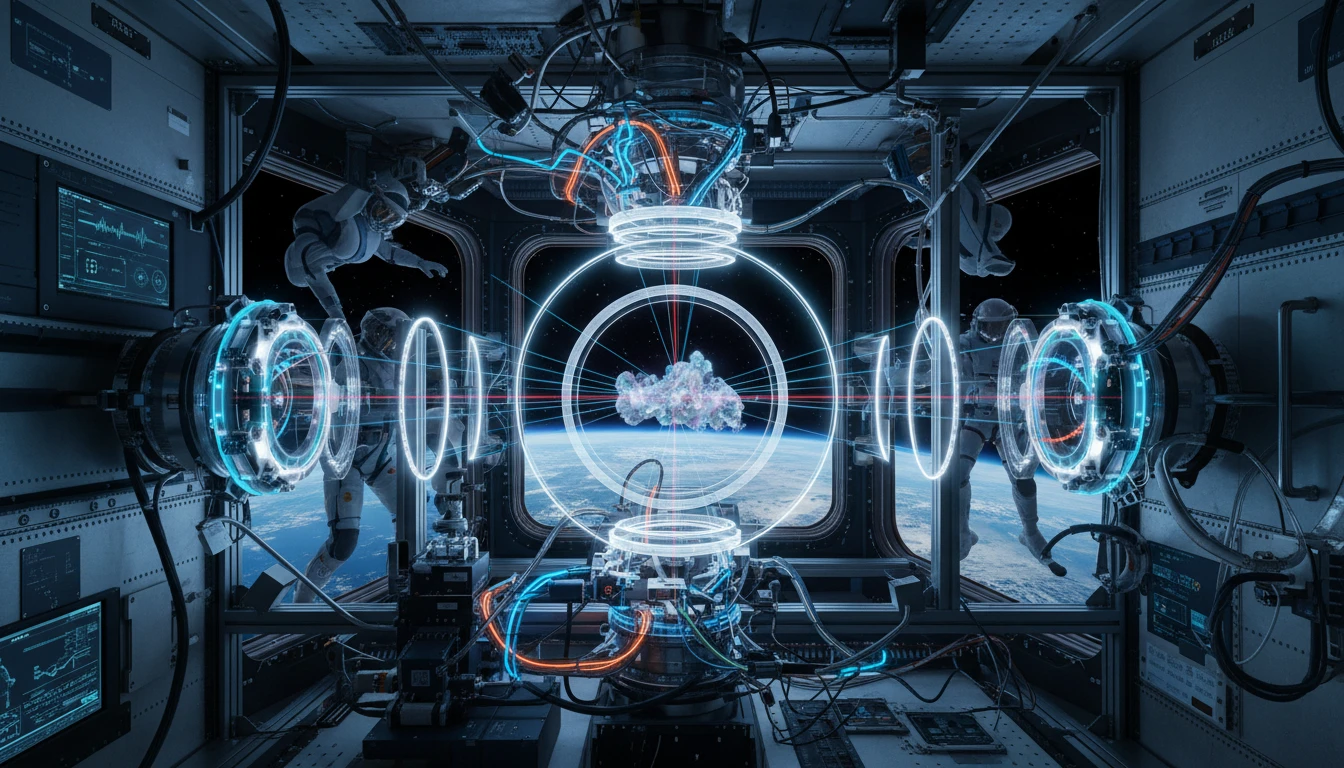
So, what happens when you cool atoms this much? They can enter a mysterious state of matter called a Bose-Einstein condensate (BEC), distinct from solids, liquids, gases, and plasmas. In a BEC, a cloud of individual atoms begins to behave like a single, massive quantum wave. This allows scientists to observe quantum phenomena, which are typically confined to the subatomic level, on a macroscopic scale. While physicists can create BECs on Earth, gravity causes them to collapse quickly. In the microgravity of the ISS, these condensates can be sustained for longer, giving researchers a precious, extended window to study their behaviour. The new upgrades are designed to produce even larger and colder atom clouds than ever before, further expanding these unique experimental capabilities.
Why Study Quantum Physics in Space?
The quantum world operates on bizarre rules that defy our everyday experience. Particles can be in multiple places at once (superposition) or be mysteriously linked across vast distances (entanglement). Studying these effects in the pristine microgravity environment of space, free from the disturbances on Earth, is crucial. According to Jason Williams, project scientist for the Cold Atom Lab, matter behaves drastically differently at the coldest temperatures, and its wave-like nature dominates. This unique behaviour not only helps us probe the fundamental nature of the universe but also enables incredibly precise measurements of time, gravity, and motion. Scientists are using the lab to create things like quantum gas bubbles to explore new properties of ultracold atoms.
The Dawn of Quantum 2.0
The research aboard the ISS is more than just a scientific curiosity; it’s a testbed for what some call "Quantum 2.0." The first quantum revolution gave us transformative technologies like lasers, transistors for our smartphones, and medical MRIs. This next phase focuses on the direct manipulation of large quantum states. The potential applications are groundbreaking. The experiments on the Cold Atom Lab could lead to ultra-precise quantum sensors capable of monitoring Earth's gravity to detect underground water sources or volcanic activity. They could also enable future navigation systems for astronauts on the Moon or Mars that do not rely on GPS, and dramatically improve the accuracy of atomic clocks. As Ethan Elliott, deputy project scientist for the lab, puts it, they are demonstrating that quantum technology can work reliably in space, hoping for gains similar to the first quantum revolution.