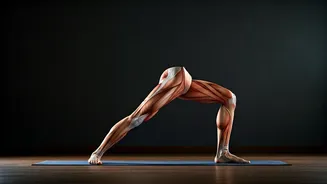









Static vs. Dynamic Stretching
For years, the standard advice was to perform static stretches before a workout. This involves extending a muscle to its end range and holding it, usually for 30 seconds or more. Think of the classic quad stretch or reaching down to touch your toes. Dynamic
stretching, on the other hand, involves active movements where your joints and muscles go through a full range of motion. These are controlled, repetitive movements like leg swings, arm circles, or torso twists. Instead of holding a position, you are actively moving, which mimics the kind of activity you're about to perform.
The Science of a Better Warm-Up
The shift away from pre-workout static stretching is backed by a growing body of research. Studies have found that static stretching before exercise can temporarily decrease muscle strength, power, and overall performance. When you hold a stretch for a long time, it can signal the muscle to relax, which isn't ideal right before you need it to fire powerfully and efficiently. Dynamic stretching, however, does the opposite. It increases blood flow to the muscles, raises your core body temperature, and activates your nervous system. This 'wakes up' the muscles and rehearses the movement patterns you'll use in your workout, which can improve coordination and power.
Key Benefits for Your Workout
Making the switch to a dynamic warm-up can offer significant advantages. Firstly, it better prepares your body for the demands of exercise, potentially reducing the risk of injury. By increasing blood flow and muscle temperature, your muscles become more elastic and less prone to strains. Secondly, it can directly enhance your performance. Research has shown that dynamic warm-ups can improve power, speed, agility, and strength output. This means you might be able to lift a little heavier, run a little faster, or jump a little higher. Finally, it improves functional flexibility and mobility, which translates to better movement efficiency both in the gym and in daily life.
Your New Dynamic Warm-Up Routine
Ready to make the change? A good dynamic warm-up only takes 5-10 minutes. Here are a few exercises to get you started. Perform each for about 30-60 seconds or 10-12 repetitions. Arm Circles: Stand with your arms extended to your sides and make small circles, gradually making them larger. Reverse direction halfway through. Leg Swings: Holding onto a wall for support, swing one leg forward and backward, and then side to side. Keep the movement controlled. Switch legs. Walking Lunges with a Twist: Step forward into a lunge and twist your torso over your front leg. Return to standing and repeat on the other side. High Knees: Jog in place, bringing your knees up towards your chest. Inchworms: From a standing position, hinge at the hips to place your hands on the floor. Walk your hands out to a plank position, then walk your feet in towards your hands.
Is There Still a Place for Static Stretching?
Absolutely. While dynamic stretching is superior for a warm-up, static stretching is highly beneficial for a cool-down. After a workout, your muscles are warm and pliable, making it the perfect time to hold stretches to improve long-term flexibility and help your muscles return to their resting length. Holding static stretches post-workout can aid recovery, reduce muscle tension, and help prevent stiffness. So, don't abandon static stretching altogether—just move it to the end of your session where it can do the most good.