


The Pocket-Sized Crop Doctor
Across India's agricultural heartlands, from the wheat fields of Punjab to the cotton farms of Maharashtra, a quiet revolution is underway. Farmers are facing ever-increasing challenges, from unpredictable weather patterns to stubborn pests and diseases
that can decimate a harvest. In a nation where agriculture employs over half the workforce, a single failed crop can have devastating economic consequences for a family. Traditionally, identifying a problem meant relying on visible cues—a yellowing leaf or the presence of an insect—by which time significant damage might already be done. Now, artificial intelligence is turning the humble smartphone into a powerful diagnostic tool. By leveraging mobile apps and simple, affordable sensors, farmers are gaining the ability to see the invisible and act before disaster strikes. This shift empowers them to move from reactive crisis management to proactive, data-driven farming.
How AI and Sensors Work Together
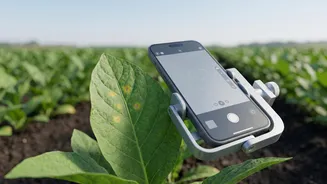
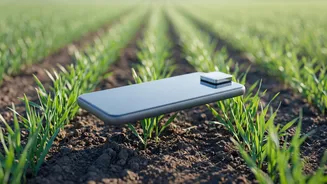
The technology works in a few innovative ways. The most accessible form involves using a smartphone's camera. An AI-powered app, such as one being developed with IIT Bombay for Maharashtra, allows a farmer to simply take a picture of a suspicious-looking plant leaf. The app's AI, trained on thousands of images of crop diseases and pests, analyzes the photo and provides an instant diagnosis, along with advice on how to treat the issue. Other solutions involve small, low-cost Internet of Things (IoT) sensors placed in the field. These devices measure critical data points like soil moisture, temperature, and nutrient levels. This information is sent directly to the farmer's mobile app, offering precise guidance. For example, it can tell a farmer exactly when and how much to irrigate, conserving precious water—a major concern in many parts of Punjab and Maharashtra. These tools are designed to be user-friendly, with many available in local languages, making advanced science accessible to everyone.
Making Precision Agriculture Affordable
For years, "precision agriculture" was a concept reserved for large, corporate farms with the capital to invest in expensive drones, complex machinery, and high-end software. The current wave of innovation is changing that. Startups and even government-backed initiatives are focused on creating "small AI"—affordable tools built for the realities of smallholder farmers, who make up the vast majority of India's agricultural community. For instance, the 'NutriSens' device, developed by an IIT Bombay researcher and used by entrepreneurs in Punjab and Maharashtra, is a portable soil testing system that provides results in minutes for a fraction of the cost of traditional lab tests. Instead of a two-week wait, a farmer gets an instant soil health card on their phone. This accessibility is key; it democratizes data, allowing farmers with just a few hectares to make decisions with the same level of accuracy as a massive agribusiness.
Real-World Gains in the Field
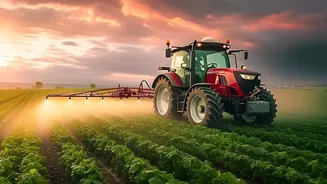
The impact of this technology is not just theoretical. In Maharashtra, the state government is piloting a project with 10,000 farmers to use AI, satellite data, and drones to boost productivity in key crops like cotton, soybean, and sugarcane. Early results from similar AI-based farming solutions have shown encouraging outcomes, including significant water conservation. In Punjab, where water overuse and soil degradation are pressing issues, IoT sensors and AI-driven advice are helping farmers manage resources more sustainably. By enabling early detection of pests, these systems reduce the need for broad, indiscriminate pesticide spraying, which lowers costs and is better for the environment. Ultimately, this translates to tangible financial benefits: reduced input costs, lower crop losses, higher yields, and, most importantly, more stable and predictable incomes for farming families. The technology helps farmers secure their livelihoods against the growing uncertainties of climate change and market fluctuations.