




A Mission of Firsts
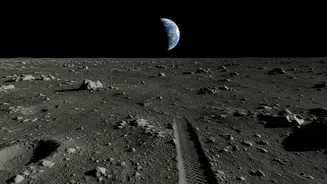
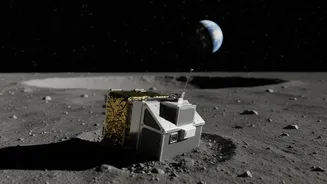
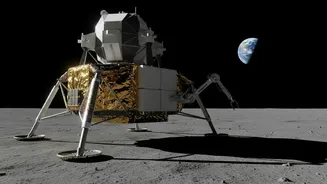
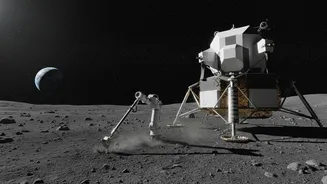
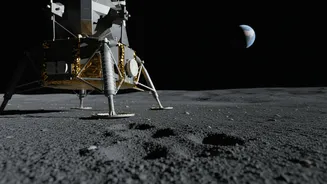
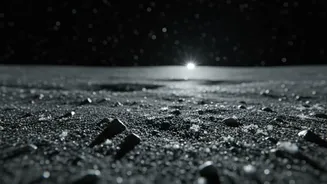
On August 23, 2023, India made history when the Vikram lander of the Chandrayaan-3 mission successfully touched down near the Moon's south pole, a region largely unexplored by previous missions. This achievement made India the first nation to land in
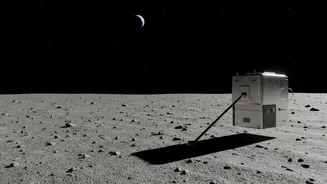
this strategic area and only the fourth to achieve a soft landing on the lunar surface. Onboard the Vikram lander were several scientific instruments designed to study the local lunar environment. One of these key instruments is the Chandra’s Surface Thermophysical Experiment, or ChaSTE. Its primary job was to measure the temperature and thermal properties of the lunar topsoil, known as regolith.
The Instrument Behind the Clues
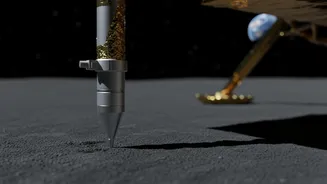
The ChaSTE payload is essentially a sophisticated thermal probe. It was designed to penetrate the top 10 centimeters of the lunar soil and measure temperature variations at different depths. This was the first time such in-situ (on-site) measurements were ever taken in the Moon's polar region. Previous data came from the equatorial regions visited by the Apollo missions decades ago or from orbiters like NASA's Lunar Reconnaissance Orbiter. The ChaSTE experiment provided a ground-truth look at how heat from the Sun penetrates and dissipates through the loose, dusty surface, a critical factor that governs the stability of any potential water ice.
Decoding the Thermal Puzzle
The data returned by ChaSTE revealed some surprises. It measured surface temperatures that were significantly warmer than models had predicted, a finding attributed to the lander being situated on a slight, sun-facing slope. More importantly, by analyzing how temperature changed with depth, scientists could model the thermal behavior of the surrounding landscape. The key insight came from this modeling: while sun-facing slopes get quite warm, nearby slopes that are tilted away from the sun remain incredibly cold, even just a meter away. In fact, modeling based on ChaSTE's data suggested that on slopes steeper than 14 degrees facing away from the sun (poleward-facing), temperatures could remain low enough for water ice to be stable within just one meter of the surface.
The Fresh Clues Explained
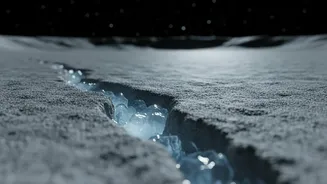
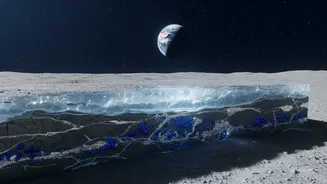
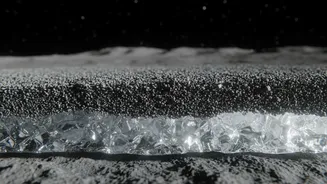
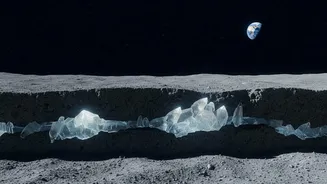
So, how does this translate to clues of subsurface water? The ChaSTE experiment did not detect water directly. Instead, it provided precise temperature and thermal conductivity measurements that allowed scientists to identify the conditions necessary for water ice to exist just below the surface. The findings suggest that the Moon's local topography—the small hills and slopes—plays an enormous role. It creates pockets of extreme cold right next to sunlit areas. These findings expand the potential locations for finding water ice beyond the permanently shadowed craters at the absolute poles. The data implies that shallow, accessible ice could be patchily distributed across a much wider near-polar area, hidden just beneath a thin layer of regolith in these cold-trapping slopes.
Why This Discovery Matters
The implications of these findings are immense. The presence of accessible water ice is a game-changer for future lunar exploration. Water is not only essential for astronauts to drink, but it can also be broken down into its constituent elements, hydrogen and oxygen. These can be used to produce breathable air for habitats and, crucially, as rocket propellant. Being able to 'live off the land' by utilizing lunar resources—a concept known as In-Situ Resource Utilization (ISRU)—would dramatically reduce the cost and complexity of establishing a long-term human presence on the Moon. The ChaSTE data provides a new layer of information for future missions, like NASA's VIPER rover, that will hunt for these ice deposits directly.