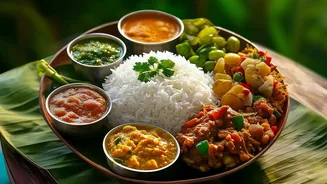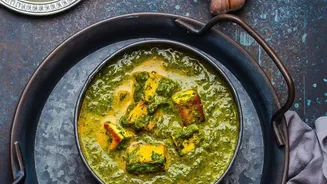





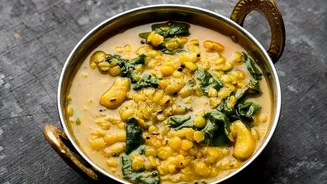
When you hear 'saag', your mind might jump to 'sarson ka saag'. But the world of saag is vast, vibrant, and incredibly versatile. It's less about a specific leaf and more about a hearty, slow-cooked green dish that can be made anywhere in India.
What Exactly Is Saag?
At its
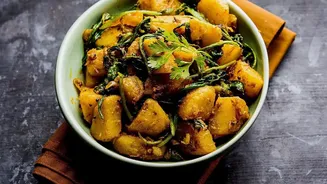
core, saag is not one dish but a category of dishes from the Indian subcontinent. The word itself comes from the Sanskrit 'shaak', which simply means leafy green vegetable. So, any dish where greens are the hero, slow-cooked to a soft, delicious consistency, can be called a saag. While Punjabi Sarson da Saag, made from mustard greens, is the most famous version, it is just one of many regional variations. From Bengal's 'shaak' to Kashmir's 'haak', different parts of the country have their own unique take on cooking greens.
The Classic Punjabi Combination
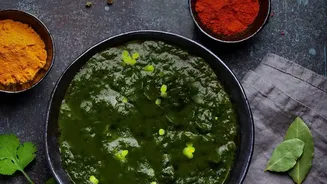
The iconic Sarson da Saag is a winter specialty for a reason—it’s when mustard greens (sarson) are fresh and abundant. Its distinctive, slightly pungent flavour is its hallmark. However, it's rarely made with just mustard leaves. Traditional recipes often balance the bitterness of sarson with the milder, creamier texture of spinach (palak) and the earthy notes of bathua (chenopodium or goosefoot). This blend creates a complex and layered flavour that is both comforting and deeply nourishing. This trio is what gives the dish its signature taste, often enhanced with a dollop of white butter or ghee before serving.
Your Local Guide to Saag Greens
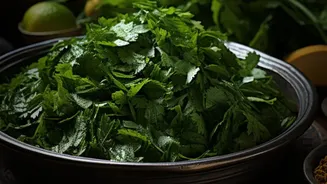
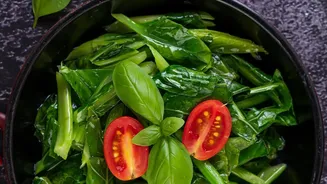
The real beauty of saag is its adaptability. You don't need to find mustard greens to make a delicious version. A vibrant and flavourful saag can be made with a wide variety of locally available leaves. The key is to experiment with a mix of greens to balance flavours—pair a pungent or bitter green with a milder one. Some excellent options found across India include:
Fenugreek (Methi): Adds a pleasantly bitter and aromatic flavour.
Amaranth (Chaulai/Lal Saag): These leaves, available in green and red, have a mild taste and are packed with calcium.
Drumstick Leaves (Moringa): A nutritional powerhouse, these leaves offer a slightly earthy taste.
Radish Greens (Mooli ke Patte): Don't throw away the tops of your radishes! Their peppery flavour adds a great kick.
Taro/Colocasia Leaves (Arbi ke Patte): These large, heart-shaped leaves give a unique, velvety texture when cooked.
Water Spinach (Kalmi Saag): Popular in Bengal and Southern India, this green has a mild, sweet taste and tender stems.
The Basic Art of Making Saag
Making saag is a simple process, though it requires patience. The general method involves a few key steps. First, thoroughly wash and chop your chosen greens. Next, the greens are slow-cooked with a bit of water, ginger, garlic, and green chillies until they are incredibly tender. This can take up to an hour. Traditionally, the cooked greens are then mashed by hand to create a rustic, coarse texture, though a blender on a low setting can also be used. A cornmeal slurry (makki ka atta) is often added to thicken the saag and give it a creamy consistency. Finally, a 'tadka' or tempering of onions, and sometimes tomatoes, fried in ghee is stirred in to finish the dish, adding a final layer of rich flavour.
A Nutritional Powerhouse
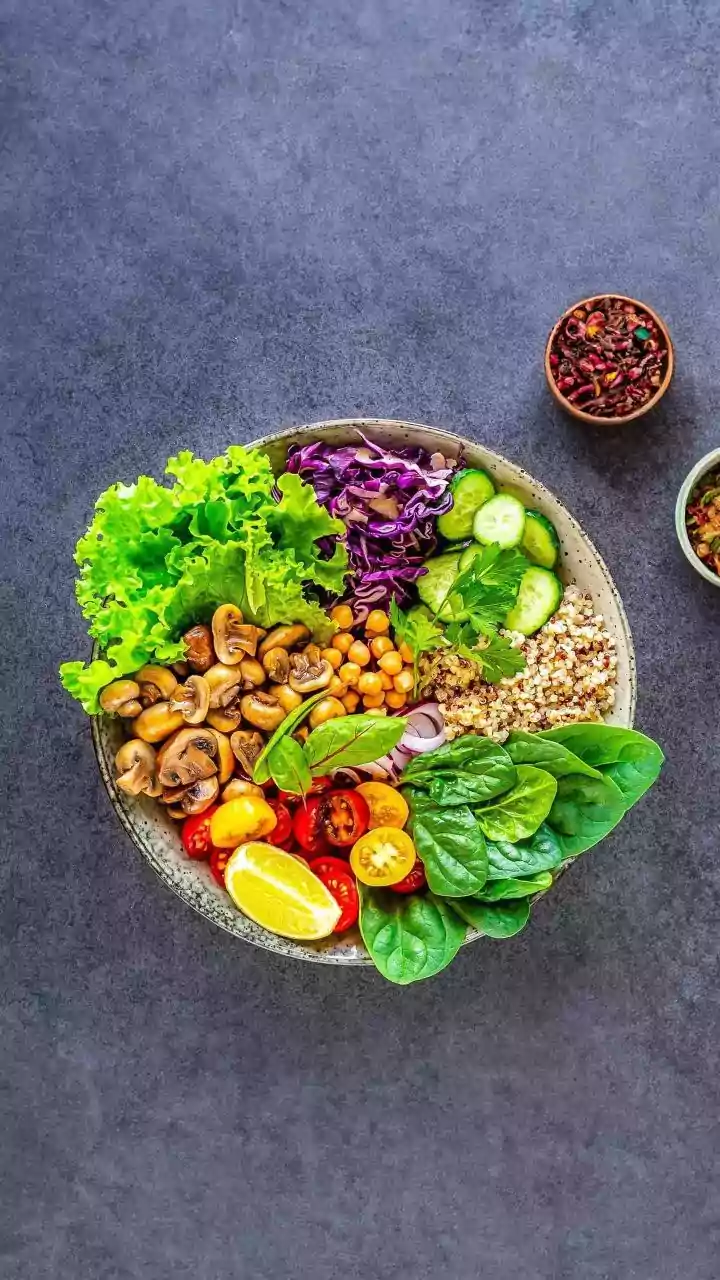
Beyond its comforting taste, saag is a treasure trove of nutrients. Dark leafy greens are loaded with vitamins A, C, and K, which are crucial for immunity, vision, and bone health. They are an excellent source of iron, calcium, and dietary fibre. This high fibre content aids digestion and promotes a feeling of fullness, making it a great addition to any meal. The spices used, like ginger and garlic, also bring their own anti-inflammatory benefits. While the traditional addition of ghee or butter adds flavour, it's worth noting that moderating the amount of fat helps maximize the health benefits.