







A New Universe of Policy
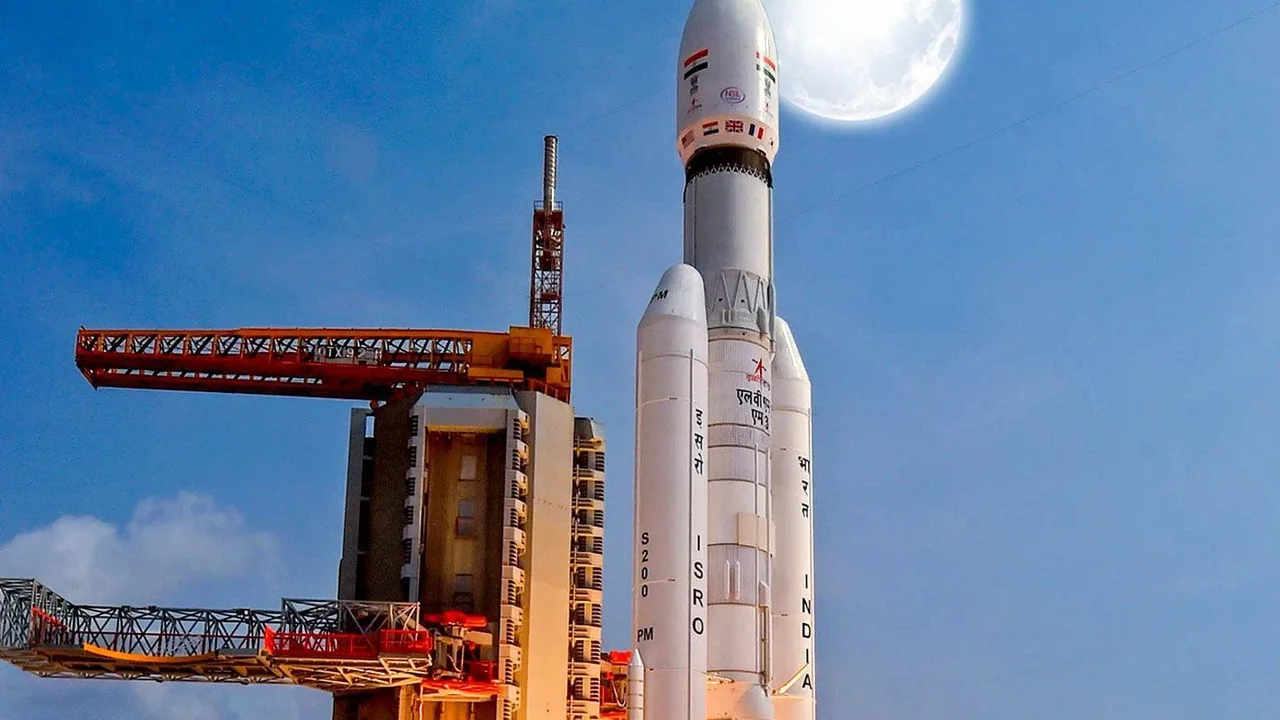
The catalyst for this private-sector boom was a series of landmark policy reforms. The establishment of the Indian National Space Promotion and Authorisation Centre (IN-SPACe) in 2020 and the approval of the Indian Space Policy in 2023 fundamentally changed
the rules of the game. These moves were designed to transition ISRO's role from being the sole operator to a mentor and facilitator, focusing on research and deep space missions. The new policy created a single-window system for private companies, granting them permission to build and launch rockets, own and operate satellites, and even use ISRO's world-class facilities for a fee. This predictable regulatory framework has unlocked a wave of innovation and investment, with hundreds of new space-tech ventures emerging.
The Private Race to the Stars
At the forefront of this new era are startups focused on the 'upstream' segment: building and launching rockets. Hyderabad-based Skyroot Aerospace made history in July 2026 by becoming the first private Indian company to launch a rocket, the Vikram-1, into orbit. Founded by former ISRO scientists, Skyroot aims to provide affordable and on-demand launch services for the booming small satellite market. Another key player, Chennai-based AgniKul Cosmos, is pioneering advanced manufacturing techniques. The company is notable for developing the world's first single-piece, 3D-printed rocket engine, a technology that drastically cuts production time and complexity. Their Agnibaan rocket is powered by a unique semi-cryogenic engine, showcasing India's growing prowess in sophisticated propulsion systems. These companies are not just launching rockets; they are creating a domestic, cost-effective alternative for putting satellites into space.
India's New Eyes in the Sky
Beyond launch vehicles, another group of startups is revolutionising the 'downstream' sector, focusing on building and operating satellites to provide valuable data. Bengaluru's Pixxel is a global leader in this domain, having launched a constellation of hyperspectral imaging satellites. Unlike standard cameras, these satellites capture data across hundreds of light spectrums, revealing details invisible to the naked eye. This technology has powerful applications in agriculture for detecting crop diseases, in mining for identifying mineral deposits, and for monitoring environmental changes. Pixxel's goal is to provide near-daily global coverage, creating a powerful analytics platform for clients worldwide. Another Hyderabad-based company, Dhruva Space, offers a full suite of space engineering solutions, from building satellite platforms and subsystems to launch and ground-segment services. The company is constructing one of India's largest satellite mass-production facilities and recently secured major contracts, including one with French firm Safran to supply systems for a national surveillance satellite constellation.
Expanding the Commercial Frontier
The impact of these startups extends far beyond launching hardware. Their primary contribution is to make space more accessible and affordable, creating new commercial opportunities. By providing frequent and low-cost launch options, companies like Skyroot and AgniKul enable a wider range of businesses and academic institutions to deploy their own satellites. Meanwhile, downstream players like Pixxel and SatSure are transforming satellite imagery into actionable 'decision intelligence' for industries ranging from finance to disaster management. This creates a virtuous cycle: more accessible launches lead to more satellites in orbit, which in turn generates more data to fuel new applications on Earth. This expansion is crucial for India to increase its share of the global space economy, which is projected to grow to over a trillion dollars in the coming decade.
A Symbiotic Partnership with ISRO
Crucially, these startups are not competitors to ISRO but collaborators. The Indian Space Policy explicitly positions ISRO as a research and development powerhouse that will transfer mature technologies to the private sector for commercialisation. Startups benefit immensely from access to ISRO's decades of expertise, its testing facilities, and its launch infrastructure. In return, the private sector's agility and commercial focus allow India to scale its space activities much faster. By handling routine activities like satellite manufacturing and commercial launches, startups free up ISRO to concentrate on ambitious national projects like the Gaganyaan human spaceflight mission and deep-space exploration. This public-private partnership creates a more robust, diversified, and commercially competitive national space program.