



Resist the Urge for Direct Heat
When your shoes are completely drenched, the temptation to place them near a direct source of heat, like a radiator, heater, or open fire, is strong. This is one of the most damaging mistakes you can make. Intense, direct heat essentially bakes the footwear.
For leather shoes, this process is catastrophic; it strips the material of its natural oils, causing it to become brittle, stiff, and prone to cracking. The high temperature can also weaken the adhesives used to bond the shoe together, leading to sole separation and a warped shape. Even direct sunlight should be avoided, as its UV rays can cause materials to fade and degrade over time.
Step Away from the Hairdryer
A hairdryer might seem like a clever, targeted solution, but it’s just another form of concentrated heat that can do more harm than good. Applying high heat from a hairdryer, even for a few minutes, can cause synthetic materials to warp or even melt. For leather, it creates uneven drying, leading to stiff patches and potential discolouration. While some suggest using it on a cool setting from a distance, it's a risky method that can easily go wrong. The safe and recommended approach is to rely on airflow rather than intense heat for drying.
Never Use a Tumble Dryer
Throwing your soaked shoes into a clothes dryer is another recipe for disaster. The combination of high heat and the constant tumbling motion is destructive. The heat can cause the shoes to shrink, permanently altering their fit and comfort. It also damages the glues and cushioning materials, breaking down the shoe's structural integrity. The tumbling action itself can physically damage the shoes and may even harm the inside of your dryer. Unless the manufacturer’s care label explicitly states that tumble drying is safe, you should always assume it is not.
Don’t Store Shoes While Still Damp
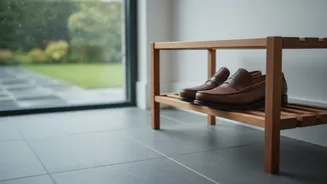
Patience is crucial when drying footwear. One of the biggest mistakes during the humid monsoon season is putting shoes away before they are completely dry. Storing even slightly damp shoes in a closed cupboard or shoe rack creates the perfect breeding ground for mould, mildew, and odour-causing bacteria. This not only leads to a persistent foul smell that’s difficult to remove but can also cause skin irritations and fungal infections on your feet. It is always better to leave them in an open, well-ventilated area for longer than you think is necessary to ensure every last bit of moisture has evaporated.
Don't Forget to Clean and Prep First
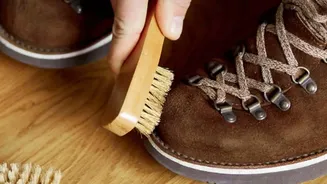
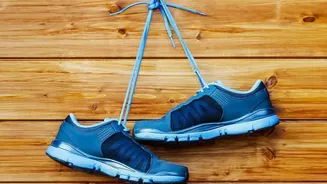
Before you begin any drying process, it’s essential to clean your shoes. Trying to dry footwear that is still covered in mud or dirt will only lock in the stains and grime, making them nearly impossible to remove later. Start by using a soft brush to get rid of any loose dirt and debris. Next, always remove the insoles and loosen the laces. Insoles absorb a lot of moisture and will dry much faster separately, while opening up the shoe allows air to circulate more freely inside. This simple preparation step makes the entire drying process much more effective.
The Right Way: Airflow and Absorption
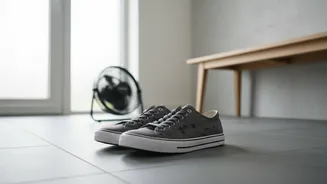
So, what should you do? The safest and most effective method relies on absorption and gentle airflow. Start by stuffing your shoes with crumpled newspaper or paper towels. This classic trick works wonders by drawing moisture out from the inside. Be sure to replace the paper every few hours as it becomes saturated. To speed things up, place the stuffed shoes in front of a fan. The constant, cool airflow will carry moisture away without causing heat damage. For an extra boost, you can place silica gel packets inside, which are excellent at absorbing residual dampness and preventing odours.