



What is the Autumnal Equinox?
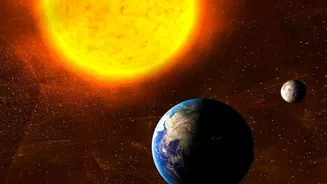
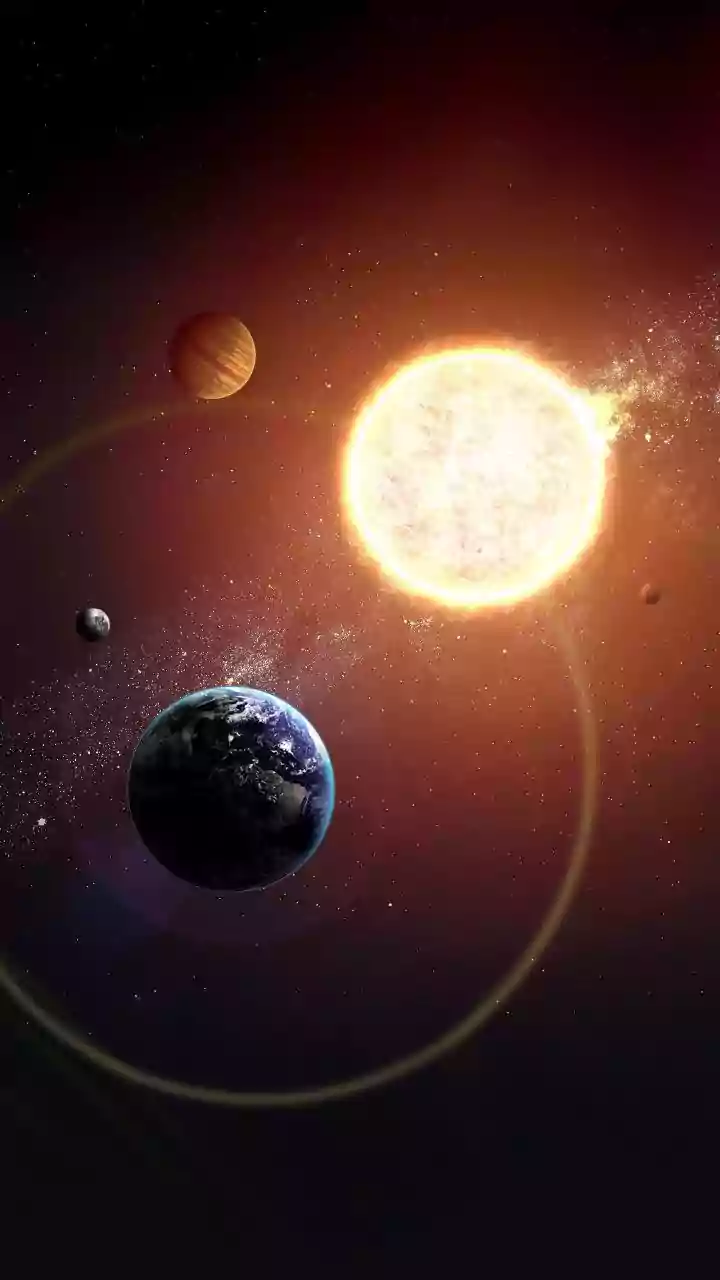
Twice a year, in March and September, the Earth reaches a special point in its orbit where its axis isn't tilted toward or away from the Sun. Instead, the axis is perfectly perpendicular to the Sun's rays. The September event marks the autumnal equinox
for the Northern Hemisphere and the vernal (spring) equinox for the Southern Hemisphere. On this day, the Sun shines directly over the equator. For us in the Northern Hemisphere, it's the astronomical start of autumn, signaling that the days will now become shorter than the nights. The 2026 September equinox occurs on September 22 or 23, depending on your time zone. The precise moment is 00:05 Coordinated Universal Time (UTC) on September 23.
The Myth of a Perfectly Equal Day
The word 'equinox' comes from Latin for "equal night," leading to the popular belief that on this day, we experience exactly 12 hours of daylight and 12 hours of darkness. While it's incredibly close, it's not perfectly equal. On the day of the equinox, most places on Earth will actually experience slightly more than 12 hours of daylight. This isn't a mistake in the calendar but rather the result of two fascinating scientific phenomena that give us a few extra minutes of sunshine.
Reason 1: Earth's Atmosphere Bends Light
The first reason we get extra daylight is a phenomenon called atmospheric refraction. Think of Earth's atmosphere as a lens. When sunlight enters our atmosphere from the vacuum of space, the air bends the light rays, particularly when the sun is near the horizon. This bending effect means we see the Sun's light for several minutes before its disc has physically risen above the horizon. Similarly, in the evening, we continue to see the Sun for several minutes after it has already dipped below the horizon. Our atmosphere essentially "lifts" the Sun's image, making the day appear longer than it truly is. This process can add around six minutes of extra daylight at mid-latitudes.
Reason 2: The Sun is a Disc, Not a Point
The second reason is based on how we define sunrise and sunset. For scientific calculations of the equinox, the Sun is treated as a geometric point at its center. However, in our daily lives, sunrise begins the moment the top edge of the Sun appears over the horizon, and sunset ends only when the last sliver of the Sun's upper edge disappears. Because the Sun is a large disc and not a tiny point, the time it takes for its full diameter to cross the horizon adds extra minutes of daylight. This definition alone can add another two to three minutes of daylight compared to a calculation based on the Sun's center.
Meet the 'Equilux': The Real Day of Equal Light
If the equinox doesn't have perfectly equal day and night, is there a day that does? Yes, and it has its own name: the equilux. The term, a blend of Latin for "equal light," refers to the specific date when a location experiences as close to 12 hours of day and 12 hours of night as possible. Because the equinox provides a little bonus daylight, the equilux doesn't happen on the same day. For the autumnal equinox in the Northern Hemisphere, the equilux typically occurs a few days after the equinox. This is the true day of balance between light and dark, a quiet follow-up to its more famous astronomical cousin.