





Start With the Ingredient List
The single most honest part of any package is the ingredient list. By law, ingredients must be listed in descending order by weight. This means the first three ingredients make up the bulk of what you're eating. If sugar (or its many aliases), refined
flour (maida), or palm oil are at the top of the list, you know what the product is truly made of, regardless of the 'healthy' claims on the front. A long list full of names you can't pronounce, like emulsifiers and stabilisers, often indicates a highly processed product. Also, always look for the FSSAI logo and 14-digit license number, which confirms the product complies with Indian food safety standards.
Master the Nutrition Facts Panel
This table is your window into the product's nutritional profile. But the first thing to check is the serving size. Manufacturers often use unrealistically small serving sizes to make the numbers for calories, fat, and sugar look lower. A packet of biscuits might list nutritional information for just two biscuits, but most people eat more. Always multiply the values by the number of servings you actually consume. FSSAI mandates that companies provide values 'per 100g' or 'per 100ml' in addition to 'per serving'. The 'per 100g' column is the best way to make a fair comparison between two different products.
Spot the Hidden Sugars
Sugar is rarely just listed as 'sugar'. It hides under many different names, including high-fructose corn syrup, dextrose, maltodextrin, invert syrup, and fruit juice concentrate. A common tactic is to use several different types of sugar in small amounts so that none of them appears first on the ingredient list. If you see two or three of these names, it’s a red flag that the product is likely high in sugar. The Indian Council of Medical Research recommends limiting added sugar to about 25 grams per day for an adult. Check the 'Total Sugar' line in the nutrition panel; if it’s more than 10-12 grams per 100g, consider it a sweet treat, not a health food.
Decode Front-of-Package Claims
Front-of-pack claims are marketing. Terms like 'Natural', 'Farm-Fresh', or 'Real Fruit' are often used but have very loose or no legal definition under FSSAI rules, meaning they don't guarantee a healthier product. A 'natural' product can still be highly processed. Similarly, a product labelled 'multigrain' might contain mostly refined flour with only a tiny percentage of actual whole grains. 'Organic' products are more strictly regulated and must carry the 'Jaivik Bharat' logo to be considered genuine. To help consumers, FSSAI has recently proposed a mandatory red, hexagonal warning label for foods high in sugar, salt, or fat, which will make it easier to spot unhealthy products at a glance.
Check for Allergens and Key Symbols
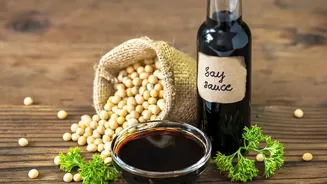
FSSAI requires that common allergens like milk, soy, nuts, and eggs be clearly declared. This information is crucial for anyone with food sensitivities. You will also find mandatory symbols that provide quick information. A green dot inside a green square indicates a vegetarian product, while a brown dot inside a brown square signifies a non-vegetarian product. Products certified as organic will carry the 'Jaivik Bharat' logo, often alongside an 'India Organic' (NPOP) or 'PGS-India' mark. Taking a moment to find these symbols can save you from accidentally purchasing something that doesn't align with your dietary needs or preferences.