



Your Pocket Planetarium
Modern stargazing apps transform your phone into a powerful, pocket-sized planetarium. They use your phone's built-in GPS and compass to know exactly where you are and which way you're pointing. When you hold your phone up to the sky, the app displays
a map of the stars in that direction. Many use augmented reality (AR) to overlay this information onto your camera's view, creating a seamless experience of identifying what you're seeing in real time. This makes astronomy more accessible than ever, turning a casual glance at the night sky into an interactive exploration of the cosmos.
What to Look For in August
The night sky is not static; different constellations become prominent with the changing seasons. In the Northern Hemisphere, August is a prime time to view the heart of the summer sky. Look for the Summer Triangle, a bright and easily recognisable pattern formed by three stars: Vega in the constellation Lyra, Deneb in Cygnus (the Swan), and Altair in Aquila (the Eagle). Also visible low in the southern sky is the distinctive 'Teapot' shape of Sagittarius and the star Antares in Scorpius. A good app will not only help you find these but also show you the beautiful star clouds of the Milky Way that run through this part of the sky.
Star Walk 2: Best for Beginners
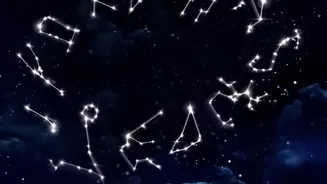
Star Walk 2 is often recommended as the perfect entry point for aspiring stargazers. Its interface is beautiful and intuitive, making it easy to just point your device at the sky and start identifying stars, planets, and constellations. The free version is robust, offering real-time tracking and an AR mode. One of its standout features is the detailed and artistic illustrations of constellations that fade in as you locate them, helping you visualise the mythological figures in the sky. The app also has a 'Time Machine' feature, allowing you to see how the sky looked in the past or will look in the future.
SkyView Lite: Best for Grab-and-Go Stargazing
SkyView Lite is praised for its simplicity and the fact that it can work without a WiFi or GPS signal, making it ideal for camping trips or stargazing in remote areas. Like others, you simply point it at the sky to identify celestial objects, including constellations, planets, and even satellites like the International Space Station (ISS) and the Hubble Space Telescope. The app includes a night mode with red filters to help preserve your night vision while observing. While the free 'Lite' version has a smaller database of stars than its paid counterpart, it is more than sufficient for casual observing and learning your way around the sky.
Stellarium Mobile: Best for Realism
For those who want a more realistic and data-rich experience, Stellarium is a fantastic choice. Originally a popular desktop planetarium software, the mobile app offers an accurate and detailed simulation of the night sky for any date, time, and location. The free version provides a massive catalogue of stars, nebulae, galaxies, and star clusters. It also stands out by allowing you to explore the sky cultures of other regions, showing you how different civilisations have interpreted the constellations. While it's packed with information, its minimalist interface makes it one of the best astronomical apps for both adults and children.