




A Unified But Divided System
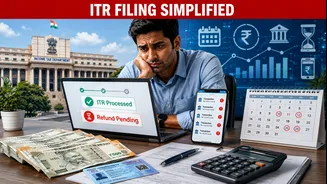
The Income Tax e-Filing portal now features an integrated payment facility called e-Pay Tax. This system has replaced the older OLTAS method and is designed to be a one-stop solution for paying various direct taxes. It conveniently brings payments under
different laws, such as the Income-tax Act, 1961, and newer legislation, onto a single platform. The goal was to enhance user experience by offering multiple payment modes like net banking, debit/credit cards, UPI, and over-the-counter payments at bank branches. While this integration simplifies the process of initiating a payment, it masks a rigid separation on the back end that taxpayers must be aware of.
The Irreversible First Choice
When initiating a tax payment on the portal, the very first choice you make is selecting the applicable 'Act'. For instance, taxpayers must choose between the 'Income-tax Act, 1961' for payments related to Assessment Year 2026-27 and earlier, or the 'Income-tax Act, 2025' for payments concerning Tax Year 2026-27 and onwards. Other laws, like the Black Money Act, also appear as options. This initial selection is far more than a simple dropdown menu choice; it dictates the fundamental legal category under which your payment is recorded. The system’s design makes this selection final and irreversible once the payment is completed.
The Cost of a Simple Mistake
Herein lies the critical issue: a payment made under the wrong Act cannot be adjusted or transferred to cover a liability under the correct Act. For example, if you mistakenly pay an outstanding income tax demand under the Black Money Act, the tax authorities cannot simply reallocate that amount to your income tax liability. The payment is effectively locked under the wrong legislative head. Your original income tax demand will remain outstanding, potentially attracting interest and penalties for non-payment. The new system, for all its convenience, does not have a mechanism to correct this specific error across different Acts.
No Easy Way Back
Once a payment is miscategorised at the 'Act' level, the only recourse for the taxpayer is to file a claim for a refund for the erroneously paid amount. This is a separate, often lengthy administrative process. While you wait for the refund, you are still required to pay the original, correct tax demand to avoid further penalties. This means your money is tied up in the system, and you must pay your liability a second time out-of-pocket. This starkly contrasts with other types of errors in a challan, such as selecting the wrong Assessment Year or 'Minor Head' (e.g., Advance Tax vs. Self-Assessment Tax), for which the portal now provides an online correction facility for unconsumed challans. However, this flexibility does not extend to correcting the selected Act.
How to Avoid This Pitfall
The solution is diligence. Before initiating any payment, taxpayers and tax professionals must double-check the notice or demand they are paying against. Carefully verify the law under which the tax is due. On the e-Pay Tax portal, pause and confirm you have selected the correct Act before proceeding. While it may seem like a minor detail in the payment workflow, it is the most crucial one. The system generates a Challan Reference Number (CRN) which is valid for 15 days, giving you ample time to ensure all details are correct before finalizing the payment. Treat the 'Act' selection as the foundational step that cannot be undone.