
The Ambitious Double-Catch Mission
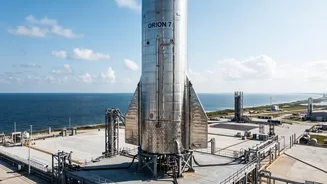
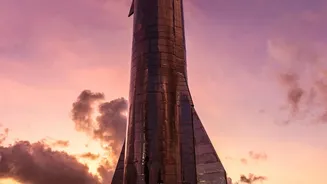
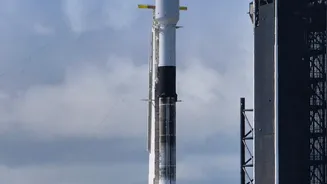
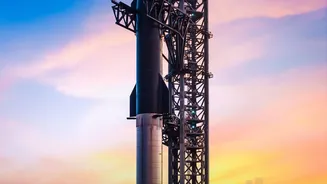
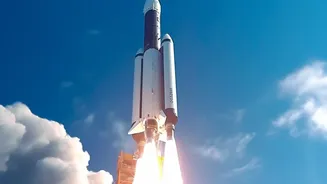
On Friday, November 13, 2026, SpaceX launched its 15th Starship test flight from its Starbase facility in Texas. The goal was unprecedented in the history of rocketry: to launch the world's most powerful rocket, have both its giant stages return to the launch site,
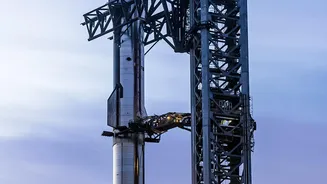
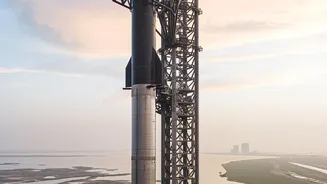
and catch them mid-air using the mechanical 'chopstick' arms of the launch tower. The plan involved two distinct events. First, the Super Heavy booster would return minutes after launch. Second, the Starship upper stage would complete 14 orbits over 22.5 hours, deploy a batch of Starlink satellites, and then return for its own catch on Saturday, November 14. Achieving this 'double catch' is the key to SpaceX's vision of a fully and rapidly reusable launch system, a feat no one has ever accomplished.
What Went Wrong with the Booster
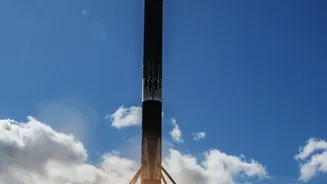
The first part of the ambitious plan did not go as expected. While the Super Heavy booster successfully propelled the Starship on its way, its own return journey was cut short. After separating from the upper stage, the booster began its 'boostback burn' to head back toward the Texas launch site. However, early indications suggest a low-fuel alarm caused the burn to end prematurely. The rocket's guidance system automatically detected it was not on the correct trajectory for a safe catch and aborted the attempt. Instead of approaching the tower, the booster was diverted to a splashdown zone in the Gulf of Mexico, where its flight termination system was activated, resulting in a spectacular explosion just before it hit the water.
A Historic First: Catching the Starship
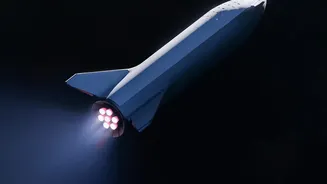
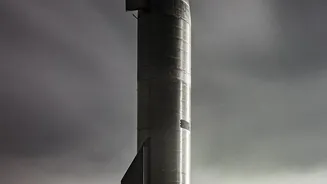
Despite the booster's failure, the mission continued. The Starship upper stage, named Ship 42, successfully reached orbit, deployed 26 Starlink satellites, and spent nearly a full day in space. Then came the main event. On Saturday afternoon, the spacecraft performed a fiery reentry, used its four large flaps to steer itself with precision toward the launch site, and fired its engines to flip into a vertical position for landing. In a breathtaking maneuver, the launch tower's massive 'chopstick' arms closed around the descending rocket, successfully catching it. It was the first time in history an orbital-class spacecraft had been caught for reuse, a moment hailed as the 'holy grail of spaceflight' by a SpaceX commentator.
Why Two Catches Are the Ultimate Goal
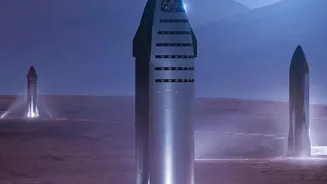
Catching both the booster and the ship is central to SpaceX's entire business model for Starship. Traditional rockets discard their expensive upper stages on every flight. By recovering both parts, SpaceX aims to eliminate the largest costs associated with space launch. Catching them directly on the tower, rather than having them land on legs, removes the weight and complexity of landing gear and theoretically allows for much faster inspection, refueling, and re-launch. This rapid reusability is what SpaceX believes is necessary to achieve its goals, from deploying tens of thousands of Starlink satellites to building a city on Mars and supporting NASA's Artemis moon missions. The company has previously caught three Super Heavy boosters, but this was the first time it successfully caught the upper stage, which travels much higher and faster.
A Success, A Failure, Or Something Else?
In the world of iterative development that SpaceX champions, a flight like this defies simple labels of 'success' or 'failure'. The loss of the Super Heavy booster and its 33 Raptor engines is undoubtedly a costly setback. However, the primary objectives of reaching orbit, deploying a payload, and demonstrating a successful Starship reentry and catch were all met. For SpaceX, gathering data from both the successful catch and the booster's failure is a critical part of the process. The company will investigate the cause of the booster's fuel issue to prevent it from happening again. The historic catch of the Starship upper stage, however, is a massive victory and a significant de-risking of its architecture, proving that the most challenging piece of the reuse puzzle is solvable.