


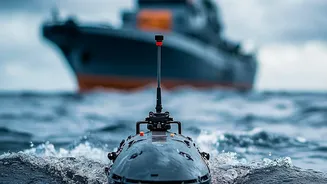
The idea of self-driving ships navigating the world's oceans is no longer science fiction. But how do you safely test such a revolutionary technology? Indian Institute of Technology Madras has unveiled a groundbreaking answer.
The Global Race for Autonomous Seas
The global shipping industry
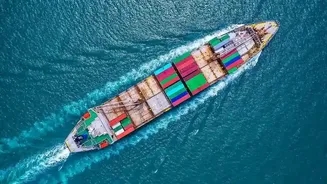
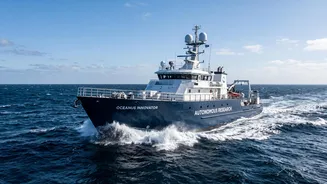
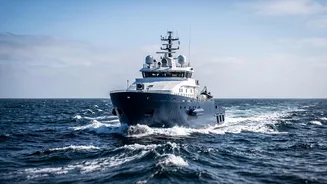
is the backbone of world trade, carrying over 80 per cent of goods across the planet. For decades, this has relied on human crews. Now, a technological shift is underway. Major maritime nations are in a race to develop autonomous vessels—ships that can navigate, operate, and make decisions with minimal human intervention. The motivations are clear: increased efficiency, lower operational costs, and, crucially, enhanced safety. Statistics show a significant percentage of maritime accidents are attributed to human error, a factor that autonomous systems promise to dramatically reduce. These 'smart ships' could also lead to lower fuel consumption and a smaller carbon footprint, making shipping more sustainable.
A High-Stakes Testing Problem
While the promise of autonomous shipping is immense, it presents a monumental challenge: testing. Developing the artificial intelligence and algorithms to guide a massive vessel through unpredictable seas, crowded shipping lanes, and severe weather is one thing. Validating that this technology is safe and reliable in the real world is another. Real-world tests are incredibly expensive, logistically complex, and carry significant risks. A single error in the code could have catastrophic consequences for the vessel, its cargo, and the marine environment. This testing bottleneck has been a major hurdle for developers worldwide, slowing the progress of deploying fully autonomous fleets.
Introducing SeaNav: A Digital Twin for the Oceans
This is the problem that researchers at IIT Madras's Department of Ocean Engineering have set out to solve with 'SeaNav'. SeaNav is a real-time digital twin platform—a highly realistic and sophisticated virtual replica of the maritime environment. Built on the powerful Unity3D engine, it creates a simulated world where all the complexities of the ocean can be recreated. This includes accurate models of ocean waves, vessel movements, and dynamic navigation environments. It allows developers to test their autonomous navigation systems in countless scenarios without ever putting a real ship at risk. The platform has been meticulously calibrated using a benchmark model of a 320-meter-long tanker, ensuring the results in the virtual world closely mirror real-world operations.
How the Virtual Proving Ground Works
SeaNav functions as a comprehensive virtual proving ground. Within this digital space, engineers can simulate a vast range of conditions. They can test how an autonomous system reacts to a sudden storm, dense fog, or the unexpected manoeuvres of other ships in a busy port. The platform combines digital twin technology with AI, advanced sensor fusion, and even virtual reality, creating an immersive environment for both autonomous systems and human operators to train safely and efficiently. According to Dr. Suresh Rajendran, Associate Professor at the Department of Ocean Engineering, SeaNav provides a scalable platform for developing and validating these crucial technologies before they are ever deployed in the real world.
Strengthening India's Maritime Future
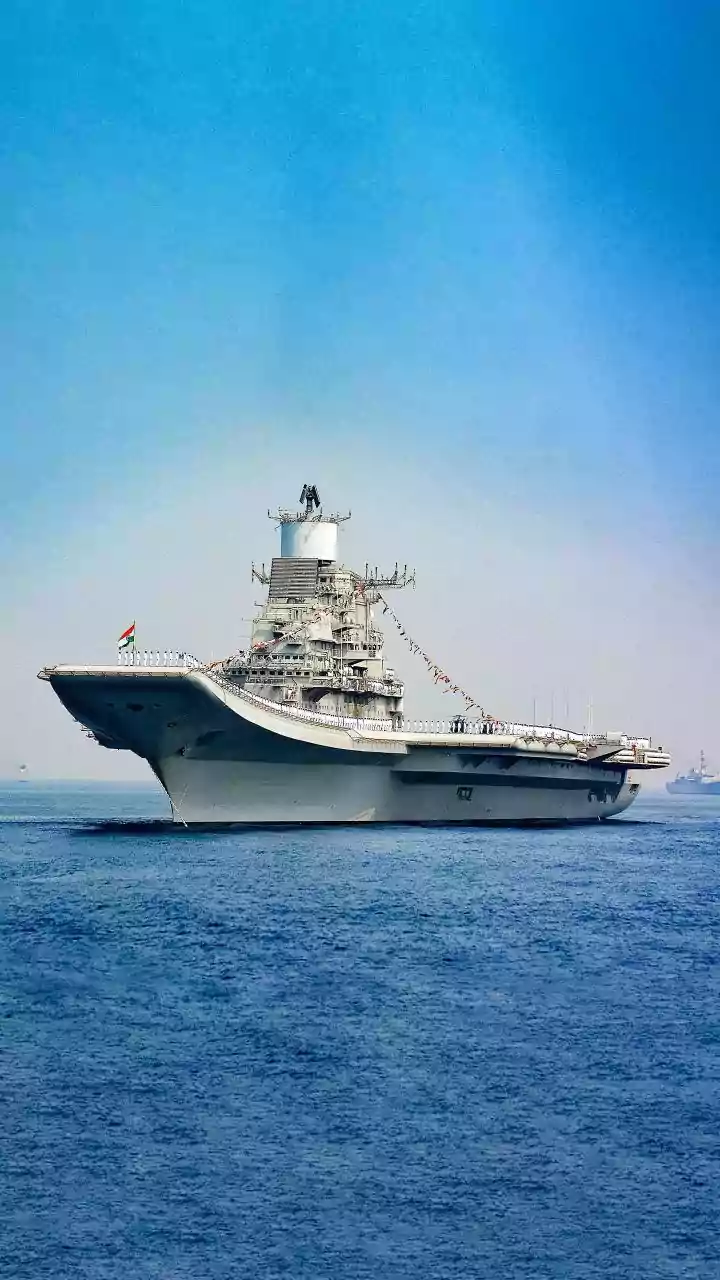
The development of SeaNav is a significant milestone for India. It directly aligns with national initiatives like the 'Sagarmala Programme' and 'Maritime India Vision 2030', which emphasise the need for smart ports and advanced digital technologies. By creating an indigenous platform for testing, IIT Madras is reducing reliance on foreign technology and positioning India as a key player in the future of maritime innovation. The platform can be used to develop AI-assisted navigation systems to enhance safety at major Indian ports like Chennai, Mumbai, and Kochi by reducing the risk of collisions and grounding. Furthermore, SeaNav's multi-vessel simulation capabilities open up applications in coastal surveillance, search-and rescue operations, and maritime defence.